Categories
HIPAA

What Is HIPAA and Why Is It Essential for Healthcare Organizations?

What Is HIPAA and Why Is It Essential for Healthcare Organizations?
What Is HIPAA and Why Is It Essential for Healthcare Organizations?

What Is HIPAA and Why Is It Essential for Healthcare Organizations?

>What Is HIPAA and Why Is It Essential for Healthcare Organizations?

What Is HIPAA and Why Is It Essential for Healthcare Organizations?

Learn how HIPAA compliance helps healthcare organizations protect sensitive patient data, meet regulatory requirements, reduce security risks, and build trust with patients and business partners.

What Is HIPAA and Why Is It Essential for Healthcare Organizations?

What Is HIPAA and Why Is It Essential for Healthcare Organizations

Organizations in the healthcare industry handle some of the most sensitive information on a daily basis. Information ranging from patient records to insurance and billing information must be protected not only to follow proper procedures but also to comply with applicable laws. 

That’s where HIPAA compliance becomes important. Regardless of whether you are a healthcare provider, a health tech startup, or even SaaS serving healthcare providers, understanding HIPAA is crucial for you.This article explains the significance of HIPAA and HIPAA compliance. 

What Is HIPAA?

The Health Insurance Portability and Accountability Act of 1996 (HIPAA) is an act of US Federal Law enacted to ensure the protection of sensitive health data of individuals. This legislation establishes national standards for the privacy, security, and exchange of health information and grants increased rights to the patient over their own health care information. 

It applies to healthcare organizations that handle Protected Health Information (PHI). 

Why Was HIPAA Introduced?

Prior to HIPAA, healthcare facilities maintained inconsistent standards in regards to data security, raising the risk of its improper usage and access.

HIPAA was introduced to:

  • Protect patient privacy
  • Secure electronic health information
  • Standardize healthcare data exchange
  • Reduce healthcare fraud
  • Improve efficiency within the healthcare industry

In the modern-day world, HIPAA has become the base for ensuring data security within the healthcare industry.

What Is HIPAA Compliance?

HIPAA compliance involves implementing administrative, physical, and technical safeguards that meet HIPAA requirements for protecting PHI and ePHI. 

Compliance is not only about the implementation of security measures; it requires organizations to have written policies, educate their employees, manage risks, and ensure that their business associates follow the same standards.

Why Is HIPAA Important?

HIPAA matters as it provides for patient privacy, improves cybersecurity in the healthcare industry, mitigates the risk of data breaches, guarantees regulatory compliance, and allows for building up patients’ trust.

In general, HIPAA creates a safe environment in which sensitive information can be processed through its entire life cycle.

Why Is HIPAA Compliance Essential for Healthcare Organizations?

It should be noted that healthcare organizations are one of the industries under the strongest attacks from cybercriminals as medical information is extremely valuable.

Adopting HIPAA for healthcare organizations has a number of advantages.

1. Protects Patient Privacy

Healthcare professionals have access to confidential information of patients.

HIPAA ensures organizations:

  • Limit unnecessary access
  • Protect sensitive records
  • Maintain confidentiality
  • Respect patient rights

Maintaining privacy strengthens long-term patient relationships.

2. Reduces Cybersecurity Risks

Healthcare ransomware infections keep increasing.

In order to promote security, HIPAA advises healthcare organizations to consider:

  • Multi-factor authentication
  • Encryption
  • Access controls
  • Audit logging
  • Secure backups
  • Continuous monitoring

They provide substantial protection against security threats.

3. Helps Avoid Regulatory Penalties

Consequences of non-compliance with HIPAA requirements include:

  • Investigations
  • Action plans
  • Penalties
  • Legal consequences
  • Damage to reputation

A compliance strategy will help you avoid all of these.

4. Improves Organizational Reputation

There is a rising tendency of patients preferring organizations with robust privacy and security measures.

Compliance with HIPAA will aid healthcare organizations:

  • Increase patient confidence
  • Build credibility
  • Strengthen brand reputation
  • Improve partnerships with insurers and vendors

5. Supports Digital Healthcare Innovation

The rise of the healthcare sector in the use of cloud solutions, telemedicine, mobile apps, and AI-driven technologies necessitates the HIPAA compliance policy.

Who Must Comply with HIPAA?

HIPAA applies to several categories of organizations.

Covered Entities

These include:

  • Hospitals
  • Clinics
  • Physicians
  • Dentists
  • Pharmacies
  • Health insurance companies
  • Healthcare clearinghouses

Business Associates

Business associates are third-party companies that process or access Protected Health Information on behalf of covered entities.

Examples include:

  • Cloud service providers
  • Medical billing companies
  • Data analytics firms
  • IT managed service providers
  • SaaS vendors
  • Telehealth platforms

Business associates are also required to meet HIPAA obligations.

What Information Does HIPAA Protect?

HIPAA provides protection to the Protected Health Information (PHI), which is defined as all information, which can be used to identify any person and is related to the individual’s health status or services.

These include:

Personal Information

  • Patient name
  • Address
  • Phone number
  • Email address
  • Date of birth

Medical Information

  • Medical history
  • Diagnoses
  • Lab reports
  • Prescriptions
  • Treatment records

Financial Information

  • Insurance details
  • Billing records
  • Payment history

Electronic Protected Health Information (ePHI)

  • Electronic medical records (EMR)
  • Electronic health records (EHR)
  • Digital imaging
  • Patient portals
  • Cloud-stored healthcare data
Understanding the HIPAA Rules

Several key rules make up HIPAA compliance.

HIPAA Privacy Rule

The Privacy Rule governs how Protected Health Information may be used and disclosed.

It also grants patients rights to:

  • Access their records
  • Request corrections
  • Receive privacy notices
  • Know how their information is used

HIPAA Security Rule

The Security Rule focuses on protecting electronic Protected Health Information (ePHI).

It requires organizations to implement:

  • Administrative safeguards
  • Physical safeguards
  • Technical safeguards

HIPAA Breach Notification Rule

Organizations must notify affected individuals and, in many cases, government authorities when a breach involving unsecured PHI occurs.

A documented incident response process is essential.

HIPAA Requirements for Healthcare Providers

Organizations should build their compliance program around these core requirements.

Administrative Safeguards

Include:

  • Risk assessments
  • Security policies
  • Employee training
  • Workforce management
  • Incident response planning

Physical Safeguards

Protect facilities and devices through:

  • Controlled facility access
  • Locked server rooms
  • Device security
  • Secure disposal procedures

Technical Safeguards

Technical controls include:

  • Encryption
  • Multi-factor authentication
  • Audit logs
  • Automatic logoff
  • Secure user authentication
  • Data integrity monitoring
HIPAA Compliance Checklist

The following HIPAA compliance checklist provides a practical roadmap for healthcare organizations and SaaS providers.

✔ Conduct a Risk Assessment

Identify vulnerabilities affecting PHI and ePHI.

✔ Develop Written Policies

Document:

  • Privacy policies
  • Security procedures
  • Access management
  • Incident response

✔ Train Employees

Employees should understand:

  • Privacy responsibilities
  • Phishing awareness
  • Password security
  • Data handling procedures

✔ Secure Systems

Implement:

  • Encryption
  • Endpoint protection
  • Firewalls
  • Secure cloud infrastructure
  • Backup solutions

✔ Manage User Access

Grant access only to employees who require patient information to perform their roles.

Apply the principle of least privilege.

✔ Monitor Systems

Continuously review:

  • Audit logs
  • Security alerts
  • User activity
  • System vulnerabilities

✔ Sign Business Associate Agreements (BAAs)

Healthcare organizations should establish Business Associate Agreements with vendors handling PHI.

✔ Perform Regular Compliance Reviews

HIPAA compliance requires continuous improvement rather than one-time implementation.

HIPAA Compliance for SaaS Companies

Many SaaS companies mistakenly assume HIPAA only applies to hospitals.

If your software stores, processes, or transmits Protected Health Information, your company may qualify as a Business Associate.

Examples include:

  • Electronic Health Record (EHR) platforms
  • Patient engagement software
  • Appointment scheduling tools
  • Medical billing applications
  • Telemedicine platforms
  • Healthcare CRM systems
  • AI-powered clinical software
Best Practices for SaaS Companies

Successful HIPAA compliance for SaaS companies includes:

  • Secure cloud architecture
  • Encryption at rest and in transit
  • Role-based access control
  • Comprehensive logging
  • Vendor security reviews
  • Regular penetration testing
  • Employee security awareness training
  • Disaster recovery planning

Privacy and security should be incorporated into product development from the beginning.

Real-World Example

Imagine a SaaS startup offering appointment scheduling software to hospitals.

The platform stores:

  • Patient names
  • Contact details
  • Appointment history
  • Insurance information
  • Medical reminders

In order to be HIPAA compliant, the firm does the following:

  • It encrypts all the information that is either stored or transmitted.
  • It provides role-based access control.
  • It creates audit trails.
  • It Signs Business Associate Agreements with its health care clients.
  • It conducts annual risk assessments.
  • It trains its staff about HIPAA requirements.
  • It develops an incident response plan.

These measures help protect patient information while meeting regulatory expectations.

Common HIPAA Compliance Mistakes

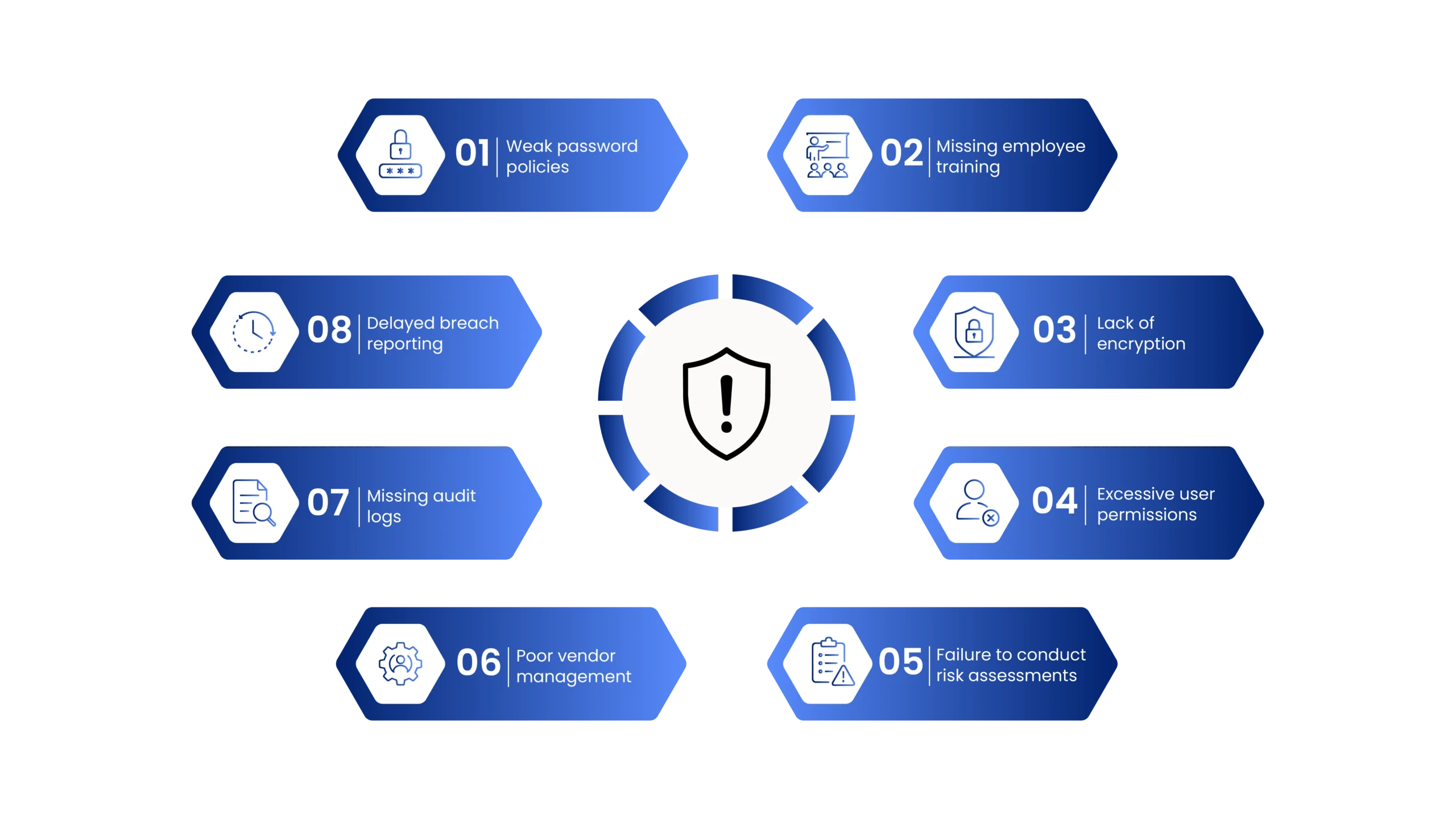
Organizations frequently encounter compliance issues due to preventable mistakes.

Common examples include:
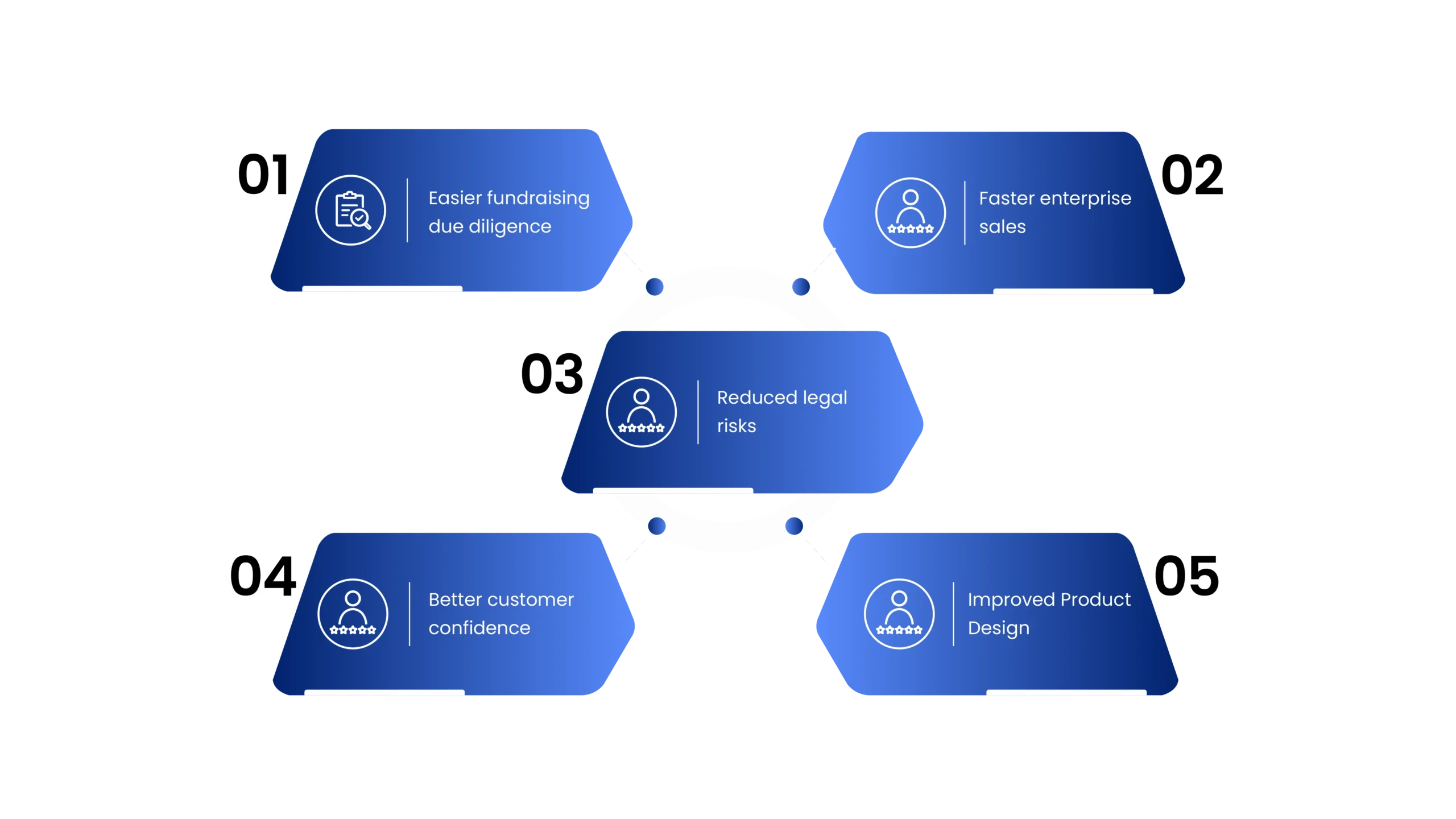
What Is HIPAA and Why Is It Essential for Healthcare Organizations

Addressing these gaps significantly improves security and compliance.

Why SOCLY.io Makes It Easier To Be HIPAA Compliant

Being HIPAA compliant can be difficult for healthcare organizations as well as SaaS providers when conducting risk assessments, implementing security controls, documenting policies, and performing ongoing compliance monitoring. SOCLY.io makes it easy to become HIPAA compliant with a platform that can help organizations in assessing their security posture, collecting centralized evidence, tracking compliance obligations, and maintaining compliance readiness at all times. For SaaS startups servicing the healthcare sector and existing healthcare organizations, SOCLY.io allows them to make their HIPAA compliance easier and more efficient.

Frequently Asked Questions (FAQs)

1. What is HIPAA and why is it important?

HIPAA is an act in the United States that ensures the safety of the health care information of the patients in terms of their privacy and the safety of data management

2. Who must comply with HIPAA?

There are a number of organizations that are known as covered entities including insurance companies, businesses associated with healthcare, clinics, and other facilities that must be HIPAA compliant.

3. What are the HIPAA requirements for healthcare providers?

HIPAA requirements for health care professionals:
Health care professionals should implement security measures including administrative, physical and technical safeguards; perform risk assessment; educate employees; protect electronic Protected Health Information and document policies and procedures.

4. How can healthcare organizations become HIPAA compliant?

The organization needs to conduct risk assessment, develop security policies, provide training for employees, encrypt confidential data, have continuous monitoring of systems, and check for compliance.

5. Is HIPAA applicable to SaaS vendors?

Yes. SaaS vendors have to be HIPAA-compliant if they use their software for storing, processing or transmitting PHI on behalf of healthcare organizations.

6. What is a part of a HIPAA Compliance Checklist?

A HIPAA Compliance Checklist usually covers risk assessment, policies and procedures, employee training, encryption, access control, audit trail, vendor management, Business Associate Agreements, and continued compliance.

Final Thoughts

As cloud computing, AI and digital healthcare experiences become ever more common, protecting health data has never been more critical. With the help of HIPAA compliance, healthcare companies and SaaS businesses get an opportunity to provide necessary protection to their patient information, lower cybersecurity risks and create sustainable trust.

Following the guidelines on HIPAA compliance for healthcare organizations, using a practical HIPAA compliance checklist and incorporating security into all aspects of operations helps organizations to be more resilient and follow the regulations.

For any healthcare provider, health-tech startup or SaaS company working with the medical industry, HIPAA compliance is a necessary step to take today in order to ensure success in the future.

Looking to Enhance Your HIPAA Compliance?

Protect your patient data and comply with the regulations by developing a HIPAA compliance strategy.

Visit Our Website to learn more about HIPAA compliance, Book a Consultation with our experts or Contact Us for assistance.

Categories
GDPR

What Is GDPR and Why Does Your Business Need GDPR Compliance?

What Is GDPR and Why Does Your Business Need GDPR Compliance?

What Is GDPR and Why Does Your Business Need GDPR Compliance?

What Is GDPR and Why Does Your Business Need GDPR Compliance?

>What Is GDPR and Why Does Your Business Need GDPR Compliance?

What Is GDPR and Why Does Your Business Need GDPR Compliance?

Learn how GDPR compliance helps businesses protect personal data, meet legal requirements, build customer trust, and strengthen their position in an increasingly privacy-focused digital world.

What Is GDPR and Why Does Your Business Need GDPR Compliance?

Why Does Your Business Need GDPR Compliance

Data is considered one of the biggest assets for your organization in the present digital world and at the same time one of its major responsibilities. No matter if you have created a SaaS startup aimed at your local audience or customers in Europe, data protection has become an obligation rather than choice for your company.

Adherence to the GDPR has turned into both legal and business necessity nowadays. Such companies, which consider data privacy as the topmost priority, have managed to create closer relationships with customers and have been more successful in security and competition. If your company operates within the personal data of people located in the EU region, you should be aware of GDPR compliance.

Here, you will find everything you need to know about GDPR  from definition to compliance process.

What Is GDPR?

The General Data Protection Regulation (GDPR) is a law of the EU which stipulates how personal data of citizens of the EU/EEA is to be handled, processed, stored and protected. The primary purpose of this legislation is to empower individuals with control over their data and at the same time give businesses the necessary safeguards on their data. 

GDPR applies to everyone in the world as of 25th May 2018, no matter where they are located geographically. If you have customers in the EU using your SaaS product then you are most likely governed by GDPR.

Why Was GDPR Developed?

Each country in Europe had different privacy laws that created a challenge for businesses to comply with the different rules and inconsistent for consumers. 

GDPR was introduced to:

  • Protect individuals’ privacy rights
  • Standardize data protection laws across Europe
  • Increase transparency in data processing
  • Hold organizations accountable for handling personal information
  • Build trust in digital services

Today, GDPR is considered one of the world’s strongest privacy regulations and has inspired similar laws globally.

What Is GDPR Compliance?

Compliance with GDPR necessitates having policies, systems, and processes in place which adhere to GDPR requirements concerning the collection, processing, retention, transmission, and disposal of personal data.

Compliance is about much more than merely having a privacy policy; it involves being accountable through the proper documentation, training, security, and risk management processes.

A compliant organization understands:

  • What personal data it collects
  • Why it collects the data
  • How long the data is retained
  • Who has access to it
  • How it is protected
  • How individuals can exercise their privacy rights
Why Does My Business Need GDPR Compliance?

Your business must adhere to the GDPR for the following reasons; to secure customer data, avoid fines, build customer confidence, increase cybersecurity and to conduct your business dealings with European customers. It is particularly crucial for software-as-a-service startups since software systems process customer data, which include names, emails, payment info, customer behavior, IP addresses and other business data.

Key Benefits of GDPR Compliance

1. Builds Customer Trust

Customers are increasingly aware of how companies use their personal information.
A transparent privacy program demonstrates that your company values customer data and handles it responsibly.

Trusted companies often enjoy:

  • Higher customer retention
  • Better product adoption
  • Increased referrals
  • Stronger brand reputation

2. Reduces Legal and Financial Risk

Non-compliance can result in significant financial penalties. More importantly, regulatory investigations can damage your reputation and slow business growth.

Compliance minimizes the likelihood of:

  • Regulatory actions
  • Customer complaints
  • Data misuse
  • Privacy lawsuits

3. Strengthens Data Security

GDPR encourages businesses to implement appropriate technical and organizational safeguards.

Examples include:

  • Encryption
  • Multi-factor authentication
  • Access controls
  • Secure backups
  • Incident response planning
  • Regular vulnerability assessments

These practices improve overall cybersecurity, not just compliance.

4. Supports International Expansion

Many SaaS startups eventually expand into European markets.
Being GDPR compliant allows businesses to:

  • Serve EU customers confidently
  • Meet enterprise procurement requirements
  • Simplify international partnerships
  • Win larger contracts

5. Creates Better Data Management

GDPR encourages organizations to collect only necessary information.

This results in:

  • Cleaner databases
  • Lower storage costs
  • Better data quality
  • Improved analytics
What Personal Data Is Protected Under GDPR?

GDPR protects any information that can identify an individual directly or indirectly.

Examples include:

Personal Identification

  • Full name
  • Home address
  • Email address
  • Phone number
  • Passport number

Online Identifiers

  • IP addresses
  • Cookie IDs
  • Device IDs
  • Login credentials
  • Location data

Financial Information

  • Bank account details
  • Credit card information
  • Payment records

Employment Information

  • Employee IDs
  • Payroll records
  • Performance reviews

Sensitive Personal Data

Special categories receive additional protection, including:

  • Health records
  • Biometric data
  • Genetic data
  • Religious beliefs
  • Political opinions
  • Sexual orientation
Who Must Comply with GDPR?

Many startups assume GDPR only applies to European companies.

That’s incorrect.

GDPR applies if your business:

  • Offers products or services to EU residents
  • Monitors user behavior within the EU
  • Collects personal information from EU individuals
  • Processes Personal Data on Behalf of Another Organization

GDPR compliance is required even for non-European startups.

GDPR Compliance for Startups

Startups usually consider compliance as something that will be done after growing. The thing is that compliance is way easier to do at the startup level.

Why GDPR Compliance for Startups Matters

Privacy-first startups benefit from:

Why Does Your Business Need GDPR Compliance

Embedding privacy during development avoids expensive redesigns later.

Core GDPR Principles Every SaaS Company Should Follow

The General Data Protection Regulation is built around several key principles.

Lawfulness, Fairness, and Transparency

Only collect data for legitimate reasons and clearly explain why.

Purpose Limitation

Use personal information only for the purpose originally communicated.

Data Minimization

Collect only the information necessary for delivering your service.

Accuracy

Keep customer records accurate and updated.

Storage Limitation

Delete information once it is no longer needed.

Integrity and Confidentiality

Protect personal data through appropriate security measures.

Accountability

Document your compliance efforts and demonstrate ongoing governance.

GDPR Compliance Checklist

The following GDPR compliance checklist provides a practical starting point.

✔ Map Your Data

Identify:

  • What personal data you collect
  • Where it is stored
  • Who can access it
  • Why it is processed

✔ Update Privacy Policies

Ensure your privacy notice explains:

  • Data collection
  • Processing purposes
  • User rights
  • Contact details
  • Retention periods

✔ Obtain Valid Consent

Consent should be:

  • Freely given
  • Specific
  • Informed
  • Easy to withdraw

✔ Strengthen Security Controls

Implement:

  • Encryption
  • MFA
  • Access restrictions
  • Endpoint protection
  • Secure cloud environments

✔ Create Data Subject Request Procedures

Customers should easily request:

  • Data access
  • Data correction
  • Data deletion
  • Data portability

✔ Prepare for Data Breaches

Develop an incident response plan that includes:

  • Internal reporting
  • Investigation
  • Risk assessment
  • Notification procedures
  • Recovery actions

✔ Train Employees

Human error remains a leading cause of data breaches.

Regular awareness training helps employees recognize:

  • Phishing attacks
  • Social engineering
  • Secure password practices
  • Data handling procedures

✔ Conduct Regular Compliance Reviews

Privacy compliance is continuous.

Review policies and controls regularly as your business evolves.

How to Become GDPR Compliant

If you’re wondering how to become GDPR compliant, follow these steps.

Step 1: Understand Your Data

Document all personal information your company processes.

Step 2: Identify Legal Bases

Determine whether processing relies on:

  • Consent
  • Contract
  • Legal obligation
  • Legitimate interests
  • Public interest
  • Vital interests

Step 3: Implement Technical Safeguards

Strengthen infrastructure through:

  • Encryption
  • Secure authentication
  • Network monitoring
  • Backup systems

Step 4: Review Vendors

Ensure third-party providers also follow GDPR standards.

This includes:

  • Cloud hosting
  • CRM platforms
  • Payment providers
  • Analytics tools

Step 5: Monitor and Improve

Compliance isn’t a one-time project.

Review risks continuously and update controls as regulations and business needs change.

Common GDPR Mistakes Businesses Should Avoid

Many startups unintentionally violate GDPR through avoidable mistakes.

Common examples include:

  • Collecting unnecessary customer data
  • Using pre-checked consent boxes
  • Weak password policies
  • Missing privacy notices
  • Ignoring customer deletion requests
  • Poor third-party vendor oversight
  • Lack of employee training

Avoiding these issues significantly improves your compliance posture.

Real-World Example

Imagine a SaaS CRM platform serving customers in Germany and France.

The platform collects:

  • Names
  • Email addresses
  • Company information
  • IP addresses
  • User activity logs

To align with GDPR data protection requirements, the company:

  • Provides a clear privacy notice.
  • Requests explicit consent for marketing emails.
  • Encrypts customer data.
  • Limits employee access based on roles.
  • Enables users to download or delete their information.
  • Signs data processing agreements with cloud vendors.
  • Regularly reviews security controls.

These practices reduce risk while increasing customer confidence.

How SOCLY.io Makes It Easier to Comply with GDPR

Compliance with GDPR can be quite a daunting task, particularly for SaaS start-ups that deal with customer data from several regions. There is collecting accurate information on how data is processed, implementing privacy controls, dealing with any requests from the data subjects, among other things. However, SOCLY.io makes it easier for businesses to comply with GDPR using its intelligent compliance automation platform that enables businesses to collect relevant evidence, conduct risk assessment, monitor compliance controls, and ensure constant readiness for compliance. If you are a SaaS start-up that wants to venture into Europe, or an existing company processing EU customer data, SOCLY.io will assist you.

Frequently Asked Questions (FAQs)

1. What is GDPR and why is it important?

GDPR is the General Data Protection Regulation of the European Union which ensures that the privacy of an individual’s personal information is safeguarded. The significance of this regulation lies in the fact that it lays down rules of good data management.

2. Why does my business need GDPR compliance?

When your business involves the processing of personal data of EU citizens, then you need to be compliant to GDPR. It is a way of handling privacy threats, which plays a part in creating customer confidence and growing your business.

3. How can I comply with GDPR?

Start by reviewing the personal data you collect, update your privacy policies, get proper consent, put security measures in place, train employees and regularly review your

4. What personal data is protected by the GDPR?

GDPR covers data that can identify a person, including names, email addresses, telephone numbers, IP addresses, geolocation data, financial data, health data, biometric data, and other identifiers.

5. Is GDPR applicable to startups outside Europe?

Yes. GDPR is applicable to startups in any country of the world providing that such startups offer their products/services to residents of the EU or track online behaviour of EU residents.

6. What will happen if an organisation fails to comply with GDPR?

Failure to comply with GDPR can lead to investigation by regulators, fines, bad reputation, etc. A compliance programme will help minimise these risks.

Final Thoughts

Nowadays, data privacy is one of the main distinctions between modern SaaS companies. Compliance with GDPR is not just a necessity dictated by regulations. It is also an ability to ensure the integrity, security, and resilience of your organization.

Knowing the GDPR, using the GDPR compliance checklist, enhancing GDPR data protection policies, and integrating privacy at the initial stages, all will help you to work confidently with customers and eliminate risks. It doesn’t matter whether you are a developing SaaS startup or an established tech company. The investment in GDPR compliance will be an investment in your future success.

Looking to Make GDPR Compliance Simple?

Ensure customer privacy and create a strong security posture with a custom GDPR compliance strategy.

Contact us to learn more about your compliance needs, Schedule a Consultation with our specialists, Visit Our Website to learn more about our services, or Start Now to use GDPR compliance as your competitive advantage.

Categories
ISO 27001

Top 10 ISO 27001 Audit Mistakes Startups Make

Top 10 ISO 27001 Audit Mistakes Startups Make

Top 10 ISO 27001 Audit Mistakes Startups Make

Top 10 ISO 27001 Audit Mistakes Startups Make

>Top 10 ISO 27001 Audit Mistakes Startups Make

Top 10 ISO 27001 Audit Mistakes Startups Make

Learn about the most common ISO 27001 audit mistakes SaaS startups make and discover how proper preparation can help you avoid compliance gaps and achieve a successful certification.

Top 10 ISO 27001 Audit Mistakes Startups Make

Top 10 ISO 27001 Audit Mistakes Startups Make

An ISO 27001 audit is one of the key achievements in the life of a SaaS startup. Although certification will help you earn your customers’ trust and open up new opportunities, there are several reasons why many SaaS companies fail their audit. And guess what? All of them are preventable.

This article will cover some of the main mistakes in the ISO 27001 audit and will explain how to prepare for an efficient audit.

What Is an ISO 27001 Audit?

ISO 27001 audit is to check if you have developed an Information Security Management System (ISMS) in compliance with ISO 27001 standard.

There are two crucial audit processes:

ISO 27001 internal audit – Done prior to certification audit for the identification of gaps.

ISO 27001 certification audit – Carried out by the certified certification body for compliance.

The more efficient your internal audit process is, the better chances you will have to pass the certification audit.

Top 10 ISO 27001 Audit Pitfalls for Startups
1. Thinking Compliance Is Only About Documentation 

Startups think that just creating policies is sufficient, but auditors also check whether those policies are implemented on a daily basis.

Tip: Make sure your processes are reflected in documents correctly.

2. Not Performing Risk Assessments

Risk assessment forms the backbone of ISO 27001. Instead of conducting risk assessments and using ready-made templates, you risk non-conformity.

Tip: Perform regular risk assessment of data, cloud infrastructure, staff, and third parties.

3. Not Conducting ISO 27001 Internal Audit

Not performing ISO 27001 internal audits usually leads to unnecessary findings during the certification process.

It can be seen as a trial run before the main event.

4. Poor Documentation Management

Missing or outdated documents are among the most common audit findings.

Examples include:

  • Security policies
  • Incident response plans
  • Risk registers
  • Access review records

Keep all documentation organized and regularly updated.

5. Waiting Until the Last Minute to Collect Evidence

Many organizations begin gathering audit evidence only weeks before the audit.

This often leads to:

  • Missing records
  • Incomplete documentation
  • Delayed audits

Continuous evidence collection makes audit preparation much easier.

6. Weak Access Control

Auditors closely examine who has access to systems and sensitive information.

Review user permissions regularly and remove unnecessary access immediately.

7. Neglecting Employee Security Training

Employees play a critical role in information security.

Provide regular awareness training covering:

  • Phishing attacks
  • Password security
  • Data handling
  • Incident reporting

8. Ignoring Third-Party Risk

Most SaaS startups rely on cloud providers, payment gateways, and collaboration tools.

Every third-party service introduces security risks that should be assessed and monitored.

9. Delaying Audit Preparation

Preparing only a few weeks before your ISO 27001 certification audit creates unnecessary stress.

Start early to allow time for:

  • Internal audits
  • Documentation reviews
  • Corrective actions
  • Employee training

10. Managing Compliance Manually

Manual spreadsheets and scattered documentation become difficult to maintain as your startup grows.

Automation reduces errors, saves time, and helps maintain continuous compliance.

ISO 27001 Audit Checklist for Startups

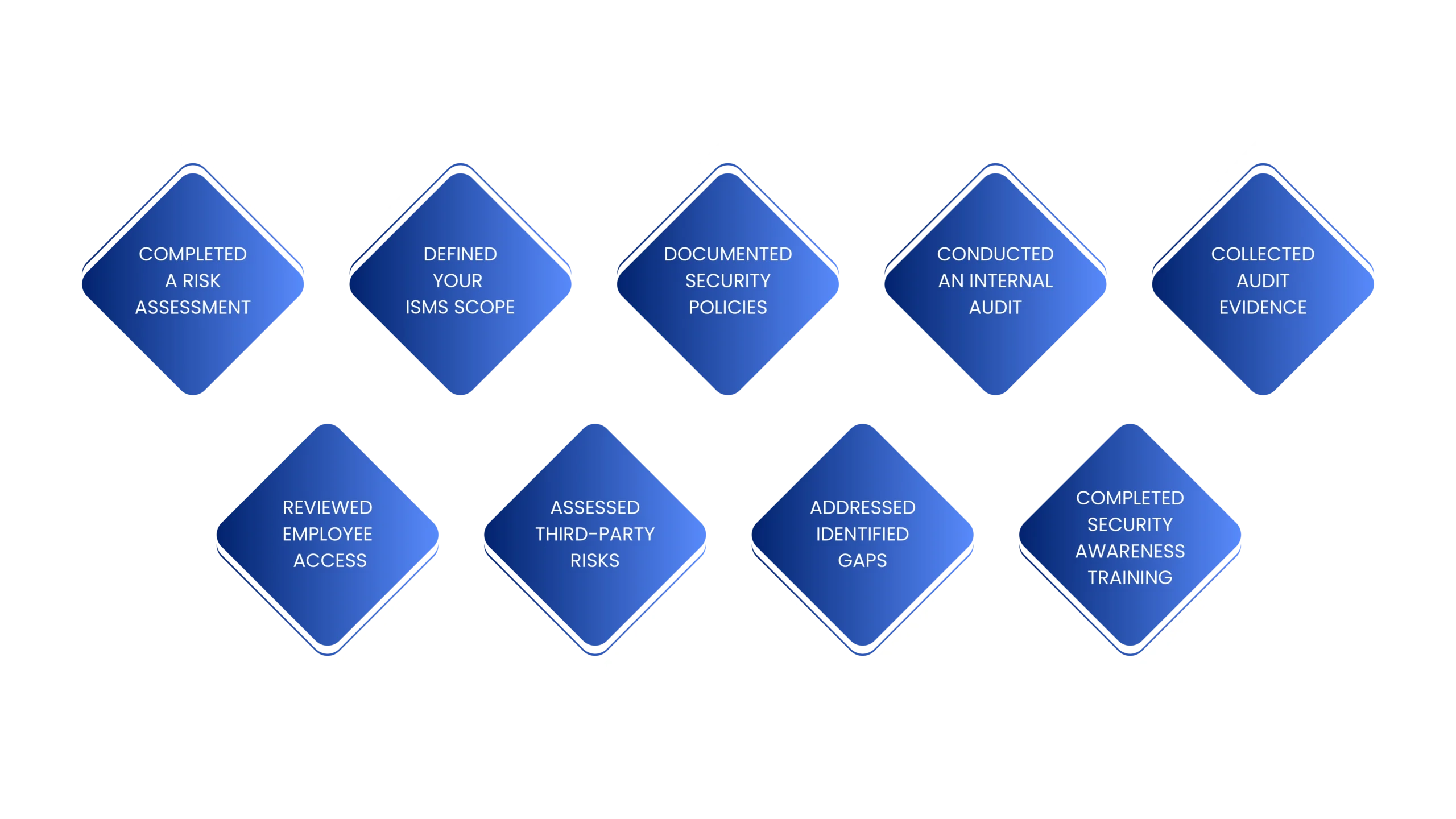
Following an ISO 27001 audit checklist for startups helps ensure you’re ready before certification.

Before the audit, make sure you have:

Top 10 ISO 27001 Audit Mistakes Startups Make
How SOCLY.io Helps

ISO 27001 certification compliance management may take up time that can be used by startups to build their products.

SOCLY.io helps to simplify this process by enabling startups to automate processes and keep themselves ready for any audits all through the year.

With SOCLY.io, you can:

  • Automate evidence collection
  • Monitor security controls continuously
  • Centralize compliance documentation
  • Track remediation tasks
  • Identify compliance gaps early
  • Prepare faster for your ISO 27001 certification audit

Instead of chasing screenshots and spreadsheets, your team can focus on innovation while SOCLY.io streamlines compliance.

ISO 27001 Audit Best Practices

To avoid ISO 27001 audit mistakes, use the following best practices:

  • It is necessary to prepare in advance.
  • Do internal ISO 27001 audits.
  • Make sure that policies and documentation are current.
  • Train employees on security awareness.
  • Conduct monitoring of security controls continuously.
  • Use automation for compliance management.

In addition to the above, they will help you not only to pass the audit but also to improve your security.

Frequently Asked Questions

Common ISO 27001 Audit Mistakes?

Common errors include poor documentation, lack of internal audits, poor risk assessment, late collection of evidence and manual compliance.

Why is an ISO 27001 internal audit so important?

This way you will get to know all non-conformances before your certification audit and can make sure that everything is in order.

ISO 27001 Certification Audit Process Explained

As part of the audit process auditors will review your ISMS , security controls , policies and evidence to see if you are compliant with the ISO 27001 standards . 

How can startups prepare for an ISO 27001 audit?

Startups need to create ISO 27001 audit checklists, conduct internal audits, keep documentation, train their employees, and constantly monitor security controls.

Can automation simplify ISO 27001 compliance?

Yes, automation decreases manual efforts, collects evidence better, centralizes documentation, and keeps companies audit-ready all year round.

Conclusion

Receiving ISO 27001 certification is not only about passing an audit, it is also about building a good foundation for information security and business development.

You can do this by avoiding ISO 27001 audit errors and using a good ISO 27001 audit checklist.

Preparing for the ISO 27001 audit will be much easier and faster with SOCLY.io.Want to make your journey to ISO 27001 easier? Book a meeting and Contact today.

Categories
SOC 2

SOC 2 Type I vs Type II: Which One Does Your Startup Really Need?

SOC 2 Type I vs Type II: Which One Does Your Startup Really Need?

SOC 2 Type I vs Type II: Which One Does Your Startup Really Need?

SOC 2 Type I vs Type II: Which One Does Your Startup Really Need?

>SOC 2 Type I vs Type II: Which One Does Your Startup Really Need?

SOC 2 Type I vs Type II: Which One Does Your Startup Really Need?

Understand the key differences between SOC 2 Type I and Type II, including their timelines, costs, benefits, and how to choose the right report for your startup's compliance journey.

SOC 2 Type I vs Type II: Which One Does Your Startup Really Need?

SOC 2 Type I vs Type II

Trust is among the major competitive advantages that SaaS startups have. Besides the impressive features offered, enterprise clients require assurance that your company will be able to handle and keep their confidential information. This is the reason many startups start their road to compliance from SOC 2.

Nevertheless, one of the common questions raised at the very beginning of the process is which SOC 2 report should your startup choose, SOC 2 Type I or SOC 2 Type II?

The choice of the report may influence your sales process, reputation, compliance process, budget and others. Despite the fact that both SOC 2 reports are based on the Trust Services Criteria, they serve different purposes and stages of development.

This article will explain the difference between SOC 2 Type I and Type II, analyze their advantages, timelines, costs and will help you make your choice.

What Is SOC 2?

SOC 2 (System and Organization Controls 2) is a security certification framework created by the American Institute of Certified Public Accountants (AICPA). This framework assesses how companies secure the data of customers through the Trust Services Criteria.

The five Trust Services Criteria include:

  • Security
  • Availability
  • Processing Integrity
  • Confidentiality
  • Privacy

Most software-as-a-service (SaaS) companies start off with security and then broaden their horizons based on customer needs and regulations.

What Is SOC 2 Type I?

The SOC 2 Type 1 Report looks at whether your company’s security controls are designed correctly at a particular point in time.

It can be seen as an image of your organization’s compliance program.

Your auditor will assess whether the correct policies, procedures, and security controls have been put in place.

Best suited for:

  • Early-stage SaaS startups
  • Companies preparing for enterprise sales
  • Organizations beginning their compliance journey
What Is SOC 2 Type II?

A SOC 2 Type II report goes a step further.

Instead of reviewing controls at one point in time, auditors evaluate how effectively those controls operate over a defined period typically between three and twelve months.

This demonstrates that your organization not only designed effective controls but consistently follows them.

Best suited for:

  • Growth-stage SaaS companies
  • Businesses selling to enterprise customers
  • Companies renewing enterprise contracts
  • Organizations with mature security processes
SOC 2 Type I vs Type II: Key Differences

Feature

SOC 2 Type I

SOC 2 Type II

Evaluation

Point-in-time assessment

Assessment over a defined period

Focus

Design of controls

Design and operating effectiveness

Audit Duration

Shorter

Longer

Customer Confidence

Good

Stronger

Enterprise Acceptance

Moderate

High

Best For

Startups beginning compliance

Growing SaaS companies

The distinction between SOC 2 Type I and SOC 2 Type II will assist startup companies in deciding which report is appropriate for their objectives at that particular stage of their business.

Which SOC 2 Report Does My Startup Need?

There are many startup founders who would like to know: Which SOC 2 report do you require

Choose SOC 2 Type I if you:

  • Are preparing for your first enterprise customers
  • Need to demonstrate security controls quickly
  • Are building your compliance program
  • Have limited resources and time

Choose SOC 2 Type II if you:

  • Already have enterprise customers
  • Receive frequent security questionnaires
  • Need stronger proof of ongoing compliance
  • Want a competitive advantage during procurement
SOC 2 Type I vs Type II Timeline

One of the biggest considerations for startups is implementation time.

SOC 2 Type I

  • Preparation: 4–8 weeks
  • Audit: 2–4 weeks

SOC 2 Type II

  • Preparation: 4–8 weeks
  • Observation period: 3–12 months
  • Audit completion after observation

The exact SOC 2 Type I vs Type II timeline depends on your organization’s readiness and the maturity of your security controls.

SOC 2 Type I vs Type II Cost

Budget is another common consideration.

The SOC 2 Type I vs Type II cost varies depending on:

  • Company size
  • Infrastructure complexity
  • Number of systems
  • Scope of audit
  • Auditor selection
  • Compliance readiness

Although Type II generally costs more because of its extended evaluation period, many organizations see greater long-term value through improved customer trust and faster enterprise sales.

SOC 2 Type I vs Type II Benefits

Benefits of SOC 2 Type I

  • Faster compliance
  • Shorter audit timeline
  • Demonstrates security commitment
  • Helps begin enterprise conversations

Benefits of SOC 2 Type II

  • Higher customer confidence
  • Stronger competitive advantage
  • Greater enterprise acceptance
  • Demonstrates continuous security practices
  • Supports larger procurement processes

Understanding the SOC 2 Type I vs Type II benefits helps organizations choose the right investment based on business objectives.

Why SOC 2 Compliance Matters for Startups

Strong SOC 2 compliance for startups provides benefits beyond passing an audit.

It helps organizations:

  • Build customer trust
  • Accelerate enterprise sales
  • Reduce lengthy security reviews
  • Improve internal security processes
  • Strengthen operational maturity

For SaaS businesses, SOC 2 often becomes a key differentiator when competing for enterprise customers.

Common Mistakes Startups Make

Many startups delay compliance until customers request it.

Common mistakes include:

SOC 2 Type I vs Type II

Planning early helps reduce stress and speeds up certification.

How SOCLY.io Helps Simplify SOC 2 Compliance

SOC 2 audit for SaaS startups is usually tedious if done manually. Gathering proof, creating documentation, checking controls, and getting ready for audits often take lots of effort.

SOCLY.io makes the process of compliance easy with the help of an automated solution.

With SOCLY.io, organizations can:

  • Automate evidence collection
  • Monitor security controls continuously
  • Centralize policies and documentation
  • Find compliance gaps early on
  • Streamline audit prep process
  • Be audit-ready all year round with continuous monitoring

Whatever your situation, be it your first SOC 2 Type I attestation report or SOC 2 Type II audit prep, SOCLY.io will help make it  easier.

Frequently Asked Questions

What is the difference between SOC 2 Type I and Type II?

SOC 2 Type I is concerned with evaluating the design of the control over a particular period of time, whereas SOC 2 Type II examines the design as well as effectiveness of the control over a period of time.

What SOC 2 report do I need for my startup?

While startups tend to begin with Type I, Type II SOC 2 is beneficial for companies dealing with enterprise customers.

How long does it take to perform a SOC 2 audit?

Type I audit can be performed quite quickly after preparation, as it usually takes no more than a few weeks. However, Type II includes an observation period of three to twelve months.

Is SOC 2 Type II better than Type I?

While Type II offers better proof of consistent compliance and is generally favored by enterprise customers, the decision should be made based on your current stage and the needs of your customers.

Can startups meet the SOC 2 standards?

Absolutely. Startups can easily get SOC 2 certification by setting up security controls and automation tools to facilitate compliance.

Conclusion

The choice between SOC 2 Type I and Type II depends on the current and future positioning of your startup. Type I will help you to prove that your security controls are properly designed, whereas Type II will be useful when you need to show that your controls function as intended.

Instead of perceiving the process of becoming compliant as a formality, successful SaaS companies leverage SOC 2 to establish trust, accelerate sales processes, and set themselves up for success.

Looking to get started with your SOC 2 certification?

Contact Us or Visit our website to see how SOCLY.io can assist your startup with becoming audit ready in less time.

Let's Talk

Tell us about your compliance needs and we’ll get back to you within 24 hours.

By submitting, you agree to our Privacy Policy and Terms of Service