DPDP Compliance

Data Protection Law Aligned with Privacy Governance

We reduce manual effort, complexity, and operational friction associated with privacy compliance by using structured workflows and automation.

Socly.io
Compliance Overview

Real-time monitoring

DPDP

● Live
COMPLIANCE SCORE
Checks
96 %
98 / 102
Policies
79%
Access Request
57%
Consent
88%
Devices
41%
Training
99%
User Onboarding
93%
AUDIT READINESS
96%
READY
Evidence 94%
Controls 96%
Integrations
100+ Happy Clients trust SOCLY.io

DPDP at a glance

The Digital Personal Data Protection Act (DPDP) is India’s data privacy law that governs how organizations collect, process, and safeguard personal data of individuals in India. DPDP compliance evaluates how organizations implement lawful data processing, data principal rights management, and data protection controls to ensure responsible handling of personal data. Implementing DPDP requirements strengthens consumer trust, improves privacy accountability, and ensures organizations manage personal data responsibly across digital platforms and business operations.

DPDP Compliance Overview

Scope
Compliance Period
Description
Applies to organizations processing personal data of individuals in India
No fixed expiry applies as long as personal data is processed
Establishes requirements for lawful processing of personal data, protection of Data Principal rights, and implementation of privacy governance and data protection safeguards under India’s data protection law.

Frameworks You Can Manage Seamlessly with SOCLY.io

Why DPDP Compliance Matters for Growth

DPDP compliance supports business growth by establishing strong personal data protection practices aligned with the Digital Personal Data Protection Act. Implementing DPDP requirements strengthens consumer trust, improves vendor approval during data privacy assessments, and demonstrates responsible handling of personal data in regulated digital markets. For SaaS and technology businesses processing personal data in India, DPDP compliance becomes a critical trust signal that enables partnerships, strengthens privacy transparency, and supports expansion across the Indian digital economy.

When & Cost of Delaying

DPDP becomes critical when business growth depends on protecting personal data and meeting India’s data protection requirements. Without proper DPDP compliance, organizations may face regulatory scrutiny, delayed partnerships, and reduced consumer trust in how personal data is processed and protected.

  • Businesses require DPDP compliance during vendor due diligence
  • Privacy assessments evaluate personal data protection practices
  • Regulated digital markets demand strong privacy governance and data protection controls

The Complete DPDP Handbook

This practical guide explains what DPDP compliance involves, how organizations manage personal data under the Digital Personal Data Protection Act, key obligations within the regulation, and factors that influence implementation effort and operational readiness. You’ll learn how to structure personal data protection practices, implement privacy governance and consent management controls, manage Data Principal rights such as access and correction, and meet regulatory expectations for responsible processing of personal data.

DPDP Act Compliance Model for India

Designed for Indian and Global Data Processing Operations

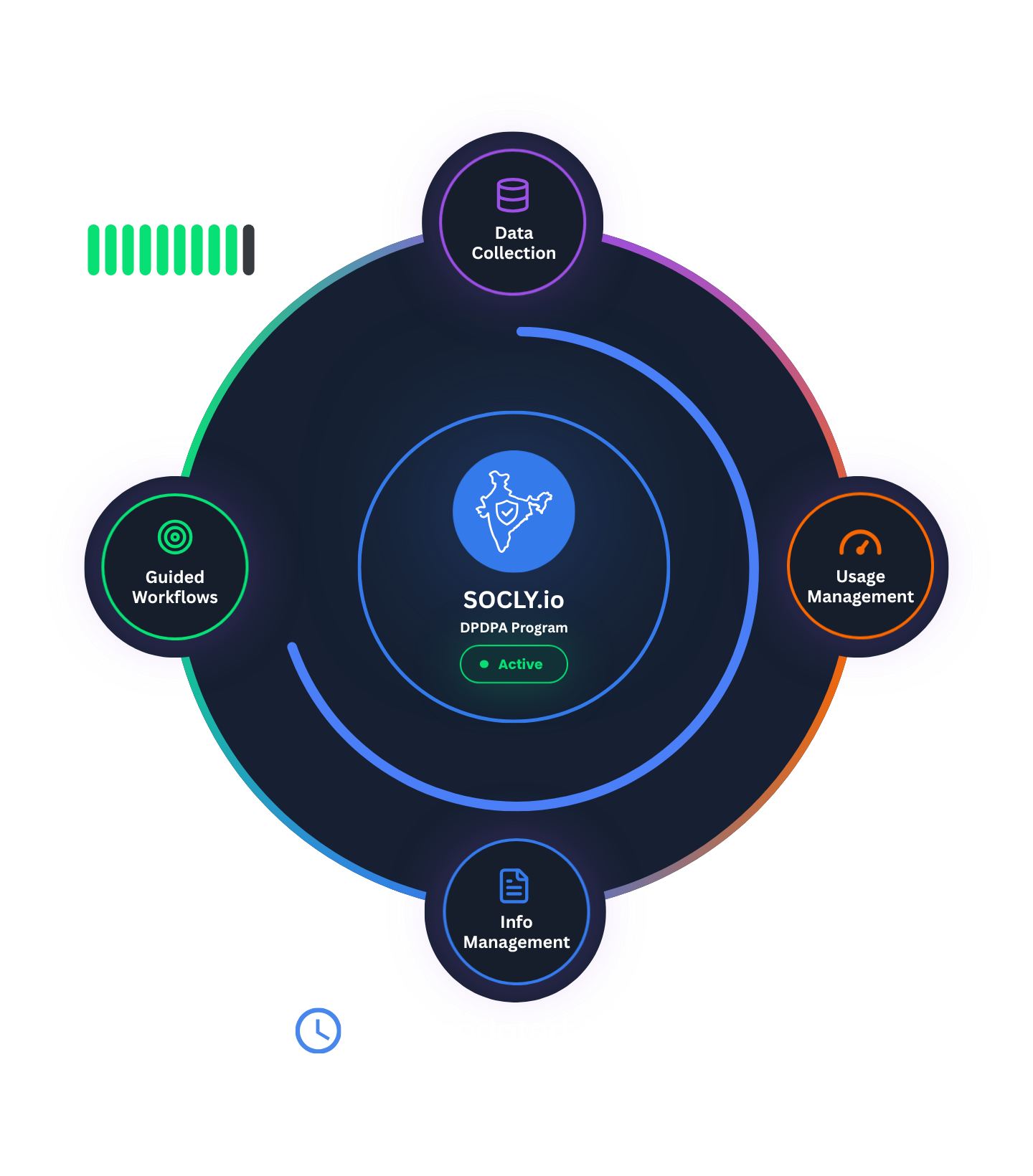
SOCLY.io turns DPDP obligations into clear, executable processes that align with modern business and technology environments, whether your organization operates primarily in India or processes Indian personal data globally.

Foundation for Privacy Programs

Structure aligned with DPDP

A DPDP aligned privacy program is tailored to your organization’s collection, use and management of personal information. This includes authorization workflows, data inventories, purpose limitation controls, and retention mechanisms.

Regulatory expectations are clarified through guided workflows for all compliance activities.

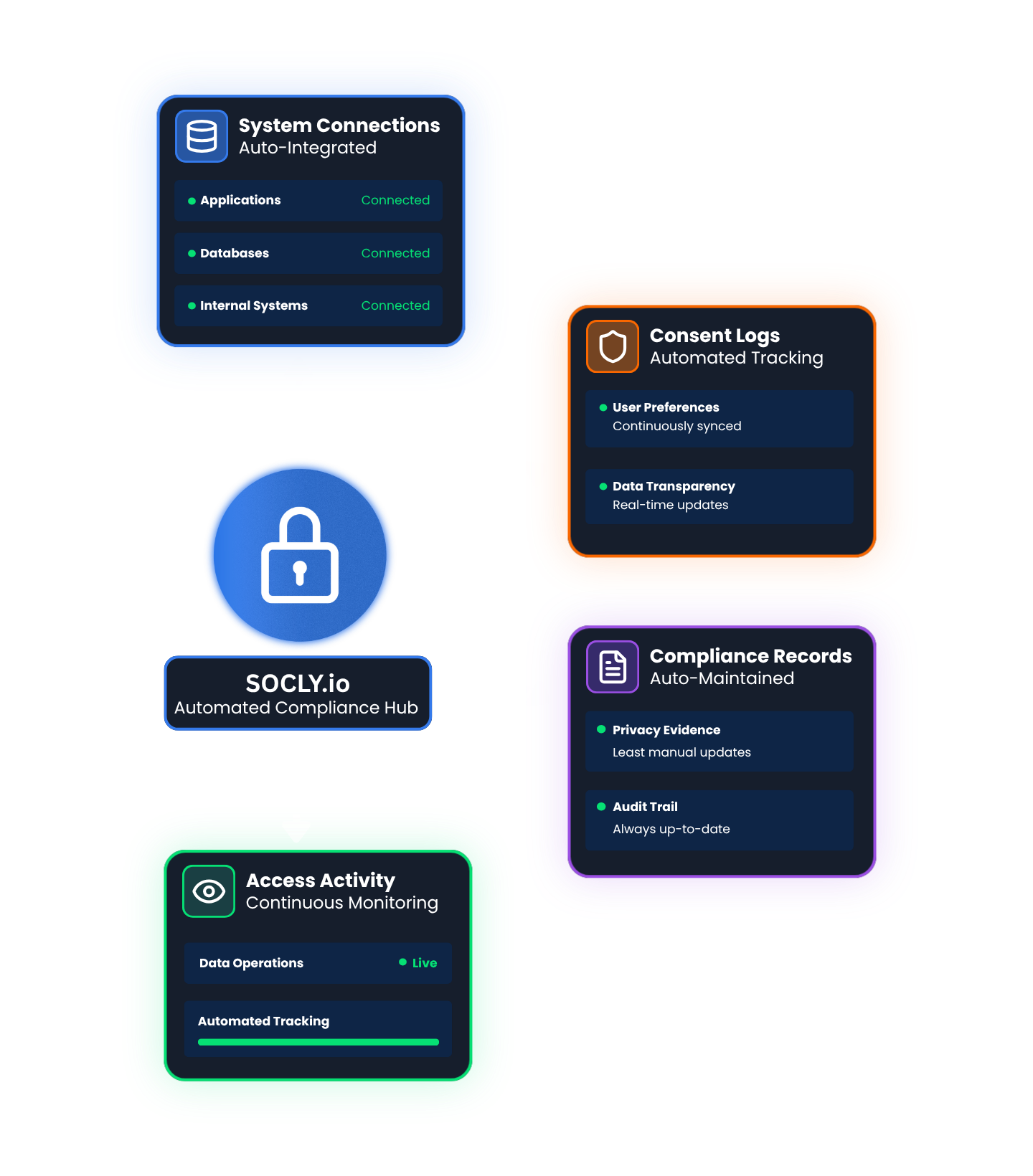
Automated Privacy Operations

Consent and transparency of data

In order to maintain compliance records, SOCLY.io connects with your applications, databases, and internal systems.

The consent logs, access activity, and compliance evidence are continuously updated without manual intervention.

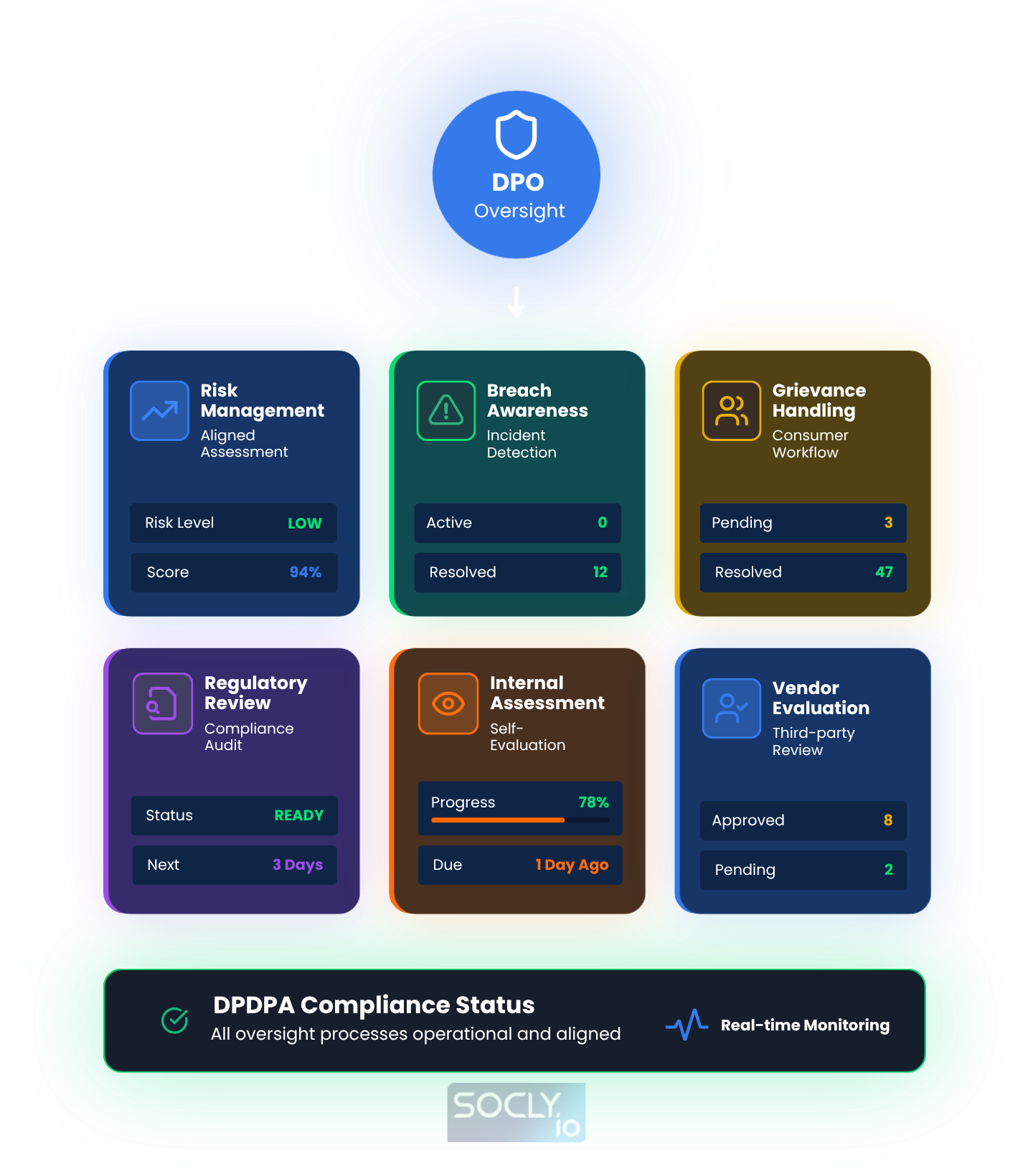
Enabling the Regulatory Process

Preparation for risk oversight and review

We support DPDP aligned risk management, breach awareness processes, grievance handling workflows, and Data Protection Officer (DPO) alignment.

Our services ensure readiness for regulatory reviews, internal assessments, and customer or vendor evaluations.
Foundation for Privacy Programs

Structure aligned with DPDP

A DPDP aligned privacy program is tailored to your organization’s collection, use and management of personal information. This includes authorization workflows, data inventories, purpose limitation controls, and retention mechanisms.

Regulatory expectations are clarified through guided workflows for all compliance activities.

Automated Privacy Operations

Consent and transparency of data

In order to maintain compliance records, SOCLY.io connects with your applications, databases, and internal systems.

The consent logs, access activity, and compliance evidence are continuously updated without manual intervention.

Enabling the regulatory process

Preparation for risk oversight and review

We support DPDP aligned risk management, breach awareness processes, grievance handling workflows, and Data Protection Officer (DPO) alignment.

Our services ensure readiness for regulatory reviews, internal assessments, and customer or vendor evaluations.

DPDP Compliance can be Managed Centrally

A single platform manages consent handling, accountability, risk controls, monitoring, and documentation, eliminating gaps, duplication, and fragmentation.

DPDP-ready policies and privacy notices

Customized privacy notices, consent formats, and internal policies tailored to your organization’s data practices and operational needs.

Governance of third-party data and the workforce

As part of ongoing privacy training, role based access controls, and third party data risk oversight, personal data is handled responsibly across teams and vendors.

Monitoring of privacy continuously

Maintaining DPDP alignment as systems and operations change requires ongoing monitoring of data access, processing changes, and potential exposure risks.

Trust Center for Privacy

Establish a transparent Trust Center that clearly communicates your DPDP controls and privacy commitments.

Privacy Program Management

Manage your entire privacy program from a centralized platform. Track activities, maintain consistency across processes, and ensure structured execution without manual coordination.

Ongoing Privacy Compliance

Maintain DPDPA alignment through continuous monitoring and regular reviews. Keep your controls up to date as your organization and data practices evolve.

Expand Beyond DPDP

DPDP should not be the end of your data protection program, it should be the foundation. Reuse your established privacy governance policies, consent management processes, and personal data protection controls to expand into additional global data protection and security frameworks without rebuilding your compliance program from scratch.

Our platform correlates and maps your DPDP privacy controls to other internationally recognized standards, helping identify overlapping requirements, close compliance gaps, and accelerate multi-framework compliance readiness.

GDPR

Extend your DPDP privacy practices to align with the General Data Protection Regulation, strengthening personal data protection and enabling compliance for organizations processing EU personal data.

CCPA

Translate your personal data protection controls into CCPA readiness by aligning consumer privacy practices with the requirements of the California Consumer Privacy Act.

ISO 27001

Strengthen your data protection program by extending privacy governance into a full Information Security Management System (ISMS), supporting internationally recognized information security certification.

DPDP Learning Hub

How SOCLY.io simplifies your compliance

How SOCLY.io simplifies your compliance

When Compliance Feels Like It’s Slowing Down Your Business

Why Do We Need SOC 2, ISO 27001, and GDPR?

Why Do We Need SOC 2, ISO 27001, and GDPR?

Every business goes through ups and downs, but if you’re seeing more than a momentary slowdown, then there could be…

Who Needs SOC 2, ISO 27001, and GDPR?

Who Needs SOC 2, ISO 27001, and GDPR?

The European Union General Data Protection Regulation (GDPR) has put some significant new responsibilities and liabilities on data controllers with…


Ready to Get DPDP Compliance?

Let us help you navigate India’s data protection requirements efficiently

FAQs

DPDP compliance generally refers to following the data processing requirements set by the Digital Personal Data Protection Act (DPDP), India, in order to safeguard personal data and individuals' rights.

Any person or organization handling the digital personal data of Indian residents is required to comply with DPDP, irrespective of their location.

Individuals have a number of rights under DPDP. Among them are the right to access their data, the right to request that inaccurate data be corrected, the right to request data be deleted, the right to have their grievances addressed, and the right to withdraw consent.

Consent is one of the bases for lawful processing of personal data under DPDP. Therefore, unless one of the exceptions listed in the Act applies, obtaining the data subject's consent is a must.

By using software and running standardized processes, most companies can achieve DPDP compliance within 4-8 weeks.

Failure to comply with a DPDP can lead to action by the regulator, penalties, and also loss of reputation.

Definitely. By being DPDP compliant, startups not only gain their customers' confidence but also lower their risk to law and get to be globally ready very quickly.

Explore Our Other Security & Compliance Solutions

ISO 42001

Establish responsible AI governance with structured AI risk management, transparency controls and global compliance readiness.

ISO 27001

Implement an Information Security Management System (ISMS) to manage information security risks and meet international enterprise expectations.

GDPR

Protect EU personal data and align with European data protection regulations, cross-border data transfer requirements, and privacy governance standards.

HIPAA

Secure Protected Health Information (PHI) and meet U.S. healthcare data security and privacy requirements.

CCPA

Comply with California Consumer Privacy Act requirements and strengthen consumer data protection transparency.

DPDP

Align with India’s Digital Personal Data Protection Act to manage personal data processing obligations and regulatory compliance.

Let's Talk

Tell us about your compliance needs and we’ll get back to you within 24 hours.

By submitting, you agree to our Privacy Policy and Terms of Service