Categories
GDPR ISO 27001 SOC 2

How to Choose the Right Compliance Framework for Your Business

How to Choose the Right Compliance Framework for Your Business

How to Choose the Right Compliance Framework for Your Business

How to Choose the Right Compliance Framework for Your Business

>How to Choose the Right Compliance Framework for Your Business

How to Choose the Right Compliance Framework for Your Business

For tech startups, healthcare entrepreneurs, and e-commerce founders, selecting the right framework is critical: the wrong choice can waste resources, while the right one builds trust and legal assurance..

How to Choose the Right Compliance Framework for Your Business

Right Compliance Framework for Your Business

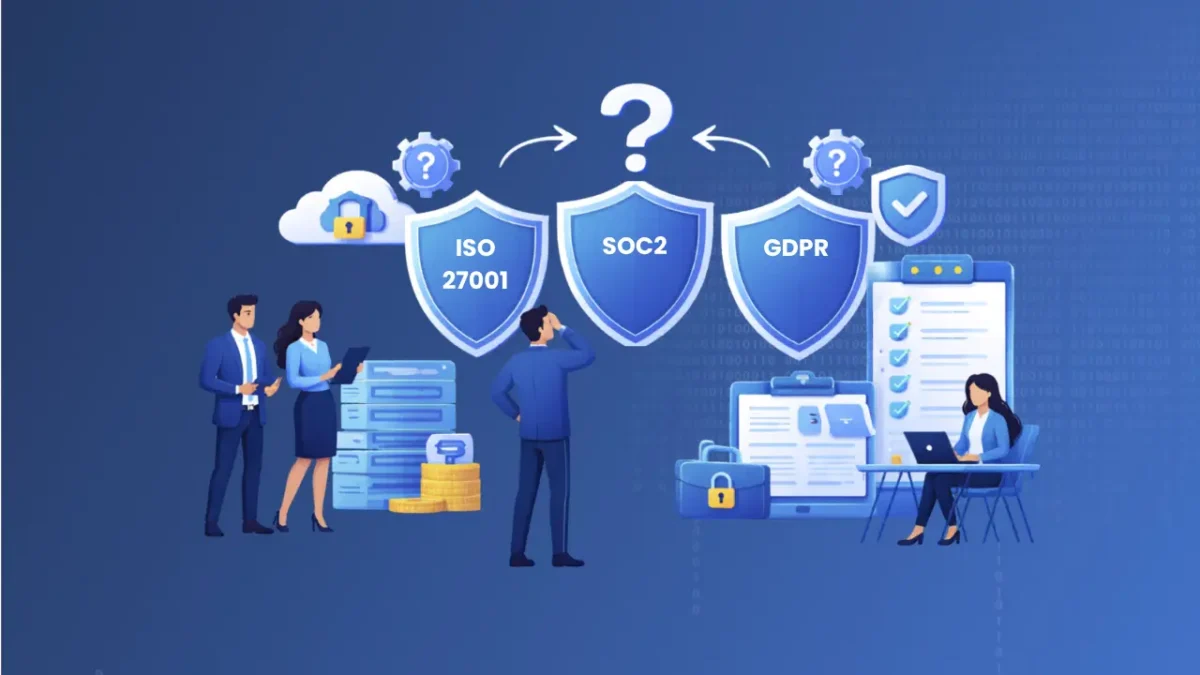
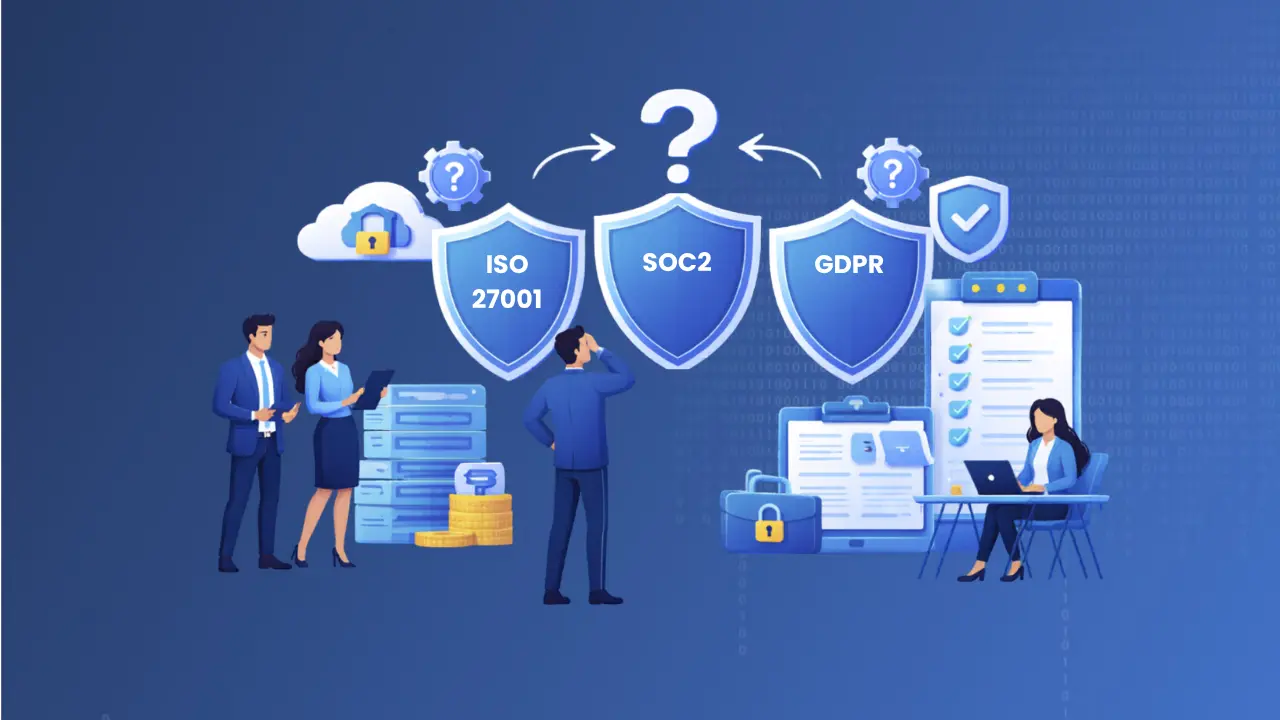
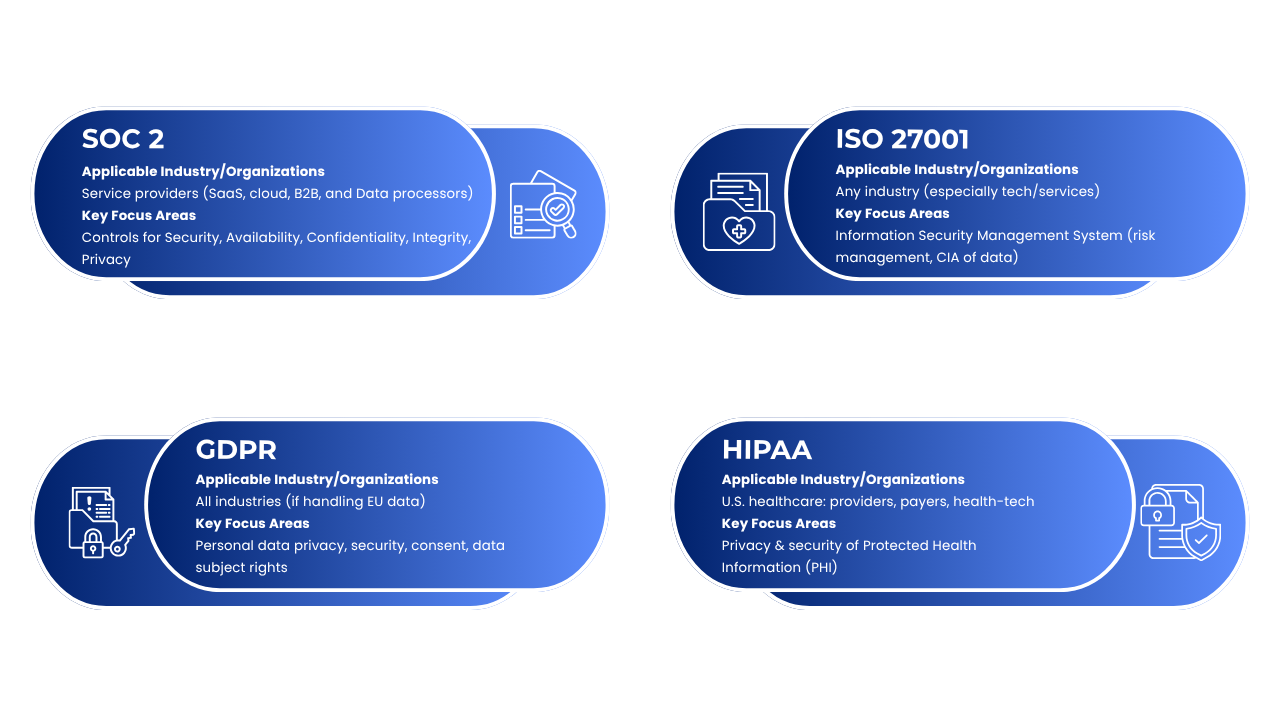
Compliance frameworks are structured guidelines and standards that help companies protect data, manage risks, and meet legal or customer requirements. For tech startups, healthcare entrepreneurs, and e-commerce founders, selecting the right framework is critical: the wrong choice can waste resources, while the right one builds trust and legal assurance. Think of ISO 27001 as one road. SOC 2 shows another way forward. Then there’s HIPAA tighter, focused. GDPR walks its own line across borders. One rule guards patient details. Another watches how info moves globally. Each sets limits based on work type. Who needs what shifts fast. A small app maker may skip some steps. Big clients demand proof sometimes. Matching needs to rule matters most here. Fit drives less stress later. Rules shape around people served usually. Business kind shapes tool choice always.

ISO 27001 Global Standard for Information Security

One way to look at ISO 27001 is as a globally recognized benchmark for handling information safely. What it does is lay out what organizations must do when setting up, running, updating, and refining their ISMS. For real world use, the standard gives companies a flexible structure built around assessing risks tied to data protection. Security here isn’t limited instead, it stretches across human behaviour, operational workflows, and digital tools, aiming always to keep information private, accurate, and accessible.

Any organization (of any size or industry) can adopt ISO 27001. Many tech startups often grab it simply because it shows others they stick to standards used worldwide.

One tool puts everything together risk checks, rules, control steps all lined up neatly inside SOCLY.io. Founders who lack full time compliance help find it easier to manage what needs doing when there is no team around. Paperwork feels lighter. Matching safeguards to requirements stops feeling like a maze.

  • Who it’s for: Perfect for businesses aiming to build strong data protection, particularly those in tech or services that work with large clients.
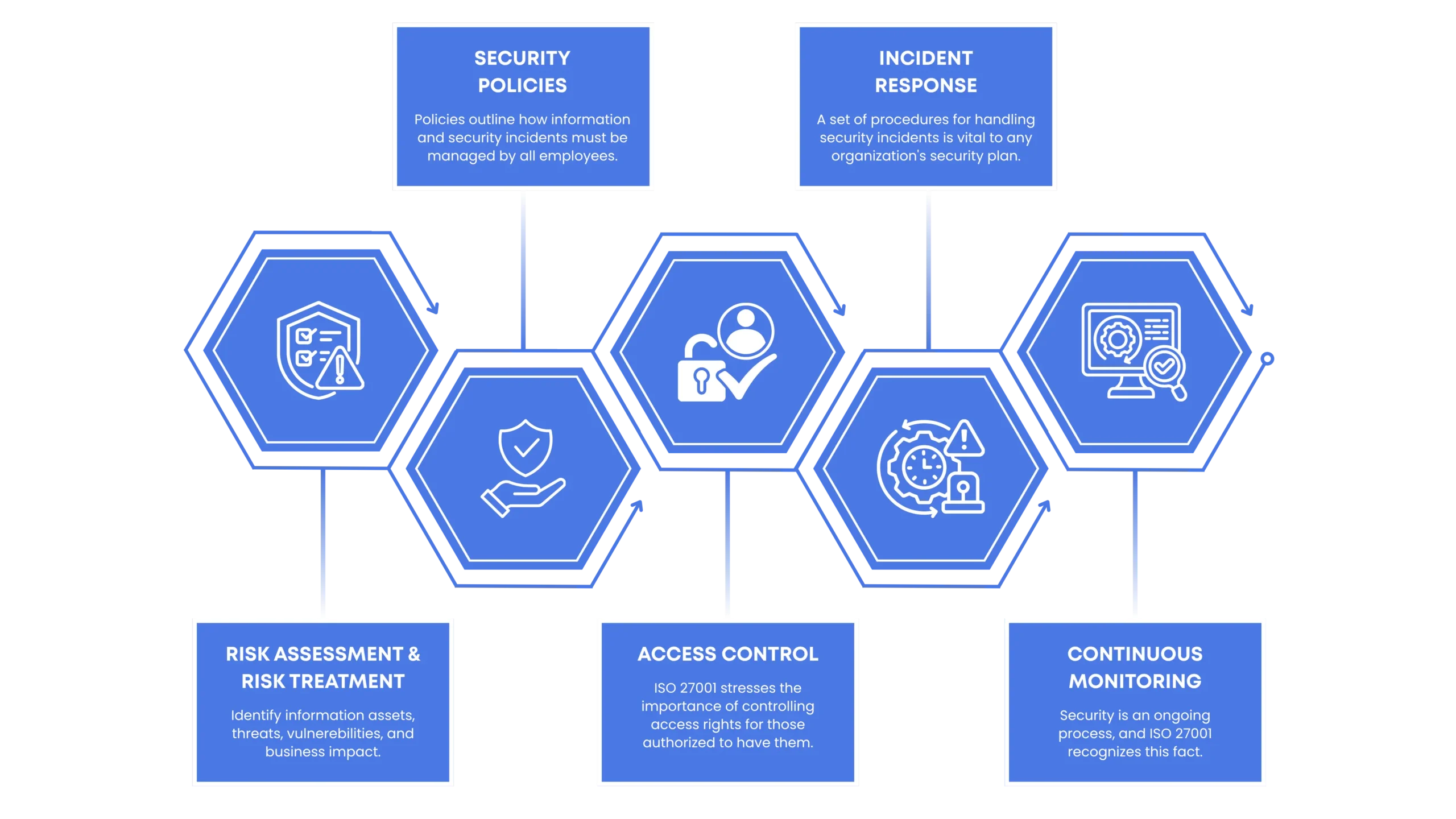
  • What it covers: Policies and procedures for risk assessment, asset management, access controls, incident response, and continuous improvement.
  • Certification: Organizations can be certified by accredited auditors, demonstrating to customers a formal security program.
SOC 2 – Service Organization Control (Trust) Report

Audit standards called SOC 2 come from the AICPA in the United States. These rules help service businesses protect client information properly. Rather than issuing certificates, auditors give reports after checking control systems against set benchmarks. Reports show if safeguards work as intended.

These criteria are called the Trust Services Criteria (TSC) and include:

  • Security (mandatory)
  • Availability
  • Processing Integrity
  • Confidentiality
  • Privacy

SOC 2 reports come in two types: Type I (controls at a point in time) and Type II (controls over a period, typically 3–12 months).

Who needs SOC 2?

Picture a startup handling user information through its online platform. That kind of company usually needs SOC 2 compliance. Think cloud based tools or software services managing sensitive data. Large businesses tend to request proof before working together. Meeting those expectations means having an audit done. It builds trust when contracts come up for discussion. So firms aiming at corporate clients prepare ahead. Evidence of security practices makes conversations smoother. Without it, deals might stall unexpectedly.

SOC 2 vs ISO 27001:

One way to look at it ISO 27001 sets clear rules worldwide for managing information risk. Meanwhile, SOC 2 checks how well certain safeguards work, especially in American companies. Where ISO demands structure, SOC 2 allows room to adapt. Think of ISO as a full blueprint; SOC 2 more like a custom review. Global reach defines one, regional habits shape the other.

  • Who it’s for: Service providers (SaaS, cloud, B2B tech) that handle customer or sensitive data.
  • What it covers: Internal controls for data security, availability, confidentiality, integrity, and or privacy.
  • Implementation: Define scope, select relevant criteria, implement policies, then hire an auditor.
HIPAA – U.S. Healthcare Data Regulation

HIPAA (Health Insurance Portability and Accountability Act) Most people think it’s optional, but HIPAA isn’t a suggestion it’s a real law made by the U.S. government. Electronic health data gets special protection under these rules, meant to keep private details secure. Doctors, hospitals, insurance companies fall under its reach, along with firms that process claims or manage records. Anyone who works with those groups and touches patient info must follow the same standards, no exceptions.

HIPAA compliance is mandatory for healthcare businesses and vendors. It covers:

  • PHI Privacy: Protects all individually identifiable health information.
  • Security Safeguards: Requires administrative, physical and technical measures.
  • Breach & Consent rules: Dictates how to handle disclosures, authorization and breach notifications.

A health tech or medical startup must follow HIPAA whenever patient information is involved. Handling such data requires checking potential risks, using strong encryption methods. Training team members regularly matters just as much as setting up legal contracts with outside partners. Skipping any part can lead to serious consequences.

GDPR – EU Personal Data Protection

The General Data Protection Regulation (GDPR) EU that guards how private details are used. Anyone, anywhere, dealing with information from people in the EU must follow it. Suppose you work with data  keeping it, using it, offering something to those living there  even from afar it pulls you into its reach. Being far from Europe does not matter when handling such personal info.

GDPR covers:

  • Lawful processing: Legal basis (consent, contract, etc.) for each use of personal data.
  • Data subject rights: Right to access, correct, delete, or port data.
  • Security and breach notification: Protect data and report breaches quickly.
  • Accountability: Document compliance (policies, DPOs, data processing records).

Fines might hit €20 million or climb to 4% of worldwide income making following rules non negotiable. Running an online store? Expect to collect permission before sending promotions, protect shopper details carefully, plus post straightforward privacy terms.

What keeps SOCLY.io useful is how it tracks who said yes to what, logs every step firms take to follow privacy rules. Steps matter when working with people in Europe, since showing proof builds confidence over time. Recording each move helps teams stay clear about their responsibilities, especially around personal information handling.

How to Choose the Right Framework?

Choosing a compliance framework depends on your industry, customers, and the data you handle. Ask:

  • Does regulation demand it? (Healthcare = HIPAA, EU customers = GDPR)
  • Do customers expect it? (Enterprise SaaS buyers often ask for SOC 2 or ISO 27001)
  • What data is at risk? (Personal data = GDPR; PHI = HIPAA; broad security = ISO/SOC 2)
  • What resources do you have? (ISO 27001 is more resource heavy, SOC 2 is more flexible)

Begin by checking what could go wrong, pay close attention to customer feedback. Some new companies gradually add structure take a health technology firm, it might start with HIPAA rules, later bring in SOC 2 or ISO 27001 to build stronger safeguards over time.

Running several compliance systems at once? SOCLY.io brings them together so new companies can keep up without extra hassle. Growing faster won’t mean more complexity here.

Implementation Readiness With Tips and Best Practices
  • Perform a gap analysis. Start by checking where things stand now. Then measure that against what the framework asks for.
  • Define scope clearly. Start by drawing clear lines. Figure out which pieces of your work fit inside. Pick where to focus without guessing.
  • Write update policies. Examples: information security, incident response, privacy notices.
  • Implement technical controls. Encryption, MFA, monitoring, access controls.
  • Train your team. Security awareness, HIPAA privacy rules, GDPR rights.
  • Document everything. Policies, training records, risk assessments, audit logs.
  • Do internal audits. Fix issues before formal assessments.
  • Plan for continuous compliance. Set up ongoing monitoring and reviews.
Compliance Framework

Compliance often seems like a tangled web to startup founders full of rules, proof demands, frequent checks. One wrong turn slows progress. SOCLY.io changes how that works. Instead of juggling separate systems, teams get everything in one place. Think ISO 27001 sitting next to SOC 2, HIPAA lined up with GDPR. Startups move faster when structure isn’t scattered. Growing businesses gain clarity without swapping tools

  • Conduct gap analyses with clarity
  • Automate evidence collection and policy management
  • Track multiple frameworks side by side
  • Ready for an audit at any time, so there is no rush when dates approach

Finding it tough to stay compliant? SOCLY.io simplifies the process for small teams, building customer confidence while supporting secure growth.

Depending on how your company operates, what field it’s in, and who your customers are, certain standards will fit better than others. New companies frequently go for SOC 2 or ISO 27001 early on  shows they take protection seriously. If health data is involved, following HIPAA rules isn’t optional. For online stores serving Europe, meeting GDPR demands comes first.

A wrong pick might cost you later. Yet going with a solid fit keeps fines away while quietly winning client confidence at the same time. Strength grows where rules are followed well.

Not sure which compliance standard is right for you? Talk to our experts today.

Categories
ISO 27001

How to Prepare for Your First ISO 27001 Audit

How to Prepare for Your First ISO 27001 Audit

How to Prepare for Your First ISO 27001 Audit

How to Prepare for Your First ISO 27001 Audit

>How to Prepare for Your First ISO 27001 Audit

How to Prepare for Your First ISO 27001 Audit

A clear path will take shape once we walk through each step. Only then the full picture comes into view.

How to Prepare for Your First ISO 27001 Audit

ISO 270001 audit

Preparing for your first ISO 27001 audit can feel overwhelming, especially if your organization has never gone through a formal compliance process before. This global benchmark for handling information safely shapes how companies manage risks around data. Passing the review shows others you treat protection of digital assets as a priority. 

Because trust matters, meeting this bar counts. Right now, people you work with want proof that data stays safe. Getting through your initial ISO 27001 check isn’t only paperwork  trust grows when risks drop. Being seen as someone others can count on often starts here.

This guide will explain:

  1. What an ISO 27001 audit is
  2. Different types of ISO 27001 audits
  3. Key requirements you must meet
  4. Wrong moves companies often take.
  5. A step-by-step plan to get ready for your first audit

A clear path will take shape once we walk through each step. Only then the full picture comes into view.

ISO 27001 Audit Explained

An ISO 27001 checks how your company manages information security. Its purpose? Making sure your system actually follows the required standards

  1. Fulfills what ISO 27001 asks for
  2. Your organization’s unique security rules fit naturally into how things are already done
  3. Is effectively implemented and maintained

Not every security framework uses several kinds of checks ISO 27001 does, mixing inside reviews with outside ones. These evaluations happen at different times, yet they work as a pair. One follows company rules, another tests against outside standards. Because of this mix, gaps show up more clearly. Each round builds on what came before it. Over time, weak spots get found earlier. Results add up without needing extra steps

  • Proof that your ISMS reduces information security risks
  • Documentation of weaknesses and corrective actions
  • Assurance for stakeholders that you are committed to continuous improvement

Successfully passing an ISO 27001 audit provides peace of mind and serves as a strong business differentiator.

Faster progress comes easier when tasks run on their own – SOCLY.io handles proof gathering without help. Controls find their place under ISO 27001 through smart matching. Year after year, the system stays prepared for review, quietly ready.

ISO 27001 audit essentials to address

Every now and then, ISO/IEC 27001 expects companies to carry out checks inside their own systems; this is laid out in Clause 9.2. These reviews happen on a set schedule. Instead of waiting for outsiders, you look closely at how things are running. The goal? To see if your information security setup follows the rules it should. Each checkpoint measures real actions against what the standard asks

  1. Fits within the rules set by ISO 27001 standards
  2. Your organization’s unique ISMS policies are reflected here
  3. Stays steady through the years

When it comes to checks inside the company, they’re something you have to do. Outside reviews come into play just when aiming for ISO 27001 status  or keeping it. Many businesses go after that badge simply because an outside body says it’s legit. A little edge over others often keeps them moving forward.

Key benefits of ISO 27001 certification audits include:

  1. Faster sales cycles with security conscious clients
  2. Increased trust with partners and regulators
  3. A framework for continuous risk management

One way to handle tasks such as managing policies, collecting proof, or watching risks is how SOCLY.io shapes them into clear steps. Small groups find this helpful because it lightens their load without extra effort.

ISO 27001 Audit Types

There are four main types of ISO 27001 audits:

1.Internal Audit

   This check, done by your own staff or someone outside the company, makes sure your information security system works as it should and follows ISO 27001 rules. Every year, without exception, one of these reviews must happen. 

2.Certification Audit

Audit happens in two steps, carried out by a recognized certifier, checking if your group meets ISO 27001 standards. Though not automatic, approval depends on how well systems align with required controls.
Stage 1: Review of ISMS documentation and design
Stage 2: Review of actual processes, controls, and implementation
Achieving it means a certificate that lasts three years lands in your hands.

3.Surveillance Audit

Every now and then, during the first couple of years post-certification, auditors come back to see how things are holding up. They peek at whether rules from Annex A still apply day to day. What happened before matters too – fixes for past issues get another look. How well changes stuck around becomes clear only through these follow ups.

4.Recertification Audit

Once every three years, companies go through another check to keep their ISO 27001 status. Not just paperwork, actual practices get reviewed too, along with how well improvements are kept up over time.

Essential ISO 27001 Documentation

Before your first ISO 27001 audit, you must prepare specific documents. The ISO27k Forum checklist identifies 14 mandatory documents, including:

  1. ISMS Scope (Clause 4.3) 
  2. Information Security Policy (Clause 5.1 & 5.2) 
  3. Information Security Risk Assessment Procedure (Clause 6.1.2) 
  4. Statement of Applicability (Clause 6.1.3d) 
  5. Information Security Risk Treatment Procedure (Clause 6.1.3) 
  6. Information Security Objectives (Clause 6.2) 
  7. Personnel Records (Clause 7.2) 
  8. ISMS Operational Information (Clause 8.1) 
  9. Risk Assessment Reports (Clause 8.2) 
  10. Risk Treatment Plan (Clause 8.3) 
  11. Security Metrics (Clause 9.1) 
  12. ISMS Internal Audit Programme and Audit Reports (Clause 9.2.2) 
  13. ISMS Management Review Reports (Clause 9.3.3) 
  14. Records of Nonconformities and Corrective Actions (Clause 10.1)

The Statement of Appraisals matters more than most realize. Inside, every one of the 114 Annex A safeguards gets a spot  marked yes, no, or maybe. Each choice ties back to how risks line up with what the group actually faces. Leftout items? They come with clear reasons rooted in real analysis.

When paperwork is missing, approval from ISO 27001 reviewers becomes impossible. Compliance stays unverified if records aren’t in place. Auditors need clear proof without it, nothing passes. Missing documents block every check. Evidence must exist, otherwise validation fails completely.

Starts messy, right. Paper trails scatter when teams dive into cold audits. That one gap – chaos in files  gets fixed a different way now. Enter SOCLY.io, slipping in ready-made checklists baked for ISO 27001 rules. Updates stick automatically, so nothing slips behind. Old drafts fade out, quietly. Fresh steps lock in place without nudging.

Common Audit Failures (and How to Avoid Them)

 Many first time ISO 27001 audits fail due to avoidable mistakes. The most frequent issues include:

Incomplete documentation- Missing paperwork shows rules that haven’t kept up with how things are really done

Weak risk assessments- Poor checks on possible dangers – often skipped entirely or done without care. What hides inside these gaps? A lack of real digging into how data could be exposed.

Insufficient training- Employees unaware of their security responsibilities

Poor management involvement- When leaders stay distant, efforts stall. Without their time or attention, projects starve. Commitment slips when priorities lie elsewhere

Neglected internal audits- Skipping or rushing through mandatory annual reviews

Steering clear of these mistakes demands thorough preparation and ongoing oversight of your ISMS

A Practical Roadmap for Audit Preparation

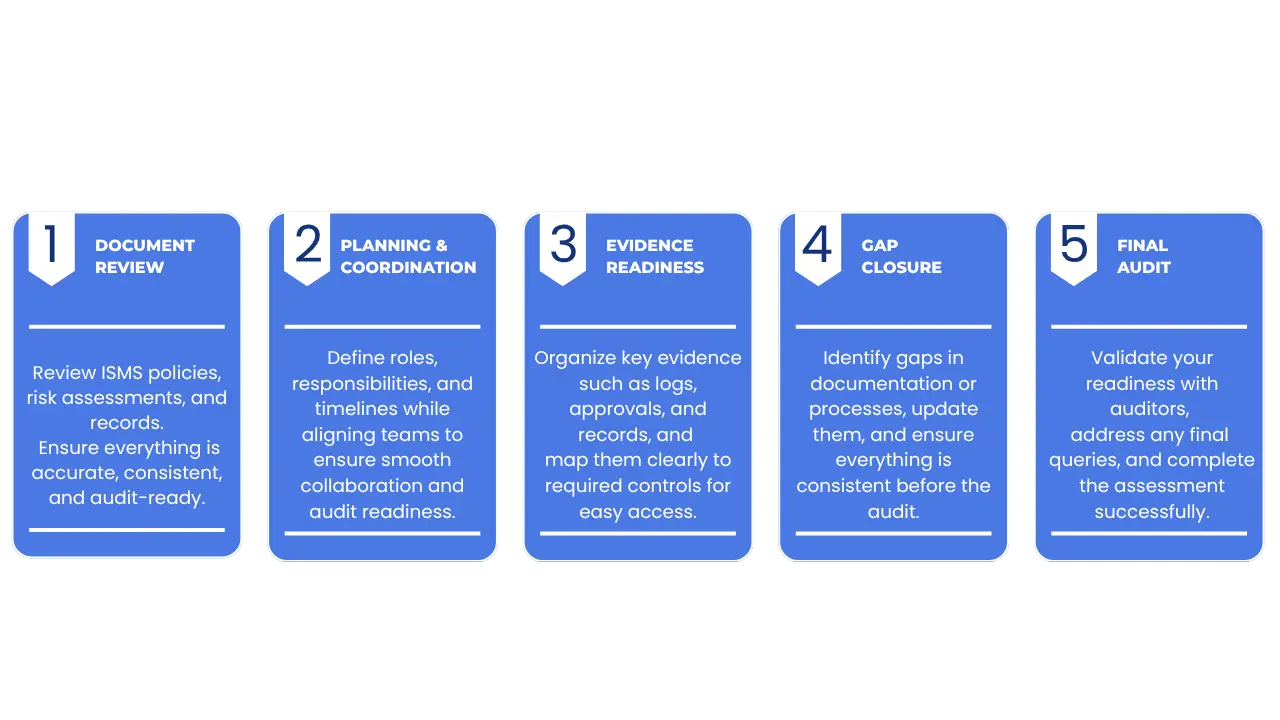
 Here’s a practical 5-step roadmap to get audit-ready:


1. Document Review

Begin by reviewing all ISMS documentation policies, risk assessments, the Statement of Applicability, and supporting records.

These should accurately reflect current practices and remain consistent across the system. Since documentation is reviewed in a shared, independent manner, it needs to be clear, self-explanatory, and easy to validate without additional guidance.

2. Planning and Coordination

Define roles, responsibilities, and timelines upfront to ensure a smooth audit flow.

Plan how information will be shared, accessed, and tracked across teams. Ensure stakeholders are available for timely responses and that documents, systems, and communication channels are structured to support distributed collaboration.

Strong coordination and leadership support help avoid delays and keep the process aligned.

3. Evidence Readiness and Organization

Prepare and organize evidence so it can be easily accessed and reviewed at any point.

This includes records such as logs, approvals, training completion, policy acknowledgements, and operational outputs. Evidence should be clearly mapped to controls and maintained in a structured repository, allowing it to be reviewed asynchronously without relying on live demonstrations.

4. Iterative Review and Gap Closure

As documentation and evidence are reviewed, feedback is shared in cycles.

Teams address gaps, update records, and refine submissions based on observations. This ongoing exchange continues until all requirements are clearly met and supported by verifiable, well-structured evidence.

The emphasis is on consistency between documentation, implementation, and what is ultimately presented for review.

5. Final Audit and Validation

Once readiness is established, auditors conduct their assessment based on the shared documentation and evidence.

Follow-ups, clarifications, or walkthroughs are handled through scheduled interactions where required. After validation, findings are documented and the audit proceeds toward final attestation.

ISO 27001 audit success with effective practices

Centralize evidence: Keep audit trails, images, rules, and learning proof – all in a single spot.

Conduct regular internal audits: Spot checks inside the company matter most when done often. When scheduled yearly, they catch weak spots before problems grow. Timing beats waiting till the official date comes around.

Involve leadership: When management steps in, funds follow  commitment and turn plans into action. Picture a team moving forward only when bosses clear the path ahead.

Train employees: People at work need to know how safety fits their daily tasks. Ongoing learning helps them stay aware. Each person plays a role, so practice matters just as much as knowledge.

Use compliance tools: Start smart. Tools that follow rules automatically gather proof, watch activity, report results cutting hours plus expense without extra effort.

ISO 27001 Audit Timeline

Picture how it unfolds:

Year 1:  Certification Audit Stages 1 and 2

Year 2&3:  Surveillance and Internal Audits

Year 4: Recertification Audit

Over time, it keeps moving forward, holding steady while getting better little by little.

Achieving  ISO 27001 certified sharpens how your group handles safety. It lowers threats while showing those who matter that you take responsibility seriously.

Key benefits include:

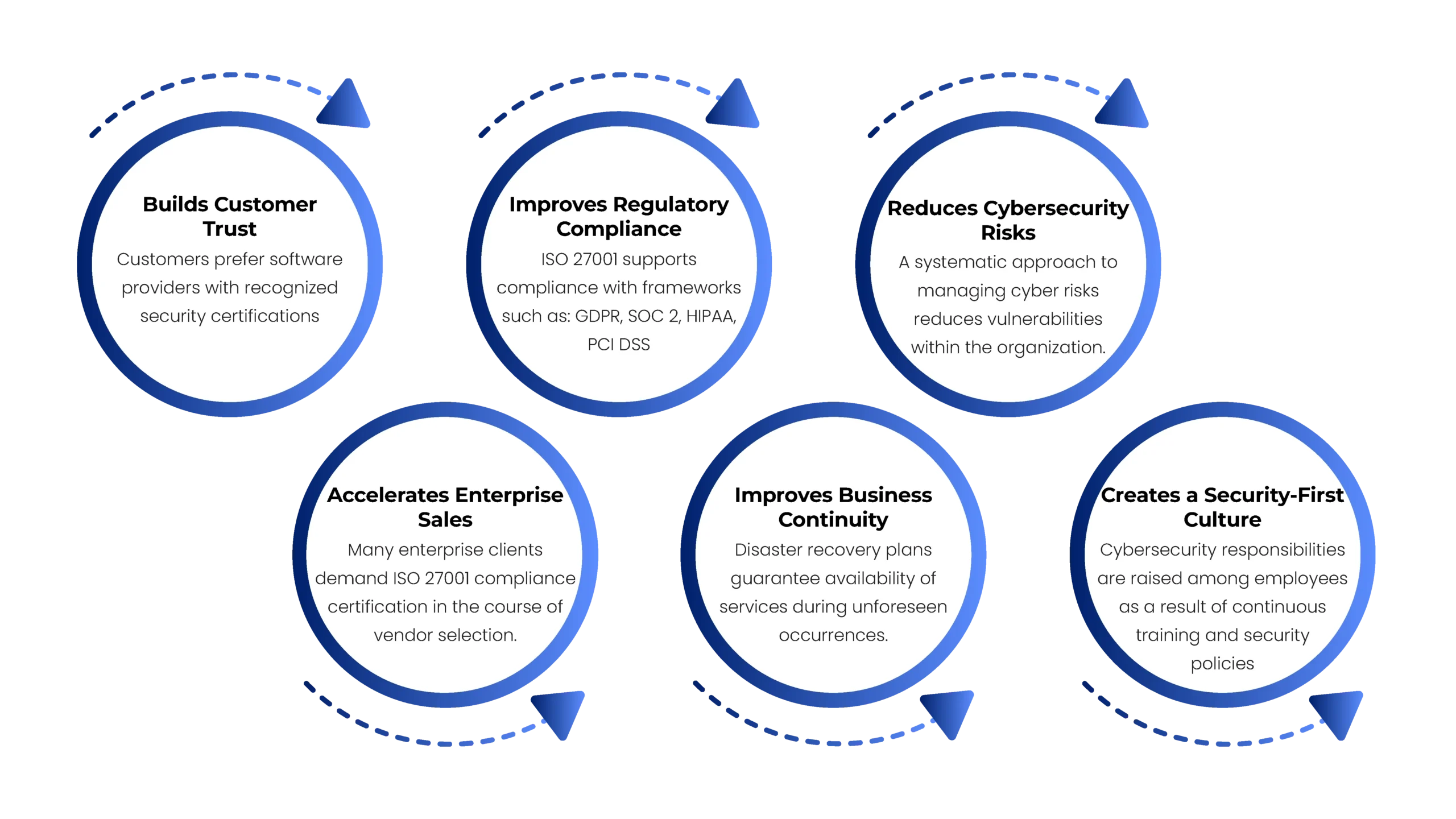
  • Increased customer trust
  • Faster enterprise deals
  • Stronger defense against cyber threats
  • A culture of continuous security improvement

A solid start on your initial ISO 27001 check builds momentum that lasts. Though details matter, clarity matters more; each step shapes what comes next.

How SOCLY.io Supports Company Readiness

Getting ready for ISO 27001 can seem like too much work especially if you are a smaller business without an army of staff to handle rules. Yet here’s where SOCLY.io steps in, quietly changing how it’s done.

One spot holds everything when SOCLY.io pulls docs together. Chasing proof by hand fades away once automation takes over. Teams move easier because tasks flow without hiccups. Risk checks live beside compliance statements, no jumping around needed. Audit trails stay put, always within reach. Nothing slips, each piece stays where it should.

Every day runs smoother when tasks follow a clear path. With automated steps built in, SOCLY.io keeps teams prepared without last-minute rushes. Proof is ready because it lives in the routine. Certification becomes part of how work already happens. Order comes from consistency, not pressure.

Starting out with ISO 27001? The initial check usually feels toughest. Getting things right means putting safeguards in place, rounding up paperwork, then making sure staff understand their roles. Still, doing it builds strength, keeps operations steady, and earns confidence over time. When done well, security becomes part of how work happens every day.

Starting with clear steps means checking documents first. Then comes the internal review, which happens before fixes are made. Where gaps exist, corrections follow right after. Leadership gets involved once things are ready. Passing the ISO 27001 check becomes likely when these pieces line up. Over time, habits form around safety because of how people engage. The way work shifts stays useful far beyond the initial goal.

Getting through compliance can feel like a maze. SOCLY.io steps in quietly, smoothing out each turn without fuss. Every step forward becomes simpler, almost natural. The path clears up, just enough to keep going.

Get a free demo and discover how SOCLY.io can save you time, reduce risk and simplify ISO 27001 certification.

Categories
GDPR ISO 27001 SOC 2

How SOCLY.io simplifies your compliance

How SOCLY.io simplifies your compliance

How SOCLY.io simplifies your compliance

How SOCLY.io simplifies your compliance

>How SOCLY.io simplifies your compliance

How SOCLY.io simplifies your compliance

When Compliance Feels Like It’s Slowing Down Your Business

How SOCLY.io simplifies your compliance

Socly.io Simplifies your compliance

For many founders, compliance isn’t just another task, it’s the task that takes over everything. One week you are preparing an investor pitch, the next you are knee deep in policy documents, chasing your team for evidence, or trying to decode the latest changes in data privacy laws.

Compliance is no longer optional. Clients, investors, and partners expect it as proof that you can be trusted with their data. Without it, deals stall, opportunities vanish and your competitors, the ones who are certified get ahead.

The problem is, traditional compliance processes are designed for large enterprises with dedicated teams. For small and medium businesses, that same workload can paralyze growth. This is exactly where SOCLY.io changes the game for your organization.

SOC 2: The Deal Maker That’s Often a Deal Breaker

If you have ever pitched to a large client, you’ve probably heard the question:

 Are you SOC 2 compliant?


It’s more than a checkbox, SOC 2 is the trust signal that shows you have your security and processes under control. Without it, many enterprise deals won’t even make it past the first meeting.

But the challenge? 

SOC 2 can take months, sometimes longer, when handled manually. Every document, every screenshot, every log has to be collected, verified and organized for auditors. Miss one piece of evidence, and the whole process slows to a crawl.

SOCLY.io removes that friction by:

  • Automated evidence collection means you’re not chasing team members for screenshots or reports.
  • Pre-built audit ready templates cut policy creation from weeks to hours.
  • Real-time progress tracking ensures you know exactly what’s done and what’s pending.

Instead of compliance blocking your sales pipeline, SOC 2 becomes a fast pass to bigger opportunities.

ISO 27001 Without the Year-Long Marathon

ISO 27001 is the gold standard for information security. It tells the world you have an Information ISMS – Security Management System that protects sensitive data. For companies eyeing global markets, it’s a credibility booster.

But ask any team that’s gone through it manually. ISO 27001 is a marathon of documentation, audits and process alignment. Many projects drag on for a year or more, draining resources and morale.

SOCLY.io changes the pace, as our platform structures your ISMS, provides industry specific policy templates, and automates the evidence process. Instead of interrupting your daily operations for months, your team works in parallel, staying productive while still moving toward certification.

And you get the credibility and trust of ISO 27001 without the burnout that usually comes with it. automation software

Privacy Laws That Change Faster Than You Can Keep Up

GDPR, HIPAA, CCPA, DPDPA, each with its own rules, deadlines and consequences.
And these aren’t static frameworks. Privacy regulations evolve constantly, adding new requirements that can be difficult for even experienced compliance teams to track.

The risk of getting it wrong isn’t just theoretical. Fines can reach millions, public trust can be lost overnight, and legal disputes can consume months of your time.

SOCLY.io can become your single source of truth.
As we bring all your compliance frameworks into one platform, monitor them continuously, and alert you when requirements change. You don’t have to scramble for updates, you’re always one step ahead, audit ready across every regulation you follow.

From Last Minute Panic to Year Round Readiness

The traditional approach to compliance is reactive, teams scramble to get audit ready a few weeks before the deadline. That’s when mistakes happen: missing evidence, outdated policies, controls that haven’t been tested.

SOCLY.io flips the model with automated monitoring, gap analysis and clear task assignments, your compliance stays in shape all year long. That means:

  • No pre-audit chaos
  • No sudden surprises
  • No pulling your team off critical projects just to chase document
Why Automation Is the Secret Weapon in Compliance

Compliance used to mean hiring consultants, building giant spreadsheets, and holding endless meetings to chase small details. That’s why so many businesses delayed it. The cost, both in money and time, was too high.

But SOCLY.io integrates with your existing tools, pulling evidence directly from your systems. Policy creation is as simple as selecting a template and customizing it to your needs. And instead of running manual checks, our platform monitors compliance continuously, notifying you if something drifts out of place.

This isn’t just faster, it’s more accurate as automation removes the risk of human error that can derail an audit.

Turning Proof of Compliance Into an Advantage

Getting compliant is one step. Showing that compliance to clients and investors is the next. That’s often where businesses lose time, buried in security questionnaires and back and forth email chains.

That’s why we built Truday, a public facing Trust Center powered by SOCLY.io. It gives you a single, professional page to showcase your security posture, policies, and certifications. Prospects can even request your reports and certificates directly from that page, eliminating endless admin work.

Your Guide Through the Compliance Maze

Even with automation, compliance can feel like a maze. 

What controls do you need? 
How do you structure policies? 

Which requirements apply to your business?

This is where the SOCLY.io Compliance Co-Pilot guides you. Think of it as your personal guide  walking you through every stage of compliance, from defining the right controls to preparing for audits. It ensures you never miss a step, even if this is your first time facing a major certification.

With Co-Pilot by your side, compliance feels less like a burden and more like a guided journey.

Turning Compliance Into a Selling Point

Here’s the truth most companies don’t realize: compliance isn’t just about avoiding fines or passing audits it’s a sales tool.
When you can show clients and investors a professional Trust Center, backed by recognized certifications, it sets you apart. It says: “We take your data seriously, and here’s the proof.”

SOCLY.io helps you get there faster. Our platform not only prepares you for audits but also gives you the assets and documentation you can present during sales conversations, turning compliance into a business advantage.

The Cost of Doing Nothing Is Higher Than You Think

Some founders postpone compliance, thinking they’ll “deal with it later.” But later often means:

  • Losing deals to competitors who are already certified
  • Spending twice as much to fix last-minute gaps
  • Facing penalties for accidental non-compliance

The smartest businesses see compliance as an investment in growth, not just a legal requirement. With SOCLY.io, that investment pays off faster.

Ready to Make Compliance Your Strength To Grow Your Business?

You can keep fighting compliance battles with spreadsheets and scattered files or you can let SOCLY.io automate, organize, and accelerate the process.

We’ve helped businesses just like yours get audit ready in weeks instead of months, without the stress or disruption of traditional methods.

Book your free 15-minute demo today and see how compliance can go from your biggest tension to your strongest selling point.

Categories
ISO 27001

ISO for Startups: Everything a Startup Needs to Know about ISO Certification.

ISO for Startups: Everything a Startup Needs to Know about ISO Certification.

ISO for Startups: Everything a Startup Needs to Know about ISO Certification.

ISO for Startups: Everything a Startup Needs to Know about ISO Certification.

>ISO for Startups: Everything a Startup Needs to Know about ISO Certification.

ISO for Startups: Everything a Startup Needs to Know about ISO Certification.

Building a startup isn’t easy; in fact, it is always a learning process for everyone, whether the startup is being built by a new entrepreneur or by a person who has already built numerous businesses in the past.

ISO for Startups: Everything a Startup Needs to Know about ISO Certification.

ISO for Startups: Everything a Startup Needs to Know about ISO Certification.

Building a startup isn’t easy; in fact, it is always a learning process for everyone, whether the startup is being built by a new entrepreneur or by a person who has already built numerous businesses in the past. However, every business has its own challenges, so any two startups can’t have the same experience with –

  • Funding,
  • Product Development,
  • Client Acquisition, or
  • Other Aspects of Launching a Company.

However, in a similar manner, startups’ compliance needs can also vary considerably. Because there are numerous regulations and standards for businesses in technology, businesses in healthcare, and so on.

In some cases, a business may need to document its compliance with several standards. But if you’re in a business that uses secure data in any way, then obtaining ISO 27001 will be among them.

The Basics of ISO 27001 

In simple words, ISO 27001 is an information security standard that was developed by the “International Organization for Standardization.” However, the key focus of this security standard is your “Information Security Management System.” Putting it in other words, this information security standard has been designed to determine whether you have security controls in place for properly securing the data you use.

For What Kinds of Businesses Is ISO 27001 Certification Needed?

ISO 27001 is not a law, which means it isn’t legally required. But it is also true that most organizations, whether they are potential customers of your business or potential business partners, won’t be interested in doing business with your organization if you do not have ISO 27001 certification.

That means businesses that meet the following criteria should work towards getting ISO 27001 compliance and certification –

  • If your business collects, stores, transmits, or processes any form of data in any way,
  • And if you want to do business outside your country.

How Can You Get ISO 27001 Certified?

The process for acquiring ISO 27001 certification is a multi-step process. However, depending on multiple factors, the process can take longer; for example, how prepared you are and how thorough your ISMS already is, etc. But in general cases, organizations are required to follow the steps below to get certified.

Assess Your ISMS

Before you hire an auditor, you’re required to be confident enough about your ISMS, i.e., whether your ISMS will pass the ISO certification assessment or if it requires some modifications. The best way to begin the assessment process is with your own assessment of your ISMS against the ISO 27001 controls so that you can see how you stack up.

You can call it a “gap analysis.” However, at Socly.io, we can automate this for you by evaluating your ISMS while giving you a clear checklist of which controls you meet as per the ISO certification and which you don’t meet.

Fix Your ISMS

Once your gap analysis is done, you will have a clear idea of what you need to do to bring your ISMS in line with ISO 27001 standards. You can then use this checklist to prioritize and update your ISMS so that you can be confident it will pass a formal ISO 27001 audit.

Choose an ISO 27001 Certification Provider

It’s important to know that ISO has developed ISO 27001, but the organization does not provide certification. This means you can only obtain ISO 27001 certification from third parties such as Socly.io.

However, the ISO organization has a list of standards that all third parties, their auditors, and certifying organizations must adhere to. Therefore, you need to ensure that you choose an ISO 27001 certification provider that complies with all ISO requirements.

Complete the Auditing Process

Your ISO 27001 certification provider then starts a two-step auditing process where –

  • The first step is an informal readiness assessment, which takes a cursory look at your ISMS to check whether it meets ISO 27001 standards. If your system passes the readiness assessment, you move on to step two, which is the formal audit.
  • A formal audit can take a few weeks because the auditor thoroughly investigates your Information Security Management System. At the end of the audit, you will either pass or fail based on the auditor’s findings.

If you fail, you will need to bear the additional expense of paying for a new audit after fixing the identified issues. If you pass, your auditor will provide your full report along with your ISO 27001 certificate. Your customers or partners may ask for both documents, so you should keep them secure.

Maintain Future Compliance

ISO 27001 compliance is not a “do and forget” thing; it isn’t something you complete once and then forget. You are required to undergo assessments each year to keep your compliance active. For the next two years, your auditor will assess only a few aspects of your ISMS randomly to verify continued compliance.

If these assessments are passed, you can maintain your certification. If not, you may need to undergo another full audit to determine whether your certification remains valid. After three years, a full recertification audit is required regardless.

👉 Book a Free Demo Today

Categories
ISO 27001

Why is ISO 27001 Beneficial to the Health Tech Industry?

Why is ISO 27001 Beneficial to the Health Tech Industry?

Why is ISO 27001 Beneficial to the Health Tech Industry?

Why is ISO 27001 Beneficial to the Health Tech Industry?

>Why is ISO 27001 Beneficial to the Health Tech Industry?

Why is ISO 27001 Beneficial to the Health Tech Industry?

Healthcare companies handle some of the most valuable information in the world, such as pharmaceutical R&D information and the most sensitive patient data.

Why is ISO 27001 Beneficial to the Health Tech Industry?

Why is ISO 27001 Beneficial to the Health Tech Industry?

Healthcare companies handle some of the most valuable information in the world, such as pharmaceutical R&D information and the most sensitive patient data. However, this is the reason why all healthcare companies need to implement some of the strongest information security measures for protecting such important information of their patients from unauthorized access and some other cyber threats.

Well, the question here is that, being a healthcare provider, how would you ensure the security of the sensitive information of your customers? However, this is where ISO 27001 comes into play, which is an international standard for information security. Do you know complying with this information security standard will help these healthcare companies set up a robust system for managing their valuable information in such a way that will meet the industry’s best practices as well as the regulatory requirements?

What is the ISO 27001 Standard?

ISO 27001 is an “international information security standard” that will help companies manage their customers’ sensitive information. However, the ISO 27001 standard will provide a blueprint of the policies, procedures, and controls for helping you set up an effective ISMS, i.e., “information security management system.”

In ISO 27001, companies regularly identify, analyze, and evaluate the weaknesses in their systems. However, this entire process is known as a “risk assessment.” However, for the companies that want to be ISO 27001 certified, let us tell you that ISO 27001 certification is done by an independent certifying body that will approve that you’ve put together your information security management system in line with the standard.

However, getting ISO 27001 certification is beneficial because it is an internationally accepted seal of approval that will help assure your stakeholders about the security of their important data, and now they will know that you will be taking the safety of their information seriously.

Why is ISO 27001 important for healthcare companies?

As we mentioned earlier, healthcare companies handle the most sensitive patient information on a day-to-day basis, and a breach of this information could have some severe consequences for the company as well as for the individuals whose data has been leaked or compromised. That means healthcare companies have to deal with numerous cybersecurity threats, such as:

Ransomware Attacks:

Do you know today a lot of healthcare companies are dealing with ransomware attacks where some bad actors hold the most important hospital data hostage, and then they force them to pay a massive ransom to recover it? As the healthcare sector is the most likely sector to pay the ransom, it has made them highly lucrative targets for hackers.

Attacks on Medical Devices: 

In this digital era, healthcare providers are quickly adopting IoT (Internet of Things), where medical devices and software exchange important information over the internet. However, there is no doubt IoT helps hospitals streamline their operations, but at the same time, their unmanaged devices can give attackers more vulnerabilities to exploit while gaining access to sensitive data.

How can ISO 27001 protect healthcare companies?

ISO 27001 certification protects healthcare companies in numerous ways.

It Provides a Blueprint of the Policies and the Procedures:

An information security management system built according to ISO 27001 helps healthcare companies clearly state their policies and procedures, where they specify how they manage information. When healthcare companies ensure proper policies, it can help them prevent data breaches.

It Helps in Analyzing the Gaps in Your Information Security System:

When healthcare companies integrate an ISO 27001–compliant information security management system in their company, then they can easily identify any gaps that are there in their information security system, and with that, they can also test their existing security measures.

It Reduces the Supply Chain Risks:

The ISO 27001 standard doesn’t only protect your organization from external threats, but it also helps your organization reduce supply chain risks, as this information security standard helps you integrate information security elements into your supplier contracts while minimizing risks.

It Ensures that the Staff is Well Equipped to Handle Cyber Threats:

When you comply with the ISO 27001 standard, then you can ensure that your staff is well trained in identifying and dealing with hacking activities like phishing, password attacks, and social engineering.

It Helps Identify and Prepare for a Variety of Security Risks:

With the ISO 27001 information security standard, you can easily identify different types of information assets along with their unique risks. When you know what these risks are, you will be able to formulate strategies through which you can deal with them effectively.

It Helps with Legal Compliance:

As we all know, the healthcare industry is one of the most heavily regulated industries in the world, and this is because of the sensitivity of the information they are handling. Therefore, some of the most stringent laws, such as GDPR and HIPAA, have strict requirements for how companies should handle important health data. Implementing the ISO 27001 security standard will help you comply with these legal requirements.

👉 Book a Free Demo Today

Categories
ISO 27001

Why is ISO 27001 Essential for Enterprise Tech?

Why is ISO 27001 Essential for Enterprise Tech?

Why is ISO 27001 Essential for Enterprise Tech?

Why is ISO 27001 Essential for Enterprise Tech?

>Why is ISO 27001 Essential for Enterprise Tech?

Why is ISO 27001 Essential for Enterprise Tech?

Making sensitive information secure should be a matter of priority for every organization, as hackers are becoming smarter nowadays and technology is also increasing its ability to access and compromise sensitive data.

Why is ISO 27001 Essential for Enterprise Tech?

Why is ISO 27001 Essential for Enterprise Tech?

Making sensitive information secure should be a matter of priority for every organization, as hackers are becoming smarter nowadays and technology is also increasing its ability to access and compromise sensitive data. However, this increased focus on information security management has led organizations to implement controls in one form or another. However, the effectiveness of information security standards relies largely on how this implementation is monitored and how it is controlled.

Well, some organizations only introduce security controls that deal with specific IT areas, and non-IT assets remain unprotected. But this may result in a greater threat to these non-IT assets of Enterprisetech companies. However, to overcome issues like these, the ISO 27001 standard was introduced.

When your Enterprisetech company achieves and maintains ISO 27001 certification, then it gives your clients a guarantee that your organization has implemented best-practice information security methods.

There are numerous benefits of implementing ISO 27001 accreditation into your Enterprisetech organization, but we are here with our top four reasons for why your Enterprisetech company should comply with the standard.

Gain a Competitive Edge

In today’s competitive market, it has become hard to differentiate yourself, but when you become certified for the ISO 27001 security standard, it enhances your value proposition. Moreover, it can also provide a unique point of differentiation between your organization and your competitors’ organizations.

  • ISO 27001 certification tells your customers that you care about their important information, and therefore you have a proactive approach in place for addressing emerging information security threats. In fact, your organization has adopted best practices for minimizing such threats.
  • When you’re an ISO 27001–certified organization, it improves your credibility among your audience. Not just that, but sometimes winning or losing a tender submission can rely on having this specific certification.
  • In fact, access to global markets also sometimes depends on having ISO 27001 compliance. The reason is that this certification allows you to compete with your international competitors.
  • Last but not least, ISO 27001 compliance also removes the hassle of completing in-depth security questionnaires as well as responding to auditors for every new client.
Avoid Financial Loss Due to Data Breach:

If you’re thinking that gaining ISO 27001 compliance might cost you, then let us tell you the fact that not doing it might cost you more. So, we recommend that you weigh the cost of compliance against the potential costs that may occur due to a data breach and service interruptions.

When you consider these costs, you will be required to consider the following points:

  • We know implementing the information security standard may look like an expense for many people, but in reality, it’s not an expense; it can become a great investment when you reduce the expenses required to resolve data breaches.
  • Research shows that a data breach not only results in leakage of important organizational secrets, but it is also very expensive.
  • The best thing is that ISO 27001 is a globally accepted standard for the security of important information assets. Hence, it can also help organizations avoid heavy fines and penalties.
Ensure Data Privacy and Integrity:

Maintaining data privacy and integrity is a top priority for most Enterprisetech organizations, as they hold personal data of their clients. However, implementing an Information Security Management System is one of the most effective ways of ensuring effective management of information security while reducing the risk associated with data breaches. You need to consider implementing your Enterprisetech organization’s ISMS based on ISO 27001 because:

  • Do you know what the most reliable way is to store data, control its access, use it safely, and destroy it effectively? It is possible through ISO 27001.
  • ISO 27001 has a systematic approach that helps identify, manage, and reduce the severity of regular threats to your organization’s important information.
  • In fact, when you’re an ISO 27001–certified company, it ensures the protection of your information assets, which can further reduce the probability of losing your clients’ trust due to data breaches.
  • ISO 27001 procedures also enable your organization to promptly detect a security breach incident and immediately take the required action.
  • The information security standard also ensures data integrity with the help of access control, data backup, and data organization procedures. This allows separation of affected data from the rest.

👉 Book a Free Demo Today

Categories
ISO 27001

A Guide to ISO 27001 for FinTech Companies

A Guide to ISO 27001 for FinTech Companies

A Guide to ISO 27001 for FinTech Companies

A Guide to ISO 27001 for FinTech Companies

>A Guide to ISO 27001 for FinTech Companies

A Guide to ISO 27001 for FinTech Companies

The FinTech industry is growing rapidly, and not just that, but the FinTech companies have captured almost 15% of the market revenue.

A Guide to ISO 27001 for FinTech Companies

A Guide to ISO 27001 for FinTech Companies

The FinTech industry is growing rapidly, and not just that, but the FinTech companies have captured almost 15% of the market revenue. However, this staggering growth also comes with some challenges and it is especially true when it comes to information security.

With a reliance on the online platforms, the FinTech companies are now more vulnerable to data breaches.

However, the question here is that, as a FinTech company, how would you ensure that your data is safe and secure? Well, that is where the ISO 27001 certification comes into the picture, which is an international standard for information security.

In the following blog, we have put together the information that will help you understand the critical security challenges that you may face as a FinTech company. Here, you will also know how the ISO 27001 certification would help you set the processes to tackle them.

What Security Challenges the FinTech Companies Face?

Information is power for every industry, but it is especially important for the companies that manage large volumes of sensitive information. However, because of this reason, the FinTech companies must be prepared and alert for any vulnerability that may happen and be ready to defend against those malicious attacks from hackers.

Well, here are a few challenges that a FinTech company may encounter:

Data Breaches

Data breaches expose the data to unauthorized people, and it can also cause some significant financial losses. However, they usually happen due to technical issues or weaknesses in your system.

Digital Identity Fraud

Digital identity fraud can also take place in the FinTech industry. However, it happens when hackers create some strong fake identities and steal important customers’ digital identities for their benefits.

However, most of the FinTech companies use digital identities for authorization and authentication, so if digital identity fraud takes place, then it can be a severe issue because someone can use the stolen credentials to make payments.

Malware Attacks

Malware attacks are malicious software, i.e., spyware and ransomware. However, these software try to steal information or hold data for ransom, and these attacks are usually among the most common threats the FinTech companies face.

So, now you know what type of security threats you may face in the FinTech industry, but how would you use the ISO 27001 certification to avoid these circumstances and reduce the chances of such attacks?

How Can ISO 27001 Certification Help with Information Security of the FinTech Industry?

ISO 27001 is an internationally recognized information security standard that outlines the best practices for managing the most important information. However, the ISO 27001 certification includes providing the companies with a blueprint of policies, procedures, as well as controls for setting up an effective ISMS (Information Security Management System).

So, ISO 27001 certification proves that your ISMS has been approved and certified by an independent certifying body.

Now let’s check how ISO 27001 certification can help.

It helps you set up transparent processes that are aligned with the security best practices for your company to manage important information. However, on your journey of getting ISO 27001 certified, you can also be able to define:

  • What information you want to protect,
  • Set up the processes to handle all sorts of data breaches, and
  • Continuously monitor the system for knowing the emerging threats and gaps.
ISO 27001 Helps You Comply with the Laws and Regulations

Some mandatory laws, such as the UK GDPR law, are enforced for the companies that handle personal data. However, with the ISO 27001 certification, your company will be able to have an up-to-date ISMS, and also you’ll be conducting regular audits for ensuring that your company will have the best practices.

ISO 27001 Helps You Analyze Gaps in Your Current ISMS

Using the gap analysis techniques of ISO 27001, you will be able to compare how you currently protect your information against the requirements of ISO 27001. And when you do this, you’ll know if your system is still up to date and follows best practices.

ISO 27001 Helps You Track, Manage, and Protect Your Assets

In the journey of ISO 27001 certification, asset management is a process that will help you take account of all the essential tangible as well as intangible assets in your company. It will enable you to prioritize what assets need protection and how.

ISO 27001 Helps Identify Security Flaws and Set Up Processes to Prevent Them

Risk assessment in the process of ISO 27001 lays the groundwork for information security while helping you recognize, analyze, as well as decide how to respond to these information security threats. However, along with ISO 27001 certification, you are required to also ensure that your team and your company culture align with the information security goals of your organization.

How Can SOCLY.io Help FinTech Companies Securely Manage Their Important Data?

Complying with the ISO 27001 certification can initially seem challenging, and it especially looks more challenging in highly regulated industries such as financial services. However, at Socly.io, we empower the FinTech companies to implement and obtain ISO 27001 certification. However, we help the FinTech companies with services such as:

  • Asset protection
  • IT management
  • Policy on security
  • Threat reduction
  • And more.

Are You Interested in Getting ISO 27001 Certified?

If you’re a FinTech company or another organization that is looking to get ISO 27001 certification, then schedule a meeting with our experts or check out our website’s ISO 27001 Certification section to learn more about the certification.

👉 Book a Free Demo Today

Categories
GDPR ISO 27001 SOC 2

Why Do We Need SOC 2, ISO 27001, and GDPR?

Why Do We Need SOC 2, ISO 27001, and GDPR?

Why Do We Need SOC 2, ISO 27001, and GDPR?

Why Do We Need SOC 2, ISO 27001, and GDPR?

>Why Do We Need SOC 2, ISO 27001, and GDPR?

Why Do We Need SOC 2, ISO 27001, and GDPR?

Every business goes through ups and downs, but if you’re seeing more than a momentary slowdown, then there could be a critical piece that might be holding you back, and that is “Information Security.”

Why Do We Need SOC 2, ISO 27001, and GDPR?

Why Do We Need SOC 2, ISO 27001, and GDPR?

Every business goes through ups and downs, but if you’re seeing more than a momentary slowdown, then there could be a critical piece that might be holding you back, and that is “Information Security.” Because a lack of information security has a negative impact on an organization, organizations suffer when they’re struck by a cyberattack.

The financial costs due to these cyberattacks can be high, and the long-term effects of cyberattacks also result in damaged trust and reputation. However, if you have strong information security measures in place, then it doesn’t just protect you from the costs of a cyberattack but also helps you establish unbreakable trust among your audience.

In fact, abiding by GDPR, ISO 27001, and SOC 2 compliance protocols can become a powerful differentiator in a very saturated market.

How Can GDPR, ISO, and SOC 2 Help You With Higher Revenue?

GDPR, ISO 27001, and SOC 2 compliance are three different information security standards. They all have different priorities and criteria, but they have essentially been designed to safeguard customer data for organizations.

  • If you comply with these regulations and compliances, then it may open the doors to new sales opportunities, as it will allow you to do business with a wider range of organizations or business partners across different industries. 
  • However, some potential clients of your business won’t even consider working with you if you don’t have a specific information security certification in place. In many cases, these cybersecurity compliances may not be legally required, but having them will set you apart from your competitors.
  • These compliances are essential because a data breach in your organization may compromise your clients’ data and, in some cases, your clients’ users’ data as well, which can damage your clients’ reputation in the eyes of their users. Therefore, many reputable organizations only want to do business with companies that are well protected by these cybersecurity compliances.

Let’s take a closer look at each of these security standards, and we will also discuss how these standards can improve your sales.

GDPR Certification

Did you know GDPR opens access to the EU market? GDPR (General Data Protection Regulation) is an EU law that requires certain precautions from organizations that acquire personal data from EU residents. Hence, there are requirements for protecting such data from breaches, along with requirements to guarantee certain privacy rights to users.

By complying with GDPR, organizations can expand their customer base to include EU residents. With access to the European market, companies can collect, process, and capitalize on more data than before, which opens the doors to new and expanding revenue streams.

Like any other law, GDPR does not provide a compliance certificate. It is the responsibility of organizations to ensure compliance, or they may incur steep penalty fines. If you are collecting data from EU residents and do not comply with GDPR, you may be at risk of serious legal consequences.

ISO 27001 

ISO 27001 certification creates international business opportunities. By achieving ISO 27001 compliance, organizations gain the ability to win enterprise-level business worldwide. Although there are several security standards, ISO 27001 is one of the most widely requested standards outside North America.

ISO 27001 is not a law like GDPR, but it is a widely accepted and respected information security certification. Complying with ISO 27001 demonstrates that an organization maintains an extremely high benchmark for security. Many potential clients and business partners, including large organizations, will not do business with companies that are not ISO 27001 compliant.

SOC 2 Compliance 

SOC 2 is a North American information security standard, and like ISO 27001, it is not a legal requirement. SOC 2 is an attestation-based standard created by the American Institute of CPAs and is founded on five Trust Services Criteria:

  • Security
  • Availability
  • Processing Integrity
  • Confidentiality
  • Privacy

Hence, SOC 2 is widely requested throughout North America, and many organizations will not do business with companies that are not SOC 2 compliant. As a result, SOC 2 compliance opens new revenue opportunities for businesses that want to expand in North America or serve larger North American clients.

Do You Need SOC 2, ISO 27001, and GDPR Compliance at the Same Time?

SOC 2, ISO 27001, and GDPR are all designed to enhance information and economic security. However, you may ask whether you need to comply with all three or just one. To open the greatest opportunities for your business, you will need all three security standards, as each of these standards or regulations is critical for entering certain markets. If you comply with all three, it will allow you to do business throughout the entire world.

You should keep in mind that most clients who request a certain security certification will not accept another security compliance in its place. For example, if one of your clients requires SOC 2 compliance, they will not accept ISO 27001 compliance in place of SOC 2 compliance.

How to Get Compliance for SOC 2, ISO 27001, and GDPR?

If you’re ready to expand your business globally while creating larger-scale opportunities, security compliances can be your entry point. Regardless of whether you start with SOC 2, GDPR, or ISO 27001, the automated compliance system by Socly.io provides a smoother and more cost-effective compliance process.

👉 Book a Free Demo Today

Categories
GDPR ISO 27001 SOC 2

Who Needs SOC 2, ISO 27001, and GDPR?

Who Needs SOC 2, ISO 27001, and GDPR?

Who Needs SOC 2, ISO 27001, and GDPR?

Who Needs SOC 2, ISO 27001, and GDPR?

>Who Needs SOC 2, ISO 27001, and GDPR?

Who Needs SOC 2, ISO 27001, and GDPR?

The European Union General Data Protection Regulation (GDPR) has put some significant new responsibilities and liabilities on data controllers with regard to their use of third-party processors.

Who Needs SOC 2, ISO 27001, and GDPR?

Who Needs SOC 2, ISO 27001, and GDPR?

The European Union General Data Protection Regulation (GDPR) has put some significant new responsibilities and liabilities on data controllers with regard to their use of third-party processors. That means data controllers will face increased requirements for understanding and contractually stipulating the policies and procedures of their processors according to the GDPR.

Well, two of the most commonly sought-after privacy and security frameworks are ISO 27001, GDPR, and SOC 2. But do you know what these processes are? What kinds of information and practices are reviewed within these processes? How can these processes be used for procurement and vendor-management purposes? And, maybe more importantly, who needs SOC 2, ISO 27001, and GDPR?

Compliance Certifications and Regulations

SOC 2

SOC 2 is an information security compliance standard used across the United States, and it is part of a Service Organization Control reporting framework developed by the American Institute of CPAs (AICPA). However, the intent of this standard is to ensure the safety and privacy of organizations’ customer data.

SOC 2 compliance operates on five Trust Services Criteria, which are as follows:

  • Security
  • Availability
  • Processing Integrity
  • Confidentiality
  • Privacy of customer data

Hence, it is a framework for safeguarding data. Systems and Organization Controls (SOC) 2 was developed by the American Institute of CPAs (AICPA), and it is a voluntary compliance standard for service providers, which has two types:

  • Type I
  • Type II

Generally, a SOC 2 attestation report is issued by external auditors.

Type I Reports

Type I reports evaluate a service organization’s systems and examine whether the selected controls are suitably designed to support the organization’s objectives and principles.

These reports reflect system performance at a specific point in time.

Type II Reports

In addition to the information provided in a Type I report, Type II SOC 2 reports detail the operational effectiveness of these controls.

These reports reflect system performance over a 6–12 month period rather than at a single point in time.

As mentioned earlier, SOC 2 compliance hinges on five Trust Services Criteria – security, availability, processing integrity, confidentiality, and privacy. Demonstrating compliance across all five criteria can give an organization a competitive advantage, especially in industries that require higher compliance standards, such as the financial sector.

ISO 27001

This is an internationally recognized standard that calls for an ISMS (Information Security Management System) in an organization. Such a system ensures that the information processed within the organization is administered appropriately.

The ISO 27001 standard lays out the specifications for implementing and managing an ISMS (Information Security Management System). It is an international information security standard that is a more rigorous compliance process and addresses people, processes, and technology.

Hence, the ISO 27001 framework contains best practices chosen from a list of “114 Annex A Controls” that cover all areas of an organization, including organizational issues, human resources, information technology, legal issues, and physical security. These controls are identified and implemented based on a risk assessment.

Based on this, an ISMS security standard ensures the confidentiality, integrity, and availability of important information by addressing security issues across the organization. To obtain ISO 27001 certification, organizations must choose an independent accredited certification body such as SOCLY.io.

How Can SOCLY.io Help You With These Compliances?

Information security and privacy are an inherent part of our values at SOCLY.io. To optimize our information security compliance, we have automated our compliance processes, and a tried and tested framework is also in place to identify and mitigate potential slippages in real time.

These compliances fortify our commitment to “Information Security and Data Privacy” while assuring our customers, partners, and vendors that we adhere to secure information security practices across the board.


In fact, this also means that we take proactive measures to protect any data that is residing with us, and you, as our customers, can sit back and relax knowing that your data is in safe hands with SOCLY.io.

👉 Book a Free Demo Today

Let's Talk

Tell us about your compliance needs and we’ll get back to you within 24 hours.

By submitting, you agree to our Privacy Policy and Terms of Service