How SOCLY.io simplifies your compliance
When Compliance Feels Like It’s Slowing Down Your Business
CCPA and CPRA Operational Privacy Controls
Automating and structuring workflows helps companies follow the California privacy laws. This approach reduces manual work, eliminates separate tools, and ensures consistent privacy policies.
Real-time monitoring


The California Consumer Privacy Act (CCPA) is a U.S. data privacy law that regulates how businesses collect, use, and disclose personal information of California residents. CCPA compliance evaluates how organizations implement transparency, consumer data rights management, and data protection controls to safeguard personal information. Implementing CCPA requirements strengthens consumer trust, improves data privacy accountability, and ensures responsible handling of personal data across digital services and business operations.
CCPA compliance supports business growth by establishing strong consumer data protection practices aligned with the California Consumer Privacy Act. Implementing CCPA requirements strengthens customer trust, improves vendor approval during privacy and data protection assessments, and demonstrates responsible handling of personal information in regulated digital markets. For SaaS and technology businesses handling consumer data, CCPA compliance becomes a critical trust signal that supports partnerships, customer transparency, and expansion within California and U.S. markets.
CCPA becomes critical when business growth depends on protecting consumer data and meeting California privacy requirements. Without proper CCPA compliance, organizations may face regulatory scrutiny, delayed partnerships, and reduced consumer trust in how personal information is handled.
This practical guide explains what CCPA compliance involves, how organizations manage personal information under the California Consumer Privacy Act, key obligations within the regulation, and factors that influence implementation effort and operational readiness. You’ll learn how to structure consumer data protection practices, implement transparency and data governance controls, manage consumer privacy rights such as access and deletion, and meet regulatory expectations for responsible handling of personal information.
Designed for U.S. and California-based businesses
We adapt CCPA and CPRA obligations to modern business structures, whether you are just entering the California market or already operating at scale.
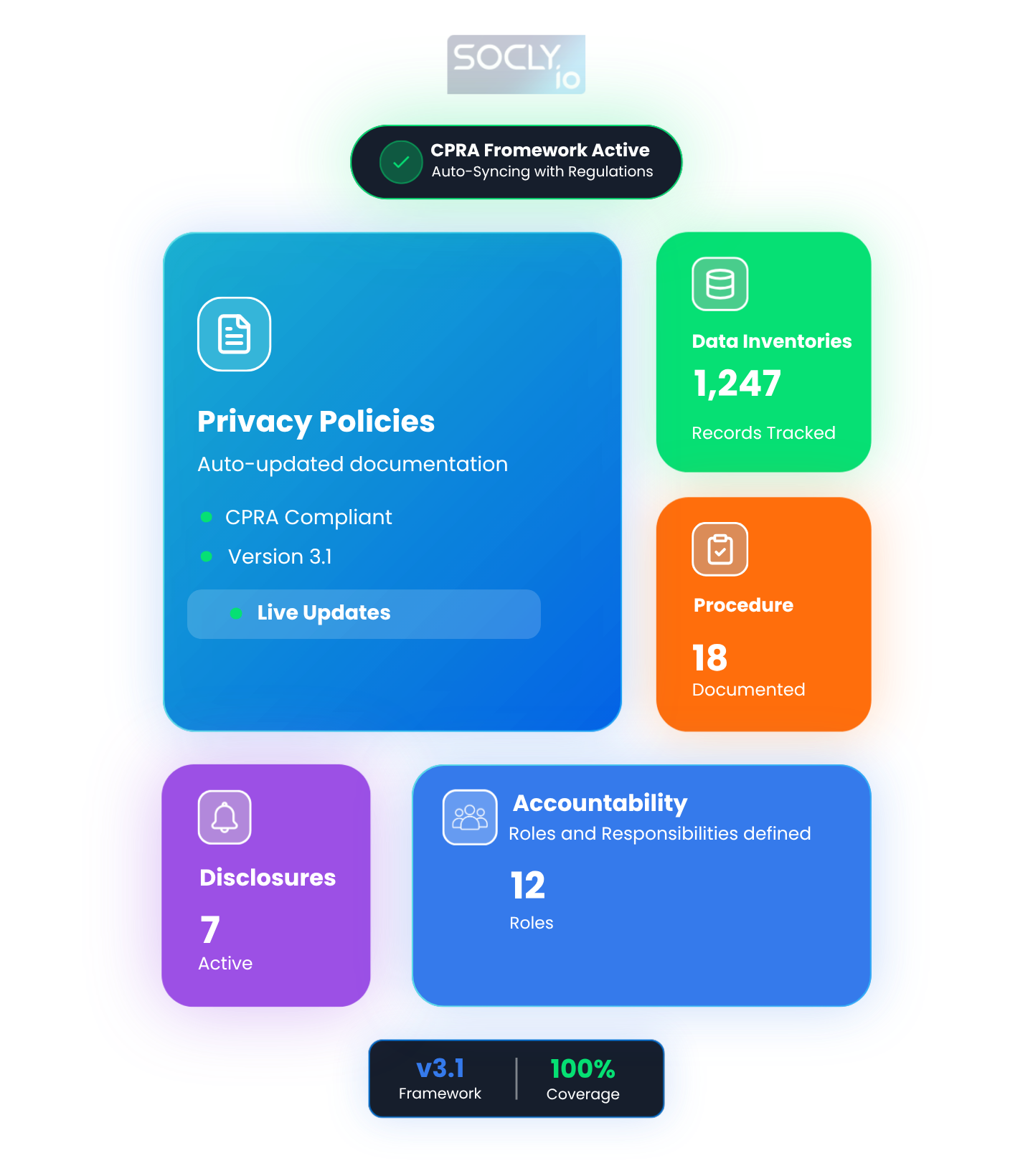
We maintain a CPRA-aligned privacy framework that evolves with regulatory changes. Privacy policies, data inventories, internal procedures, required disclosures, and accountability structures are all part of this.
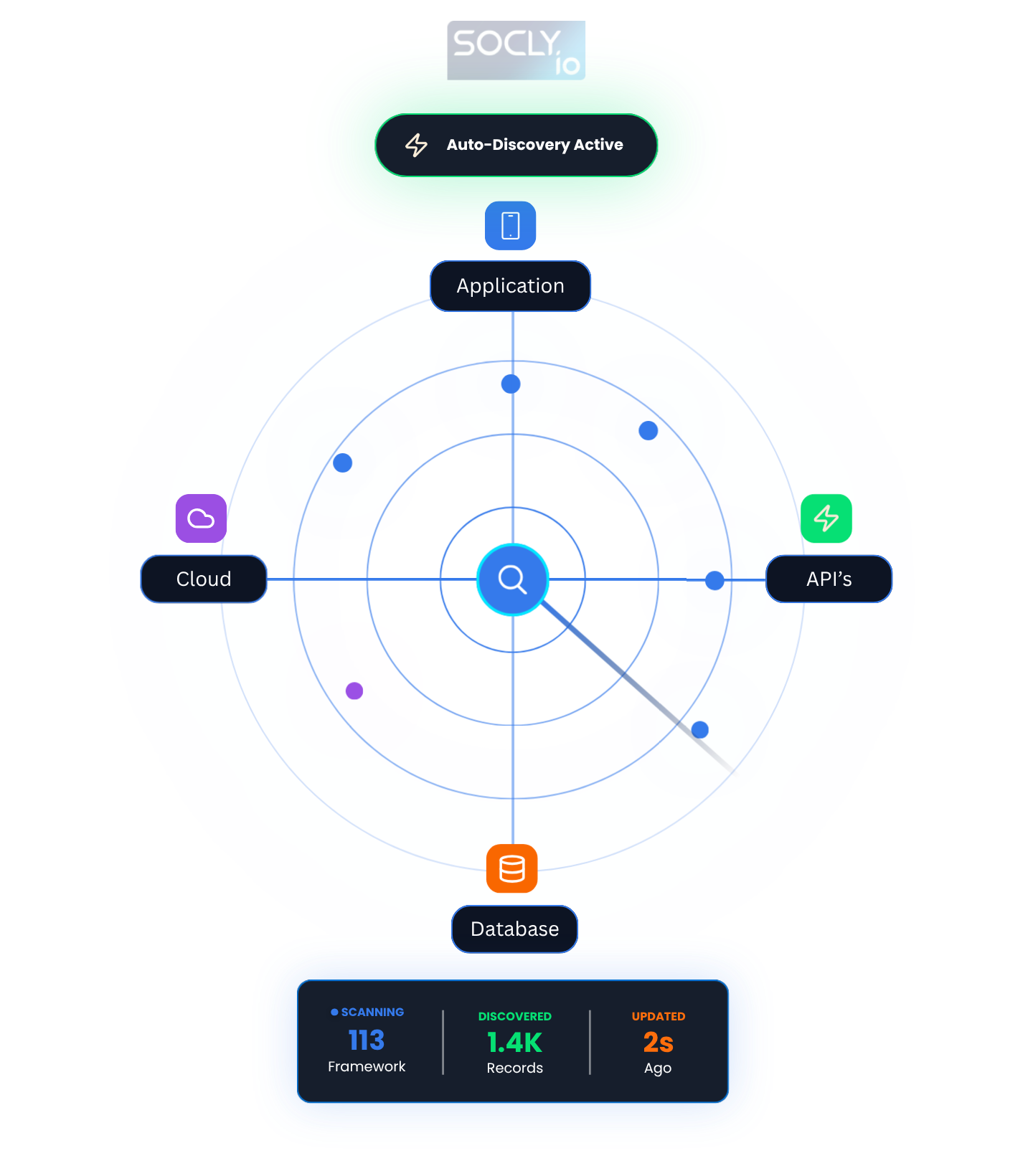
In order to identify and monitor personal data usage across your applications, databases, and cloud infrastructure, we connect with your applications, databases, and cloud infrastructure. As data flows and systems change, privacy documentation remains current.
We help you implement CCPA and CPRA requirements, such as verification workflows, response timelines, and risk evaluations.
We also assist your team in preparing for regulatory reviews, internal assessments, and external compliance inquiries.
We maintain a CPRA-aligned privacy framework that evolves with regulatory changes. Privacy policies, data inventories, internal procedures, required disclosures, and accountability structures are all part of this.
In order to identify and monitor personal data usage across your applications, databases, and cloud infrastructure, we connect with your applications, databases, and cloud infrastructure. As data flows and systems change, privacy documentation remains current.
We help you implement CCPA and CPRA requirements, such as verification workflows, response timelines, and risk evaluations.
We also assist your team in preparing for regulatory reviews, internal assessments, and external compliance inquiries.
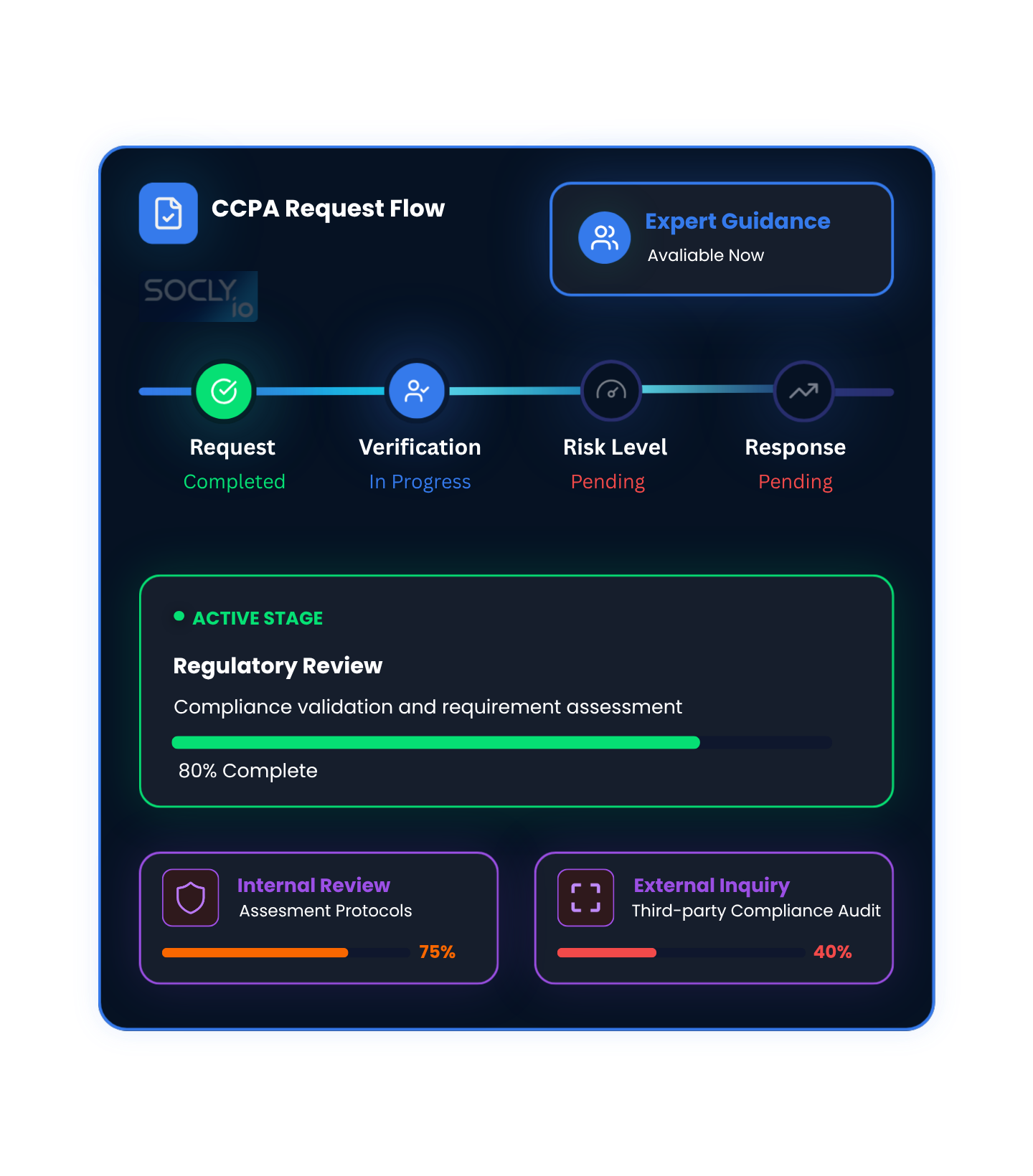
A single system manages privacy workflows, data visibility, risk assessments, monitoring, and accountability, reducing operational gaps and duplication.
Your business model, systems, and data processing activities are supported by CPRA aligned privacy notices, internal procedures, and disclosure templates
The use of automated access controls, training tracking, and third party privacy risk oversight ensure responsible handling of personal data across teams and partners.
By evaluating data processing activities and access changes, we can identify potential privacy risks early and maintain regulatory alignment.
A Trust Center on your website that provides customers and partners with information about your privacy posture, safeguards and alignment with CCPA and CPRA requirements.
Automate key privacy workflows such as tracking data usage, validating controls, and updating processes. Reduce manual effort while keeping your privacy operations consistent and reliable.
Maintain alignment with CCPA and CPRA through continuous monitoring and regular reviews. Ensure your privacy practices evolve with your data and regulatory requirements.
CCPA should not be the end of your consumer data protection program, it should be the foundation. Reuse your established consumer privacy policies, data governance processes, and personal information management controls to expand into additional data protection regulations without rebuilding your privacy program from scratch.
Our platform correlates and maps your CCPA privacy controls to other global data protection frameworks, helping identify overlapping requirements, close compliance gaps, and accelerate multi-regulation readiness.
Extend your CCPA privacy practices to meet the requirements of the General Data Protection Regulation, strengthening personal data protection and enabling compliance for organizations handling EU personal data.
Adapt your existing privacy governance framework to safeguard Protected Health Information (PHI) and meet U.S. healthcare privacy and security requirements.
Leverage your consumer data protection controls to align with India’s Digital Personal Data Protection Act and manage personal data processing obligations across Indian markets.
When Compliance Feels Like It’s Slowing Down Your Business
Every business goes through ups and downs, but if you’re seeing more than a momentary slowdown, then there could be…
The European Union General Data Protection Regulation (GDPR) has put some significant new responsibilities and liabilities on data controllers with…
Let us help you meet CCPA requirements efficiently and effectively
CCPA compliance is essentially a process through which a business demonstrates that it respects the personal data of California consumers and is compliant with their privacy rights.
CPRA is an extension of CCPA. It reframes consumer rights to a higher level of protection, makes corporate responsibilities stricter, and gives enforcement power to a separate, independent entity.
The companies that, through their activities, collect personal info of the California residents and generate revenues, process a large volume of user data and share it with third parties over certain thresholds.
Consumers rights: The consumer has the right to ask for an information copy; the right to request that their information be destroyed; the right to correct their information; the right to opt-out of the selling or sharing of their information and, in addition, the usage of sensitive personal information is limited.
The majority of enterprises can achieve CCPA compliance within 4-6 weeks provided they adopt end-to-end automation.
The non-compliant business will face CCPA penalties and eventually lawsuits. In addition, their reputation may be damaged in the eyes of customers.
Yes. Startups that handle California consumer data have to comply not only to avoid legal liabilities but also to earn trust in the market as they scale.
Establish responsible AI governance with structured AI risk management, transparency controls and global compliance readiness.
Implement an Information Security Management System (ISMS) to manage information security risks and meet international enterprise expectations.
Protect EU personal data and align with European data protection regulations, cross-border data transfer requirements, and privacy governance standards.
Secure Protected Health Information (PHI) and meet U.S. healthcare data security and privacy requirements.
Comply with California Consumer Privacy Act requirements and strengthen consumer data protection transparency.
Align with India’s Digital Personal Data Protection Act to manage personal data processing obligations and regulatory compliance.
Your trusted partner in compliance automation. Turn complex regulations into clear, automated workflows.
By submitting, you agree to our Privacy Policy and Terms of Service