
System and Organization Controls
Information Security Management System
Artificial Intelligence Management System
General Data Protection Regulation
Health Insurance Portability and Accountability Act
California Consumer Privacy Act
Digital Personal Data Protection Act
Data is one of the most valuable assets a business owns today. From personal data of customers and employees to payment information and data related to user activity, businesses process huge volumes of personal data every single day. Given the rising concerns regarding personal privacy, organizations must start managing personal data with great care and responsibility.
Here come the provisions of the DPDP Act. Digital Personal Data Protection Act is a unique Indian privacy law that addresses how organizations process, collect, store and secure personal data. For any SaaS startup or business growing rapidly, learning about the DPDP Act and its provisions becomes absolutely necessary.
This guide will help you to understand what the DPDP Act is, why you should know it, and how to proceed further.
“DPDP Act” is an abbreviation for “Digital Personal Data Protection Act, 2023.” This act represents the full name for the legislation that deals with data protection in India in relation to the processing of digital personal data.
This act contains all necessary provisions concerning the collection, use, storage, and transmission of personal data.
The primary goal of the DPDP Act is to create a balance between:
Quick Definition
Digital Personal Data Protection Act can be defined as legislation that lays down rules for businesses about how personal data should be dealt with in order to ensure transparency, accountability, and privacy.
With businesses moving into the digital space, the amount of personal data being collected is increasing day by day.
The different kinds of information include:
Without appropriate protection measures, there could be risks of exposure and misuse of the personal information gathered from customers.
Understanding what is the DPDP Act and why it is important gives an organization a clear idea of how to use the personal information of customers.
The Data Privacy and Data Protection Bill affects entities who process digital personal data in India.
These include:
Whether you are a startup catering to hundreds of users or a developing company processing thousands of records, there may be a need to comply with the DPDP law.
The Act relies on some basic principles that provide guidelines for responsible data processing.
Data Processing Based on Consent
It requires obtaining proper consent from individuals before processing their personal data.
They should know:
Purpose Limitation
Firms must have a specific purpose when processing personal data.
If the firm uses personal data for any other activity than initially planned, it requires consent from the individual.
Data Accuracy
Businesses must keep personal data updated at all times when it is necessary.
Data Protection
Businesses should use appropriate security measures to prevent unauthorized access to personal data.
Accountability
They must always make sure that the processing of personal data is done legally.
Data Privacy Compliance involves the measures put in place by organizations to comply with laws and regulations regarding personal data protection.
For businesses, compliance goes beyond just avoiding punishment and allows for the following:
Businesses that ensure personal privacy gain an edge in today’s digitally competitive market.
Personal Data Protection: An Important Element
Personal Data Protection is fast becoming an important business issue.
In today’s world, customers require that companies show how they protect their information. Personal data protection enables businesses to:
For software as a service (SaaS) startups, securing personal data could be the main consideration when attracting enterprise clients.
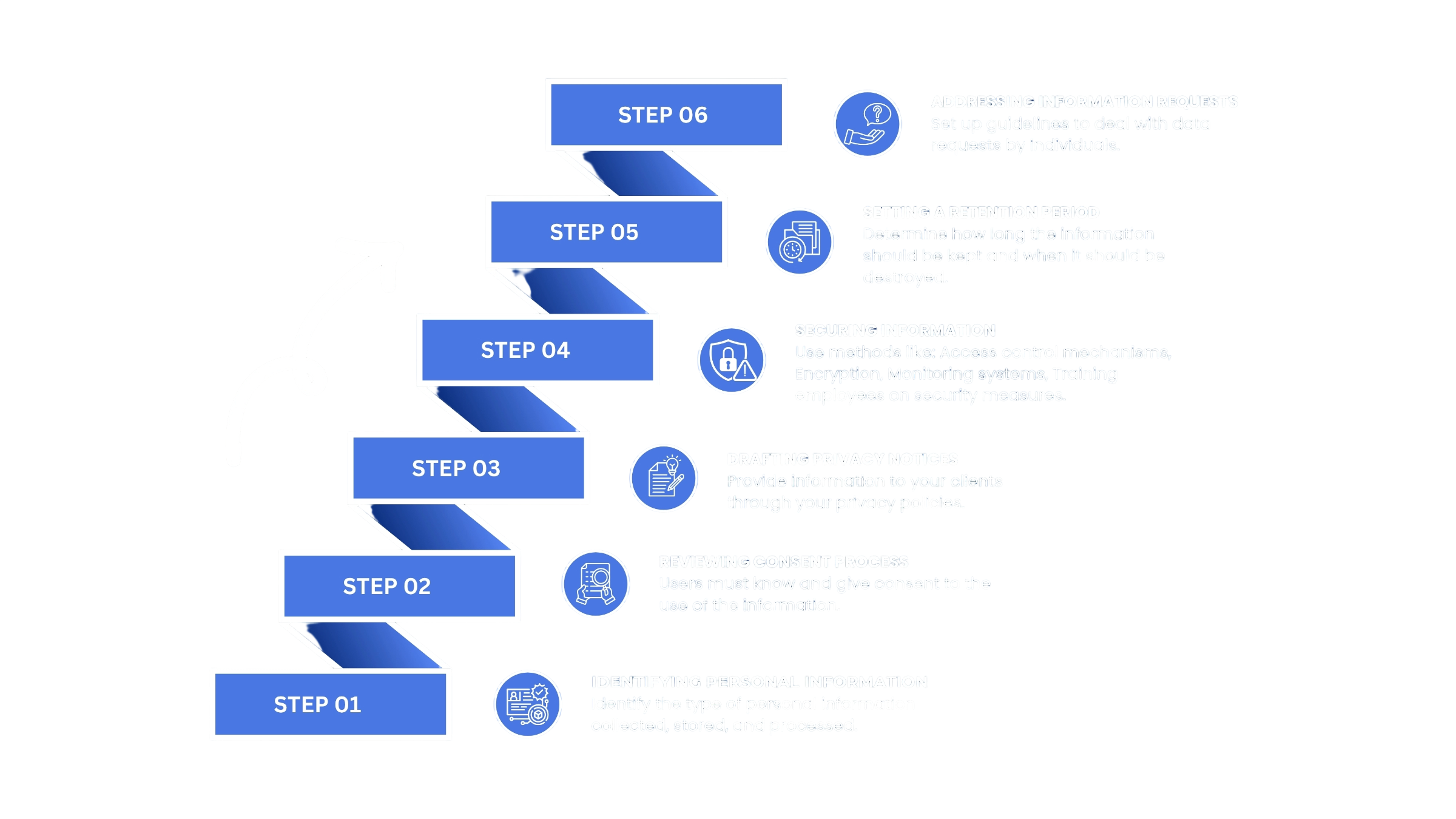
Achieving DPDP Act Compliance for Businesses
It is common for businesses to wonder about ways to meet DPDP Act compliance requirements without making their operations difficult.
The best part is that one can approach the issue in a stepwise manner.
Common Compliance Challenges Faced by Businesses
Startups may face difficulties regarding data privacy due to:
Nonetheless, proper compliance ensures future success.
Imagine a SaaS company collecting customer information through its platform.
Without proper privacy controls:
With proper DPDP compliance:
The result is a more resilient and trustworthy business.
Take an example of a SaaS firm gathering data from customers via its portal.
In case of inadequate privacy policies:
With adequate DPDP compliance:
Companies seeking guidance for complying with the DPDP Act can concentrate on developing a privacy-focused mindset.
Instead of seeing compliance as a one-off process, companies must approach compliance as a continuous effort.
Compliance with privacy policies can be difficult, particularly for startups that are expanding and have fewer resources to comply with the policies. The SOCLY.io platform assists organizations to comply easily using automation.
Through SOCLY.io, organizations will be able to:
With SOCLY.io, organizations will be able to achieve continuous compliance in a more efficient manner.
Privacy is becoming one of the key priorities for every organization irrespective of their industry sector.
Consumers, regulatory authorities, and business partners have started expecting the companies to manage personal data in a responsible manner.
Organizations that take privacy seriously today would benefit from:
The DPDP Act is indeed a great initiative towards building a secure and privacy-friendly digital environment in India.
What is the DPDP Act and why is it important?
The DPDP Act is India’s data privacy law that regulates how organizations collect, process, and protect personal data. It helps safeguard privacy rights while promoting responsible data handling.
Who does the DPDP Act target?
The act targets organizations involved in processing digital personal data and includes startups, SaaS companies, technology organizations, and other firms present in India.
What is personal data under the DPDP Act?
Personal data refers to any information that can identify an individual, either directly or indirectly.
What is data privacy compliance?
Data privacy compliance involves implementing policies, processes, and controls that ensure personal data is handled according to applicable privacy laws and regulations.
How can businesses comply with the DPDP Act?
Businesses can comply by identifying personal data, obtaining consent, implementing security controls, maintaining privacy policies, and establishing procedures for managing data requests.
Why is personal data protection important for startups?
Personal data protection helps startups build trust, improve security, meet compliance obligations, and strengthen relationships with customers and investors.
In light of the ever-growing dependency of organizations on data, privacy must no longer take a backseat. With the passing of the DPDP Act, organizations now have a legal and ethical framework under which they can process personal data while fostering trust with their consumers.
By adopting the provisions of the DPDP Act, adhering to strong Data Privacy Compliance measures, and prioritizing Personal Data Protection, startups and organizations can gain a competitive edge over other companies within the same industry.
Are you ready to take your privacy program and DPDP compliance to the next level?
Please do not hesitate to Contact Us, visit our website, or Get Started Now to see how your organization can leverage its personal data.
Your trusted partner in compliance automation. Turn complex regulations into clear, automated workflows.
By submitting, you agree to our Privacy Policy and Terms of Service

