Categories
ISO 27001

What Is ISO 27001 and Why Do You Need It?

What Is ISO 27001 and Why Do You Need It?

What Is ISO 27001 and Why Do You Need It?

What Is ISO 27001 and Why Do You Need It?

>What Is ISO 27001 and Why Do You Need It?

What Is ISO 27001 and Why Do You Need It?

Discover why ISO 27001 is the leading information security standard for modern businesses. Protect sensitive data, manage risks effectively, and demonstrate your commitment to security.

What Is ISO 27001 and Why Do You Need It?

What Is ISO 27001 and Why Do You Need It?

Data breaches do not make news due to their rarity. Breaches make news since they are anticipated. With the cyber landscape changing on a daily basis, customers, investors, and regulatory authorities are interested in proving an organization’s commitment to information security.

That’s where ISO 27001 comes in. Certifying your company with ISO 27001 goes far beyond just holding a certification. You get a framework that not only safeguards your critical data but also allows you to mitigate any potential risk with regard to information security. ISO 27001 for SaaS startups is very advantageous for companies targeting enterprise clients and want a better approach towards security and competitive advantage within their domain.

Here, you can find relevant details with regard to ISO 27001 along with its importance and potential benefits.

What is ISO 27001?

The ISO 27001 is a standard for the creation of an Information Security Management System (ISMS) established by the International Organization for Standardization (ISO) and the International Electrotechnical Commission (IEC). 

 It details the systematic processes to identify information security threats, and manage and mitigate those threats.

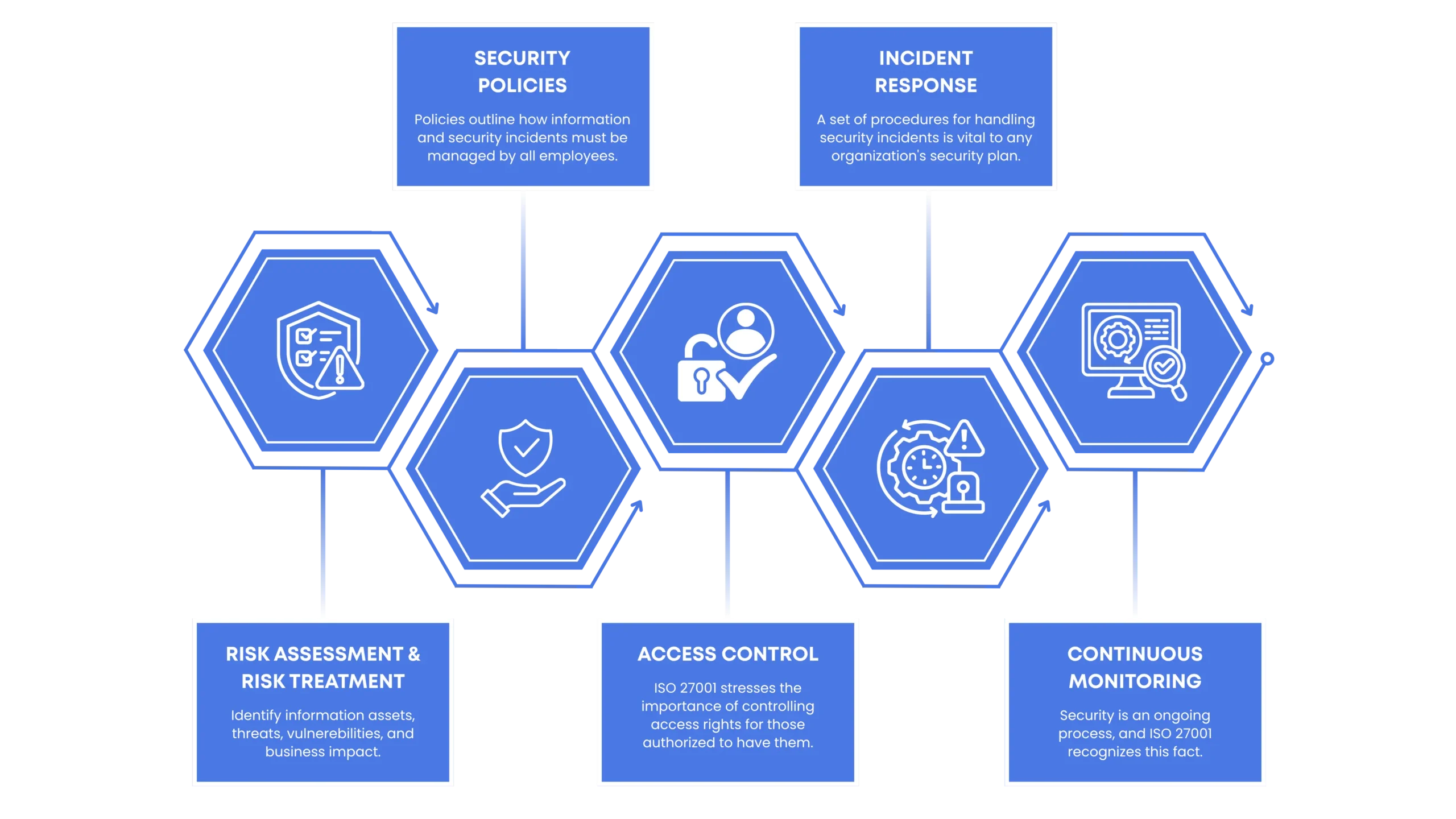
In layman’s terms, ISO 27001 actively protects information by integrating:

  1. Security policies 
  2. Risk assessment
  3. Employee awareness
  4. Access control
  5. Handling of incidents
  6. Constantly improving

ISO 27001 is not just about technology; it’s about people, processes and systems.

Quick Definition

The ISMS framework is defined by the ISO 27001 standard. It describes what an organization must do in order to fortify its information security management and, as a result, helps to build, implement, manage, and boost an ISMS. Its relevance and appeal are recognized across the globe.

What are the advantages of ISO 27001?

In modern business, data is especially important. Customer data, financial information, intellectual property, and internal communications are all pieces of data that need to be protected.

Without a formalised security framework, organisations are facing risks such as:

  • Data breaches
  • Financial losses
  • Regulatory penalties
  • Reputation damage
  • Customer attrition

ISO 27001 provides you with a way to manage those risks proactively, before they become costly problems.

How Does ISO 27001 Work?

The Information Security Management System, or ISMS, is at the heart of ISO 27001.

Think of an ISMS as the operating system to business security. An ISMS doesn’t wait for threats to occur before you respond. Instead, it allows you to continually identify vulnerabilities and reduce risks.

The framework follows a cycle of:

  1. Identify risks
  2. Assess potential impact
  3. Implement controls
  4. Effectiveness monitoring
  5. Continuous improvement

This process helps to ensure security is keeping pace with business growth and evolving threats.

Key Components of ISO 27001
Why SaaS Startups Need ISO 27001

ISO 27001 for SaaS startups provides a structured approach to information security while helping growing companies meet enterprise customer expectations. 

Faster Establishment of Customer Trust

Trust is among the major barriers blocks for SaaS solutions.

Enterprise buyers increasingly ask questions such as:

  • How will my information be kept secure?
  • What security controls do you have?
  • Are you compliant with recognized standards?

ISO 27001 offers answers to all of those concerns.

Faster Enterprise Sales

Many enterprise purchasing departments demand from vendors that they have a good security practice.

ISO 27001 compliance will help by:

  • Cutting long security audit
  • Speed up vendor approval processes
  • Boosting sales

Better Security Stance

ISO 27001 can enable the early establishment of mature security practices for startups.

Support Global Expansion

As the standard is widely accepted worldwide, this makes it possible for organizations to operate in different markets. Understanding the benefits of ISO 27001 certification for SaaS companies can help organizations evaluate its impact on security, customer trust, and business growth. 

Benefits of ISO 27001 Certification for SaaS companies 

Better Risk Management

Companies have a proper way of handling security risks.

Enhanced Customer Trust

The certification shows that the organization is dedicated to protecting their sensitive data.

Regulatory Alignment

The standard plays an important role in making sure the organization complies with privacy and security laws

Reduced Security Incidents

Effective measures help minimize human error.

Competitive Differentiation

When comparing vendors, certified organizations appear less risky.

Many growing SaaS businesses pursue both standards to satisfy different customer requirements.

Common Misconceptions About ISO 27001

“It’s Only for Large Enterprises”

False.

Startups and growing SaaS companies often benefit the most because they establish security foundations early.

“It’s Only About Technology”

False.

ISO 27001 covers people, processes, governance, and technology.

“Certification Guarantees No Breaches”

False.

No framework can eliminate all risks. ISO 27001 helps organizations manage and reduce risk effectively.

Practical Example: Why ISO 27001 Matters

Imagine a SaaS startup handling customer financial data.

Without ISO 27001:

  • Security practices vary between teams
  • Access permissions aren’t reviewed regularly
  • Incident response procedures are unclear

With ISO 27001:

  • Risks are documented and monitored
  • Access controls are standardized
  • Security responsibilities are clearly defined
  • Customers gain greater confidence

This leads to better security and business reputation.

Steps to Achieve ISO 27001 Certification

1. Define Your ISMS Scope

Determine which systems, processes, and departments fall under the ISMS.

2. Conduct a Risk Assessment

Identify risks and measure the impact of each risk

3. Implement Security Controls

Implement controls depending on risk assessment.

4. Document Information

Create the information you need to attain certification.

5. Conduct Internal Audit

Measure the effectiveness of controls.

6. Complete Certification Audit

Auditors certify that ISMS is compliant with standard.

Signs Your Organization Needs ISO 27001

You should seriously consider ISO 27001 if:

  • You handle sensitive customer data
  • Enterprise clients request security certifications
  • You want to improve cybersecurity maturity
  • You’re expanding into regulated markets
  • You’re preparing for rapid growth
  • You need a structured security framework

For many SaaS startups, these conditions appear much earlier than expected.

The Future of Information Security

Cyber attacks become increasingly sophisticated and common. Customers are getting more choosy as to who they can trust with their information.

Companies that implement information security now will be able to:

  • Earn customers’ trust
  • Comply with regulations
  • Minimize risks
  • Expand easily

ISO 27001 provides a great framework for starting your journey to an Information Security Management System. 

How to Get ISO 27001 Certified with SOCLY.io

Getting ISO 27001 certification takes a lot of time and effort, especially due to the need to consider issues related to cybersecurity and creation of new products. It’s all the evidence, the risk analysis, the controls, the certification, it’s a tedious job.

ISO 27001 certification has become much simpler due to the SOCLY.io platform which helps automate compliance management and build a more efficient ISMS.

Using SOCLY.io will allow your organization to:

* Collect evidence 

* Keep track of all your security controls

* Centralize policies, risks, and documents

* Find compliance gaps ahead of time

* Prepare better for certification audits

* Keep your compliance up to date thanks to continuous monitoring

With this approach, companies don’t have to spend many days and weeks on collecting and managing information and documenting security policies and procedures.

Such a tool is highly important for SaaS startups and SMEs when developing a proper ISMS. It will make it possible not only to enhance their security but also to streamline the compliance process.

Should you require some support for ISO 27001 certification in your company, please do not hesitate to contact us.

Frequently Asked Questions

What is ISO 27001, briefly explained?

ISO 27001 is an internationally recognized standard that assists in setting up an ISMS (Information Security Management System). 

Why is ISO 27001 certification required for SaaS?

It makes the system more secure, helps build credibility, speeds up the sales cycle, and prevents information security incidents.  

How long will it take to obtain ISO 27001 Certification?

It takes between three to twelve months, depending on the organization’s size. 

Is ISO 27001 certification mandatory?

ISO 27001 is an internationally recognized standard of Information Security. This helps the organization enhance its security, gain credibility among customers, and demonstrate its commitment towards safely handling information.

What is ISMS according to ISO 27001?

Information Security Management System (ISMS) is a collection of tools and management of security concerns of information through policies and procedures. 

Is it possible for startups to get ISO 27001? 

Yes. Many startups have received ISO 27001 certification effectively and even leverage the certification while targeting enterprise clients.

Conclusion

Information security is not only the concern of one particular department anymore. Secure protection of the data must become the key part of each firm’s activity. Today there are more cyber attacks than ever before, and consumers tend to care about their security. Therefore, companies need to take actions to protect their information.

ISO 27001 is able to help organizations accomplish many things at once. They will be able to diminish risk factors, improve their security systems, meet the requirements of legislation and customers, and establish trust in their clients and stakeholders.

If you want to create a niche for yourself in the product market, grow your business using enterprise clients safely, and increase your impact and reputation in the business world, then it may be possible for you through ISO 27001.

Do you want to get ISO 27001 certified?

We would love to hear from you. Book a call with us to see how you can build a strong security foundation for your organization.

Categories
SOC 2

Why SOC 2 Is the Most Trusted Security Framework for SaaS Companies

Why SOC 2 Is the Most Trusted Security Framework for SaaS Companies

Why SOC 2 Is the Most Trusted Security Framework for SaaS Companies

Why SOC 2 Is the Most Trusted Security Framework for SaaS Companies

>Why SOC 2 Is the Most Trusted Security Framework for SaaS Companies

Why SOC 2 Is the Most Trusted Security Framework for SaaS Companies

Discover how SOC 2 helps SaaS companies build customer trust, strengthen security, accelerate enterprise sales, and achieve compliance with confidence.

Why SOC 2 Is the Most Trusted Security Framework for SaaS Companies

SOC 2 Most Trusted Security Framework

Trust is the key currency of the SaaS business model. Regardless of how innovative your software offering is, no one is going to want to pay for your product if they do not trust you regarding your approach to security measures. That is precisely why SOC 2 has emerged as the benchmark when it comes to SaaS companies all around the world.

Both startups and enterprise-level SaaS businesses are being required to show evidence of how they protect, handle and process their customers’ personal information in a safe and responsible manner.

In this article, we will find out what makes SOC 2 such a valuable SaaS Security Framework, how it helps startup companies, why SaaS companies need SOC 2 compliance, and why using a SOC 2 Automation Platform can dramatically simplify the compliance journey. 

What is SOC 2?

SOC 2 (System and Organizational Controls 2) is a framework created by the American Institute of Certified Public Accountants to help assess how well businesses handle their customers’ data.

SOC 2 specializes in five criteria of trust services including:

  1. Security
  2. Availability
  3. Processing integrity
  4. Confidentiality
  5. Privacy

While the security Standard is typically required for SaaS companies, others may be selected based on your needs and expectations of your customers.

Unlike generic cybersecurity assessment tools, SOC 2 helps ensure that your controls are working reliably over time.

Why SaaS Companies Should Have SOC 2

Security is Now a Priority Among Buyers

SOC 2 has evolved into a trusted SaaS Security Framework because it combines operational security, continuous monitoring, and independent validation. 

Modern buyers prioritize security more than ever before. For enterprise-level buyers, they even demand SOC 2 compliance before they commit to the deal.

What happens without SOC 2?

  1. Extended sales cycle time
  2. Delayed  procurement process
  3. Loss of potential enterprise customers
  4. Weak consumer trust 

SOC 2 acts as independent proof that your organization takes data security seriously.

SaaS Businesses Handle Sensitive Data

Some of the sensitive data handled by SaaS companies include the following:

  1. Customer details
  2. Transaction details
  3. Employee details
  4. API credentials
  5. Internal communications
  6. Intellectual property

SOC 2 can help protect such data using control processes and security policies.

It Builds Competitive Advantage

In competitive SaaS environments, security could be the most Unique factor.
Consider two vendors whose software is very similar to each other.

  • One is SOC 2 certified.
  • The other one is not.

Enterprises generally prefer SOC 2-compliant vendors since they’re considered less risky.

Why SOC 2 Became the Most Trusted Security Framework
SOC 2 Most Trusted Security Framework

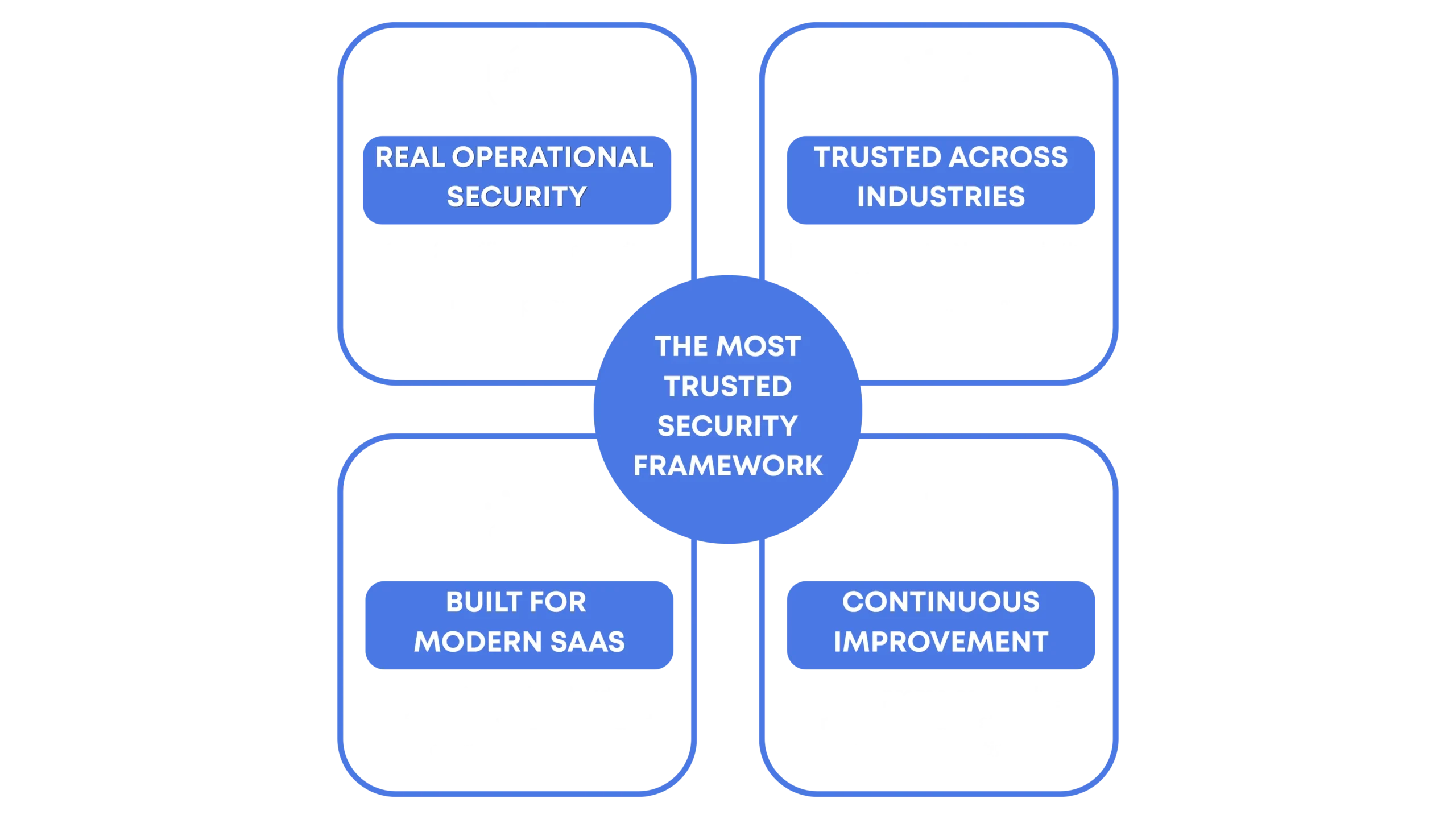
1. It Focuses on Real Operational Security

SOC 2 is not just about documentation. It evaluates how security controls actually function in day-to-day operations.

Auditors examine:

  • Access controls
  • Incident response processes
  • Vendor management
  • Monitoring systems
  • Change management
  • Employee security training

This practical approach makes SOC 2 more credible than surface-level compliance programs.

2. It Is Widely Accepted Across Industries

SOC 2 has become a universal benchmark for SaaS security.

Industries that frequently request SOC 2 reports include:

  • FinTech
  • Health Tech
  • HR Tech
  • EdTech
  • AI platforms
  • Cloud infrastructure providers

Because it is recognized globally, SOC 2 helps SaaS companies scale faster across markets.

3. It Aligns With Modern Cloud Security Needs

Traditional compliance frameworks were not built specifically for cloud-native SaaS environments.

SOC 2, however, fits naturally with:

  • Remote infrastructure
  • Cloud hosting
  • DevOps workflows
  • Continuous deployment
  • Distributed teams

This flexibility makes it especially relevant for modern SaaS startups.

4. SOC 2 Encourages Continuous Improvement

SOC 2 is not a “one-time certification.” It promotes ongoing monitoring and operational discipline.

This encourages companies to:

  • Continuously assess risk
  • Improve security maturity
  • Detect vulnerabilities early
  • Strengthen internal accountability

As cybersecurity threats evolve, continuous compliance becomes essential.

The Growing Importance of SOC 2 Automation Platforms

Manual compliance processes can overwhelm growing SaaS teams. Collecting evidence, tracking controls, and preparing for audits often consume hundreds of hours.

That’s why many companies now use a SOC 2 Automation Platform to simplify SOC 2 Compliance compliance management.

What Does a SOC 2 Automation Platform Do?

A modern automation platform helps organizations:

  • Automate evidence collection
  • Monitor cloud infrastructure
  • Track compliance controls
  • Identify security gaps
  • Simplify audit preparation
  • Reduce manual effort

Instead of managing spreadsheets and screenshots, teams gain centralized visibility into compliance activities. When evaluating the best SOC 2 automation platform for SaaS startups, organizations often look for solutions that reduce manual effort and simplify audit preparation. 

Benefits of Using a SOC 2 Automation Platform

Faster Compliance Readiness

The
best SOC 2 automation platform for SaaS startups can significantly reduce preparation time and improve overall compliance efficiency. Automation greatly cuts down on the time needed for preparing for audits.

Many SaaS businesses reduce compliance cycle times from months to only weeks.

Reduced Human Error

Manual evidence collection often leads to:

  • Missing documentation
  • Inconsistent records
  • Audit delays

Automation provides greater consistency and accuracy in the compliance procedure.

Continuous Monitoring

Effective SOC 2 automation applications continuously monitor systems, whereas other processes perform monitoring at intervals.

This allows security teams to:

  • Detect misconfigurations quickly
  • Rapidly respond to risks
  • Ensure continuous compliance

Increased Team Productivity

Development and Engineering teams are usually responsible for undertaking difficult tasks. With automation, repetitive compliance tasks will be automated to allow teams to focus on product development.

Common Challenges SaaS Startups Face With SOC 2

Limited Security Resources

Since there are no security teams to handle this work, the founders and engineers have to oversee auditing along with developing products.

Fast Changes to the Infrastructure

The infrastructure of a SaaS solution evolves quickly; it’s impossible to stay ahead by documenting everything manually.

Complicated Vendor Environment

Modern SaaS companies depend on:

  • Cloud providers
  • Third-party API integration
  • Tools for collaboration
  • CI/CD systems

Each vendor introduces additional security considerations.

The best way to manage all these elements would be through a SOC 2 Automation Platform. These challenges highlight why SaaS companies need SOC 2 compliance solutions that can scale alongside business growth. 

Practical Example: How SOC 2 Impacts SaaS Growth

Consider a SaaS business that delivers workflow automation solutions for other businesses.

Without SOC 2:

  • Enterprise customers hesitate
  • Procurement teams request additional security reviews
  • Sales cycles stretch for months

After achieving SOC 2 compliance:

  • Buyer trust improves
  • Security questionnaires become easier
  • Enterprise deals close faster

SOC 2 plays an important part in helping SaaS organizations increase their income.

Best Practices for Achieving SOC 2 Compliance

Identify Security Gaps 

First, it is necessary to find out what your company lacks.

Develop Security Policies

Document policies for:

  • Access management
  • Incident response
  • Data retention
  • Employee onboarding
  • Vendor management

Train Employees Regularly

Human error continues to be one of the biggest threats in cybersecurity. Security awareness training is essential.

Automate with a SOC 2 Automation Solution

Automation lowers the cost of operations and makes long-term compliance management easier.

Monitor in Real-Time

Security doesn’t stand still. Real-time monitoring keeps you audit-ready all year round.

Why SOC 2 is Key for Sustainable Growth as a SaaS

SOC 2 isn’t just about boosting your cybersecurity posture. It lays the groundwork for sustainable growth.

As SaaS companies expand:

  • Customer expectations increase
  • Regulatory scrutiny grows
  • Vendor risk management becomes essential

SOC 2 establishes a scalable foundation for handling these challenges efficiently.

How Does SOCLY.io Make It Easy To Gain SOC 2 Compliance?

The journey to SOC 2 compliance is not easy for most growing SaaS companies because of resource constraints, among other reasons. However, using a systematic approach to automate compliance can make things much easier for such organizations. In fact, SOCLY.io provides an easy solution by automating the whole compliance process to ensure ease and efficiency.

Using SOCLY.io makes it easy for SaaS organizations to:

Automatically collect evidence from cloud infrastructure, dev environments, and ID management systems. Monitor compliance controls continuously, thus identifying any gaps. Consolidate policies, controls, risks, and other audit documentation. Save lots of time by automating manual compliance work. Remain ready for audit all year round. Leverage expert advice during the process.

Unlike other compliance solutions that use a consultant-oriented process based on screenshots and spreadsheets, SOCLY.io enables SaaS firms to develop and scale their compliance programs. This way, companies do not spend too much time or energy on compliance while focusing on developing their products and services.

Whether you are getting SOC 2 certified for the first time or simply trying to simplify an already existing program, SOCLY.io makes compliance easier.

Frequently Asked Questions (FAQ)

What is SOC 2 compliance in SaaS?

SOC 2 compliance is a framework designed to measure the level of protection offered by SaaS providers to customers through certain controls and processes.

Why Does SOC 2 Matter to SaaS Startups?

SOC 2 compliance helps startups gain customer trust, close large deals with enterprises, and demonstrate best-in-class security right from the start.

How much time is required for SOC 2 Certification?

It depends on several factors, but typically the entire process takes about 2-6 months to be completed successfully. A SOC 2 Automation Platform can substantially cut down that duration.

Can small SaaS businesses be SOC 2 compliant?

Absolutely. Many new SaaS companies gain SOC 2 compliance through effective security controls and automation solutions.

Is SOC 2 necessary for enterprise SaaS sales?

For most enterprises, SOC 2 is mandatory. Enterprises are demanding that software providers produce SOC 2 reports before any business can be transacted.

Final Thoughts

SOC 2 is well known as the most credible security framework for SaaS providers since it’s not just about meeting compliance standards; it actually assesses security practices that really matter to clients, investors and enterprise users.

For growing SaaS companies, implementing SOC 2 should be a top priority, and not something that you think about when you need to.

With the combination of proven security controls and a reliable SOC 2 Automation Platform, it’s easy to receive SOC 2 compliance and earn your customers’ trust.

Want to lock down your SaaS operations and streamline compliance?

Start now, schedule a consultation or Contact us today.

Categories
HIPAA

How to Streamline HIPAA Compliance Without Complexity

How to Streamline HIPAA Compliance Without Complexity

How to Streamline HIPAA Compliance Without Complexity

How to Streamline HIPAA Compliance Without Complexity

>How to Streamline HIPAA Compliance Without Complexity

How to Streamline HIPAA Compliance Without Complexity

HIPAA compliance requires administrative, physical, and technical safeguards. But with the right approach, organizations can strengthen security while simplifying compliance efforts.

How to Streamline HIPAA Compliance Without Complexity

HIPAA Compliance

Trust shapes how people see medicine. Every time someone visits a doctor, they hand over private details, names, histories, fears through systems built on confidence. But during 2024, those promises cracked; at least 275 million health files spilled into risk across America. That works out to around three quarters of a million personal entries lost each day. When numbers settle, fixing such leaks now demands nearly eleven dollars per record one cent shy of ten million one hundred thousand total. 

Heavy rules weigh on expanding businesses. Writing policies comes up, along with tracking logins, handling outside partners, while getting ready for checks by officials. Builders and workers aiming at growth instead dig through sheets, hunt down papers, and read confusing legal terms. 

A clear plan makes HIPAA easier to manage and follow every day. The right tools can make the work simpler and save time. A good structure helps turn confusion into clear steps. The way you approach the process matters more than rushing. When you follow consistent methods, everything becomes more organized and easier to handle.

1. Bringing Structure to HIPAA Compliance

Starting out can be tough for businesses trying to meet rules. When it comes to HIPAA, expectations show up in management steps, building protections, also digital defenses.

What if sorting rules felt simpler? SOCLY.io gives teams a way to gather demands into a structured layout. Not wrestling messy files or fuzzy roles anymore, companies now link guidelines, checks, and workflows inside a single hub. A quiet shift, yet everything clicks differently.

Starting here, every piece fits because the method leaves no gaps. Because of this, rules are followed the same way by everyone involved.

2. Building Consistency Across Controls

Staying compliant means not only putting protections in place, but also showing that they are being used properly every day. It is not enough to just have rules,  you must prove they are followed in daily work. Taking action and following the process matters more than paperwork alone. 

When teams grow, keeping track of habits on paper turns messy. That’s where SOCLY.io steps in putting access controls, encryption, and employee training all work together seamlessly 

Keeping information updated makes it easier to share accurate details when needed. When you track things properly, records are created naturally without extra effort. 

3. Continuous Compliance Readiness

Staying compliant with HIPAA isn’t something you finish once. Instead, it requires ongoing attention over time. For companies, that means regularly checking who can access data and reviewing policies when needed. Safeguards should also be updated and monitored consistently to keep security strong and effective. 

Every now and then, a tool shows up that changes how teams handle compliance. SOCLY.io keeps everyone aware of where things stand without last minute panic. When audit time comes around, preparation feels smoother thanks to current records sitting ready. Clear trails for each step make progress easier to follow than guessing what happened weeks ago.

Staying prepared ahead of time means less pressure when test day arrives. Confidence grows naturally through consistent practice and familiar material.

4. Simplified Risk Assessments and Remediation

Every year, many organizations conduct risk assessments simply because HIPAA requires them. However, risk assessments are more effective when done regularly rather than once a year, because business operations, technology, and compliance requirements can change over time. Regular monitoring helps organizations identify issues early, reduce unexpected costs, and avoid disruptions to daily operations. 

Start by spotting problems early, then handle them right away. Teams using SOCLY.io can follow risks step by step, write down what they find, while moving through fixes logically.

Fixing weak spots like locked down permissions, fresh rules, or shaky suppliers works better when steps are spelled out ahead of time. A plan cuts through confusion once trouble shows up.

5. Managing Vendor Compliance Effectively

Third-party vendors are one of the biggest areas of risk in HIPAA compliance. Not every group watching over patient data sticks to the standards unless there is a solid agreement locked down ahead of time. A proper contract becomes essential once outside firms start touching sensitive records. Without signed terms clearly laid out, trouble can show up fast.

Managing outside partners becomes much easier with SOCLY.io. Teams can clearly see who they are working with, without confusion. Contracts move forward smoothly without getting lost in emails. Records stay updated because changes are tracked whenever needed, and important information remains easy to access at all times. With better visibility and regular updates, the chances of compliance issues or data loss are greatly reduced. 

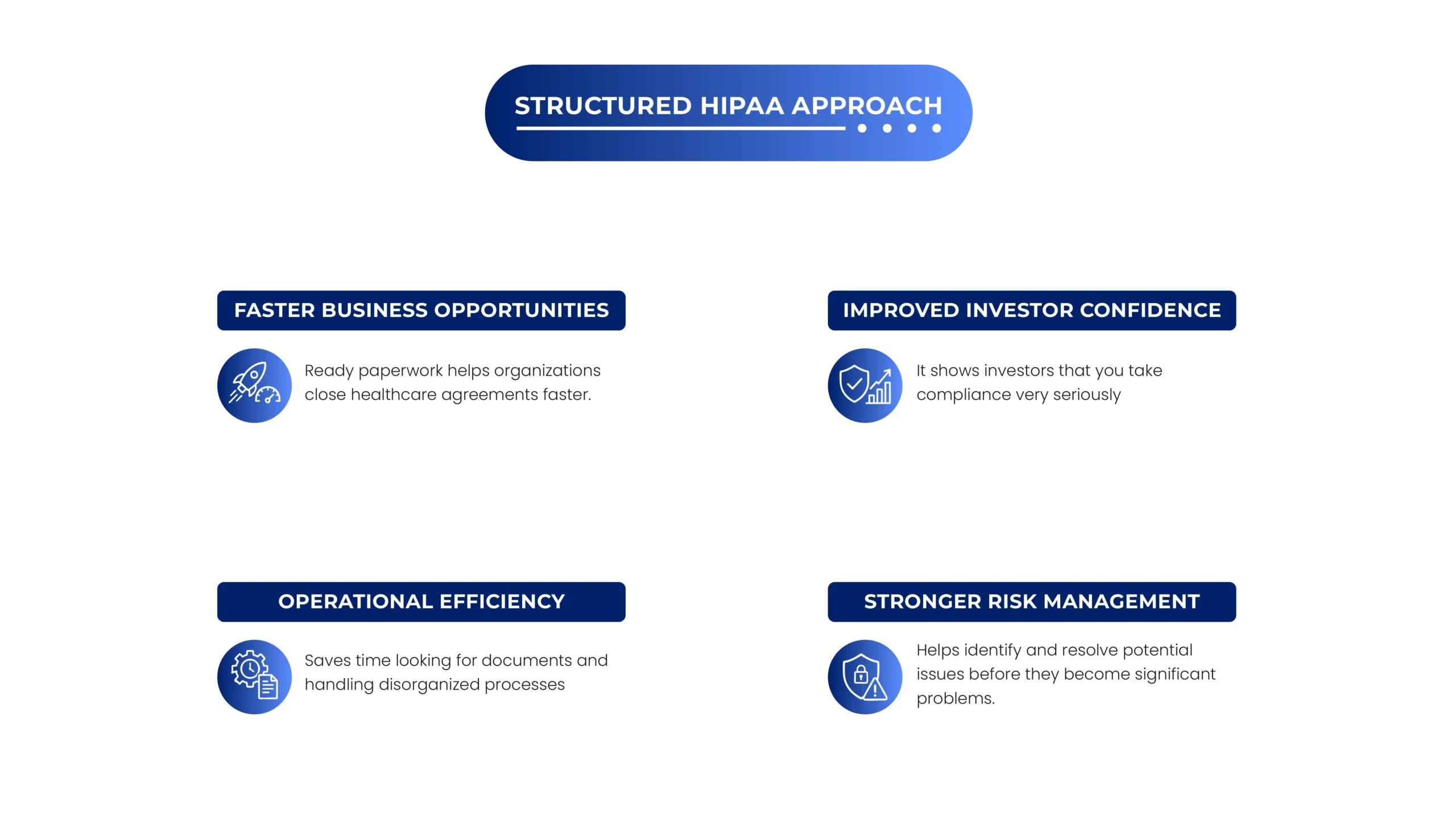
What Founders Gain from a Structured HIPAA Approach

Transitioning from a fragmented compliance process to a systematic approach offers clear advantages for your business:

Managing Multiple Frameworks Without Complexity 

Many healthcare startups don’t deal with HIPAA alone. These also include SOC 2, GDPR, or ISO 27001.

Approaching each framework individually may result in wasted time and inefficiency.

SOCLY.io consolidates these compliance obligations in one place, enabling organizations to manage their compliance needs under different frameworks efficiently.

How SOCLY.io Supports HIPAA Compliance

SOCLY.io is designed to simplify compliance management for growing teams by providing:

  • Centralized policy and documentation management
  • Clear mapping of controls to HIPAA requirements
  • Continuous tracking of compliance status
  • Structured risk and gap management

Instead of compliance slowing your business down, it becomes an organized and manageable part of your operations.

Conclusion

HIPAA compliance will always be essential for healthcare organizations, but it doesn’t need to be overwhelming.

With a structured approach, clear processes, and the right platform, businesses can:

  • Reduce manual effort
  • Strengthen patient trust
  • Stay prepared for audits
  • Support long-term growth

SOCLY.io helps you build a compliance foundation that grows with your business without unnecessary complexity.

Ready to simplify your HIPAA compliance process?
Book a demo with SOCLY.io and take the next step toward structured, scalable compliance.

Let's Talk

Tell us about your compliance needs and we’ll get back to you within 24 hours.

By submitting, you agree to our Privacy Policy and Terms of Service