System and Organization Controls
Information Security Management System
Artificial Intelligence Management System
General Data Protection Regulation
Health Insurance Portability and Accountability Act
California Consumer Privacy Act
Digital Personal Data Protection Act
The Complete Beginner’s Guide
In the connected world of today, cybersecurity cannot remain restricted to just the IT teams. All of us individuals, businesses, agencies and institutions, rely upon the use of digital technology to conduct our communication, information storage, transactions, and service delivery. With increasing reliance on technology, comes the increasing requirement of protection of the systems and information we rely upon in the modern world.
Cybersecurity Foundations provides the basic knowledge needed to know how these systems are protected, why cyber-attacks happen, and how security programs work. Regardless of whether you wish to learn about beginner cybersecurity concepts or become a security professional yourself, Cybersecurity Foundations lays down the basic knowledge which forms the base for all other areas of cybersecurity. By the end of this guide, you will understand:

Cybersecurity what it is, why it is important, and how it works to defend our digital world today.

The key assets that companies are protecting such as data, systems, networks, applications, and infrastructure.

The Cyber Attackers who they are, what their motivations are, and types of attacks on companies

The way in which common cyber-attacks take place and the methods used by cyber attackers.
This foundational knowledge also prepares readers for more advanced topics such as governance, risk management, compliance frameworks, audits, and structured security operations.
Cybersecurity is important since the current age requires the use of technology and the internet to facilitate communication, business processes, money transfer, health care, learning and teaching, governance, and many other daily activities. With the growing dependence on technological tools and processes, there has been a rise in cyber-attacks, which have the potential of disrupting services, compromising data, damaging infrastructure, and causing harm to people and organizations. Cybersecurity ensures that information systems, data, applications, devices, networks, services, and users and organizations using them are safe from cyber-attacks.
This digital transformation has created enormous benefits:
But every networked system opens up avenues of attack as well. With information being digitized and available through networks, it is important that there be proper controls to make sure that unauthorized access does not occur.
In the very early days computer systems were generally isolated and had few users who were all trustworthy. With the development of networking capabilities and the advent of the internet, everything changed.
Security became necessary because:
Customer databases, financial details, intellectual property, and business strategy became valuable data assets.
Compromise of one system could impact several others.
They became skilled at developing tools and methods to hack systems.
Disruption of any kind would immediately impact business operations.
Organizations were made liable for securing some kinds of data.
Consequently, cybersecurity was no longer an issue limited to technology but had become a business issue.
Major cyber incidents have demonstrated how significant security failures can become.
Examples of High-Impact Cybersecurity Incidents
The WannaCry ransomware attack infected more than 200,000 computers across over 150 countries. It encrypted files, disrupted hospitals, businesses, and government organizations, and caused billions of dollars in damages worldwide.
A vulnerability in Equifax’s systems led to the exposure of sensitive personal information belonging to approximately 147 million people, making it one of the largest data breaches in history.
Attackers compromised trusted software updates distributed by SolarWinds, allowing them to gain unauthorized access to thousands of organizations, including government agencies and major enterprises.
A ransomware attack forced Colonial Pipeline to temporarily shut down fuel distribution operations in the United States, causing fuel shortages and demonstrating how cyberattacks can disrupt critical infrastructure.
The impact of poor cybersecurity extends far beyond technology.
| Security Weakness | Potential Business Impact |
|---|---|
| Weak access controls and poor password practices | Unauthorized access, account compromise, and financial fraud |
| Unpatched software and outdated systems | Malware infections, ransomware attacks, and costly recovery efforts |
| Inadequate network security | Service disruptions, data interception, and operational downtime |
| Poor data protection practices | Data breaches, regulatory penalties, and loss of customer trust |
| Lack of employee cybersecurity awareness | Successful phishing attacks, credential theft, and increased cyber risk |
| Weak incident response and recovery planning | Extended business disruption, higher recovery costs, and reputational damage |
Indirect costs of a cyber event can be even more expensive than the direct technical recovery costs for some companies.

Cybersecurity is a result of today’s digital age where interconnected technology plays a key role in everyday life.

Digital information is an invaluable resource that brings cyber attacks.

Real-life examples of cybersecurity threats illustrate the practical impact of breaches in terms of operational and financial loss.

Cybersecurity is no longer just a technical necessity but a strategic one.

Common types of cybersecurity weaknesses include weak passwords, poor access controls, unpatched software, insecure network configurations, inadequate data protection, and limited employee security awareness.
Technology changed the way business and life work through connections made between people, systems, and services worldwide. While technology improved efficiency and innovation, it also introduced the risk of cyber security problems since businesses became very reliant on technology.
Digital transformation can be defined as the incorporation of digital technology in business processes. The following technologies are being adopted more widely:


Modern organizations rarely operate isolated systems. Applications exchange data with:
Modern organizations rarely operate isolated systems. Applications exchange data with: This interconnected environment creates a larger attack surface. A weakness in one connected component can potentially affect multiple organizations.
One of the emerging technologies that is facilitating digital transformation in today’s business organizations is cloud computing technology. Rather than having their entire IT infrastructures on premises, organizations are increasingly relying on cloud services to increase agility and efficiency. Cloud computing technology provides for a lot of the digital services employed by organizations, allowing them to offer storage, application delivery, and online services to their customers.
Organizations commonly use cloud computing for:
Because industries such as banking, healthcare, retail, education, transportation, and government increasingly rely on cloud-based services, securing cloud environments has become an essential part of modern cybersecurity. Organizations must protect cloud resources through strong access controls, encryption, continuous monitoring, and secure configurations.
Many essential industries now rely on digital technologies and cloud-enabled services to deliver critical operations and services.

Digital banking platforms, online payments, mobile banking applications, and cloud-based financial services enable secure and convenient financial transactions.

Electronic Health Records (EHRs), telemedicine platforms, connected medical devices, and cloud-based healthcare systems improve patient care while requiring strong cybersecurity protections.

E-commerce platforms, digital payment systems, inventory management applications, and customer relationship systems help retailers operate efficiently and serve customers worldwide.

Digital logistics platforms, GPS navigation, fleet management systems, and connected transportation networks improve operational efficiency and supply chain visibility.

Governments rely on digital public services, citizen portals, cloud infrastructure, and critical information systems to deliver essential public services securely.

Learning Management Systems (LMS), virtual classrooms, cloud-based collaboration platforms, and student information systems support modern education and remote learning.
As organizations across every sector become increasingly dependent on digital technologies and cloud services, cybersecurity plays a vital role in ensuring that these systems remain secure, available, and trustworthy.

Digital transformation has expanded the use of connected technologies.

Interconnected systems create a larger attack surface.

There is increased security concern in cloud computing.

The reliance on critical services has become high with digital technologies.

Increased technological reliance makes cybersecurity more important.
Cybersecurity is becoming very significant as the threat to cybersecurity impacts not only individuals but also companies, economic activities, and even national security. With the increasing reliance of people on digital devices, there is a need to protect such devices.
Individuals can be affected by cyber incidents through:
Routine tasks like banking, shopping, and social networking online need protection to safeguard personal data.
For businesses, cybersecurity supports:
Cybersecurity is now being seen by companies as a basic component of business operations.
Cyber incidents could have an impact on whole industries and even economies. Some large-scale cyberattacks might compromise:
Cybercrime is estimated to cost the global economy approximately USD 10.5 trillion annually by 2025, making it one of the fastest-growing economic threats worldwide. These costs include financial fraud, ransomware payments, business disruption, recovery expenses, legal penalties, and lost productivity.
Nowadays, governments consider cybersecurity to be one of the main elements of national security. It could include critical infrastructure of an energy system, communication, transport, and others.
Securing such systems entails collaboration among various government agencies, private sectors, and security experts.

Cybersecurity impacts individuals, firms, the economy, and the government.

Most common targets of cyber-attacks include personal information and money.

Firms depend on cybersecurity to conduct their operations and build client confidence.

Security of critical infrastructures is now considered part of national security.
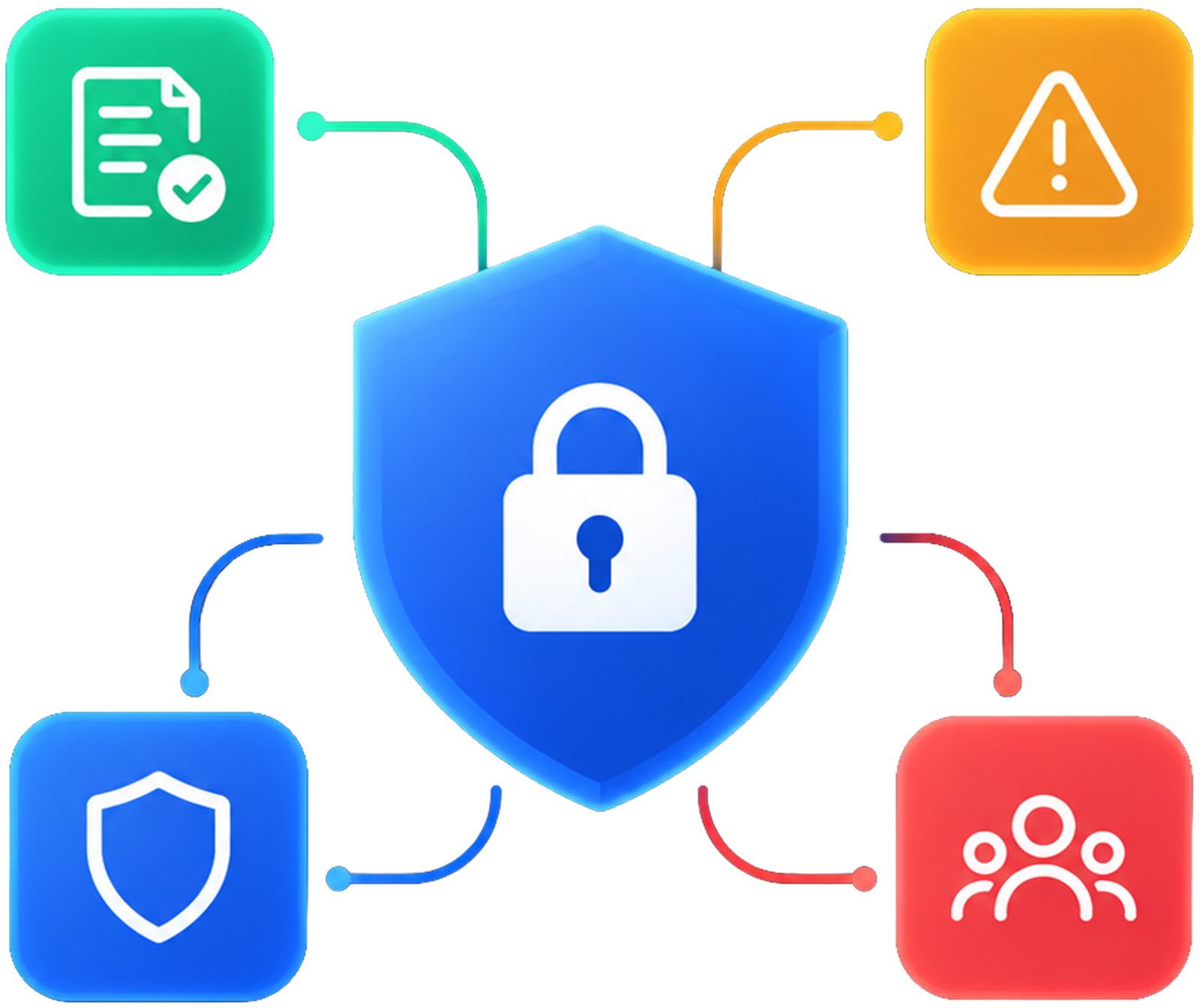
Cybersecurity is the practice of protecting computer systems, networks, applications, devices, and data from cyber threats and attacks by identifying, managing, and mitigating vulnerabilities. The core objective of cybersecurity is to preserve the confidentiality, integrity, and availability of information while enabling organizations to operate securely.
Having considered the reasons for which the concept of cybersecurity is important, it is necessary to figure out what is cybersecurity. Although cybersecurity is a common notion, its definition is not clear to many people. Most individuals relate cybersecurity only to protection from hackers and attempts to gain unauthorized access to computers. In fact, cybersecurity is a far broader field involving the integration of processes, technology, governance, and people in order to protect business interests.
Every email sent, online purchase made, cloud application used, and customer record stored relies on a combination of people, processes, and technology working together to maintain cybersecurity.
Definition
Cybersecurity can be defined as a series of techniques used in protecting an information system or any kind of digital asset from cyber threats.
It entails identifying and assessing risks, implementing security controls, monitoring systems, responding to security incidents, and continuously improving security measures as threats evolve.
Cybersecurity is not a software solution or product but a continuous process that should involve the whole organization
Elements of an effective cybersecurity strategy include:
Collectively, these components assist organizations in mitigating risk while ensuring business operations.
Companies hold plenty of different types of information ranging from personal information about customers and employees, to financial information, intellectual property, and others. Cybersecurity guarantees the protection of such information
Security goes beyond just protecting from cyber-attacks; security also means maintaining business continuity despite any incidents that happen. Good cybersecurity will minimize disruption and help in achieving quick recovery from attacks.
It is impossible to remove all cyber risks for an organization. What cybersecurity does is identify the risks, prioritize and use proper controls.
Customers, employees, stakeholders, etc., expect that companies will keep their information safe. Good cybersecurity is important in establishing such trust.
Various sectors are required to comply with data protection and information security laws and regulations. Cybersecurity plays a crucial role in supporting compliance by protecting information and implementing security controls, helping organizations meet regulatory requirements while reducing legal and financial risks.
There is much more to cybersecurity than safeguarding computers. Contemporary organizations require the security of various other forms of digital assets and environments.
Cybersecurity involves:

Prevention of sensitive data from being accessed, altered, or destroyed without authorization.

Protection of the communication network from any form of unauthorized access, attacks, and interceptions of data.

Protecting software applications throughout their lifecycle by identifying and addressing security vulnerabilities during design, development, testing, deployment, and maintenance.

Protection of cloud-based applications, services, and data, and sharing the responsibility of security.

Cybersecurity of devices like laptops, desktops, smartphones, and servers from malware and unauthorized access.

Ensuring that users are able to access only those resources which they are authorized for.

Continuously monitoring systems, detecting suspicious activity, investigating security incidents, and responding to cyber threats.
With the advent of new technologies, the scope of cybersecurity is expanding and therefore becoming an important function for every department.
Despite increased awareness, there are still some misconceptions regarding cybersecurity.
| Misconception | Reality |
|---|---|
| Cybersecurity can prevent attacks only from hackers | Cybersecurity can prevent many other incidents, such as mistakes, insider attacks, system malfunctions, and operational risks. |
| Big companies are targets only | Organizations of every size can become targets. Attackers often exploit the easiest and most vulnerable targets, regardless of company size. |
| Antivirus software installation is enough | Effective cybersecurity includes multiple layers, including security policies, monitoring, employee training, access controls, and other protective measures. |
| Cybersecurity is an IT department job only | Every employee is responsible for the cybersecurity of the organization through their everyday actions and decisions. |
| Cyber-attacks happen rarely | Cyber-attacks occur continuously around the world, and organizations of all sizes are regularly targeted by both automated and targeted attacks. |
This knowledge will help in setting realistic expectations from the concept of cybersecurity.
Consider an online retail company that processes thousands of customer orders daily.
Its cybersecurity program must protect:
If the attacker is able to break into any one of the above categories, he/she will cause financial, operational, reputational, and regulatory harm.
This shows that cybersecurity is supposed to secure the whole digital environment and not just a single entity.
Cybersecurity protects digital systems, networks, applications, devices, and information.
It combines people, processes, technology, and governance.
The goal is to reduce cyber risk while enabling business operations.
Cybersecurity covers multiple domains, including cloud, networks, applications, identities, and endpoints
Effective cybersecurity requires continuous improvement rather than one-time implementation
Companies secure their digital assets, which include information, hardware, software, networks, clouds, and digital identities. All these have vital roles to play within a company, and each of them can be the target of cyber attacks if not protected adequately.
Cybersecurity starts with determining what is supposed to be secured. All companies have digital assets that allow them to operate, provide services, and create value for their clients and stakeholders.
Information
Information is one of the most important assets that an organization has. It involves all the data ranging from customer information, financial data, research findings, agreements, and even communication within the company.
Examples of information include:
In case such information is compromised, organizations may suffer financial, operational, reputational, and legal consequences.
Devices support business operations, provide access to organizational resources, and process organizational data. Because they often store sensitive information or connect to critical systems, they are common targets and entry points for attackers.
Common devices include:
Desktop computers
Laptops
Smartphones
Tablets
Servers
Point-of-sale systems
Internet of Things (IoT) devices
Through compromised devices, attackers will be able to steal credentials, deploy malware, or access internal networks.
Applications help employees and customers to undertake crucial organizational activities.
These include:
Applications normally handle confidential data which makes them attractive targets for attackers.
Networks link users, devices, and applications such that information flows through the organization.
Examples include:
If a network is compromised, attackers may intercept communications, move laterally across systems, or disrupt organizational operations.
Most companies depend on cloud services to store information, deploy applications, and deliver business services.
Cloud environments may include:
Cloud security follows a Shared Responsibility Model, where the cloud service provider secures the underlying cloud infrastructure, while the organization remains responsible for protecting its data, identities, configurations, and other resources based on the cloud service model being used.
There is a digital identity assigned to each individual, whether an employee, contractor, customer, or system account.
Examples include:
Since compromised identities and stolen credentials can provide unauthorized access to organizational systems and data, protecting digital identities has become one of the most critical aspects of cybersecurity.
| Digital Asset | Why It Matters |
|---|---|
| Information | Drives business operations and decision-making |
| Devices | Provide access to organizational resources |
| Applications | Deliver business services and process data |
| Networks | Connect systems and enable communication |
| Cloud environments | Host critical workloads and business applications |
| Digital identities | Control access to systems and information |
Organizations protect far more than computers.
Cybersecurity involves securing the whole digital environment.
Every digital asset contributes to business operations.
Knowledge about the protected assets enables proper prioritization of security controls.
Attackers often target the weakest or most accessible digital asset to gain unauthorized access, steal sensitive information, or disrupt business operations.
Data is one of the most valuable assets for organizations and a primary target in many cyber-attacks because of its economic, operational, and strategic value. Ensuring that data is protected from unauthorized access is one of the key goals of any cybersecurity initiative.
Despite the fact that cybersecurity provides protection to all types of digital assets, data continues to be the most valuable one. Data is used by organizations for decision-making, providing customer services, creating products, and performing other operations.
There are many types of information that organizations deal with, and some of these include:
Information that relates to the identification of people, for example, names, address, contact numbers, and ID numbers.
Information related to banking accounts, payment cards, invoices, and financial documents.
Reports of operations, contracts, sales, product roadmaps, and strategies.
Patents, software source codes, research information, algorithms, and trade secrets.
Logs, configurations, inventories, and production data necessary for business activities.
Every type of information requires a different level of security depending on its sensitivity and importance to the organization.
Data enables organizations to:
For hackers, the obtained data can be sold, exploited through fraudulent activities, or used for blackmailing purposes. Therefore, data is among the most valuable digital resources for both businesses and cyber criminals.
However, not all types of data pose the same threats to individuals or organizations. Some data need extra security measures because its unauthorized access may lead to severe consequences.
Examples include:
Organizations often classify data based on sensitivity to determine the appropriate level of security.
Most cyber-attacks ultimately seek access to valuable information. Attackers may aim to:
Organizations often classify data based on sensitivity to determine the appropriate level of security.
Steal customer records
Encrypt data through ransomware
Sell confidential information on criminal marketplaces
Alter records to commit fraud
Destroy information to disrupt business operations
Therefore, data protection goes beyond just preventing any theft. An organization needs to be sure that its information is accurate, available, and accessible only to the authorized personnel.
A healthcare organization holds the electronic medical records of thousands of patients. If cybercriminals manage to breach the organization’s security measures, they can steal highly confidential information, disrupt patient care, and expose the organization to regulatory sanctions.
Using proper access control measures, encryption, monitoring, and frequent backups will help avoid such a scenario.
Data is the main target for many cyber-attacks due to its value.
An organization handles various types of information that require different security levels.
Sensitive information demands greater protection considering the risks involved in compromising it.
The protection of data entails confidentiality, integrity, and availability of information.
In addition to securing our systems and information, cybersecurity also entails knowing the different kinds of threats that pose risks to our systems and information.
Every day, organizations face cyber threats from a wide range of threat actors, including cybercriminals, malicious insiders, hacktivists, and nation-state actors.
In carrying out such attacks,these threat actors use a variety of attack techniques to gain unauthorized access to systems and information, disrupt business operations, steal valuable assets, or otherwise compromise organizational security. It is thus important to understand what motivates such attacks and how such attacks take place.
A cyber attacker refers to an individual or group of individuals who use technology to commit cyber-attacks through which they can get unauthorized access to computer systems or networks in order to accomplish certain political, financial, or strategic objectives.
All cyber-attacks are not done by the same type of attacker. There are various types of cyber attackers whose motives can range from financial benefits to espionage, activism, revenge, and even political motives.
Cybercriminals represent the largest group of attackers. Financial gain represents the main motivation for such attackers.
They often target organizations to:
Modern cybercriminals behave like businesses. There are many cybercriminals who belong to organized groups specializing in creating malware, identity theft, and selling compromised data via underground markets.
Example
The cybercriminal sends phishing emails to employees while impersonating a trusted vendor. If an employee enters their credentials on the fake website, the attacker can use those stolen credentials to gain unauthorized access to the organization’s legitimate systems and potentially access sensitive information.
It does not mean that the attacks will always come from the outside of an organization. Insider attacks are launched by insiders who have legitimate access to the system.
Insider threats may include:
Insiders can cause harm intentionally or unintentionally.
The worker steals company secrets before leaving the organization.
Hacktivism refers to the use of cyber-attacks to promote political, social, or ideological causes.
An employee unintentionally compromises security by clicking on a malicious link or sending confidential information to an unauthorized person.
Since the insider already has legitimate access, identifying this threat can be difficult.
Their objectives may include:
Hacktivist attacks usually get ample media coverage because that is the purpose of these attacks.
Nation-states are entities sponsored by governments who conduct sophisticated cyber activities for their country’s benefit.
Their objectives may include:
Many organized cyber groups operate internationally, making investigation and prosecution difficult.
Some cyber attackers work as highly organized criminal groups.
These groups usually specialize in various aspects of cybercrimes such as
Many organized cyber groups operate internationally, making investigation and prosecution difficult.
| Attacker | Primary Motivation | Typical Targets |
|---|---|---|
| Cybercriminals | Financial gain | Businesses, individuals, financial institutions |
| Insider Threats | Revenge, negligence, personal gain | Employer systems and data |
| Hacktivists | Political or social causes | Government agencies, corporations |
| Nation-State Actors | National security and espionage | Governments, defense, critical infrastructure |
| Organized Cyber Groups | Profit through coordinated cybercrime | Businesses across multiple industries |
An organization becomes the victim of a ransomware attack in which attackers encrypt critical servers and demand a ransom payment to restore access to the systems and data.
The study indicates that the perpetrators managed to get hold of the systems by sending phishing emails targeting one of the employees.
This case illustrates how the compromise of a single account can be used to conduct a major cyber-attack.

Cyber attackers have varying motives, skills, and objectives.

Fiscally motivated cybercriminals are the most frequently encountered cyber attackers.

The insider threat may either be malicious or inadvertent.

National actors conduct complex cyber operations with strategic motives.
Cyber attackers use different techniques to gain unauthorized access to systems, steal information, disrupt services, or compromise the confidentiality, integrity, and availability of digital assets. The following are some of the commonly observed cyber-attacks: phishing, malware, ransomware, social engineering, password attack, and denial of service.
The attackers in the cyber world are constantly inventing new forms of exploiting not only technological weaknesses but behavioral as well. Different types of attacks
keep appearing every day, however, some of the most effective cyber-attacks use very old methods and security weaknesses.
Malware is software meant to harm computer systems, steal data or give attackers unauthorized access to systems.
Types of malware include:


An employee downloads an attachment from what appears to be a legitimate email. Once opened, the attachment installs malware that allows the attacker to steal sensitive information and gain unauthorized access to the organization’s systems.
Ransomware is a type of malware that encrypts a victim’s files or systems and demands a ransom payment in exchange for restoring access.
Some characteristics of contemporary ransomware attacks include:


Organizations without secure backups may face significant operational disruption during recovery.
Social engineering attacks manipulate people instead of technology.
Attackers exploit trust, curiosity, fear, or urgency to convince victims to perform actions that compromise security.
Common techniques include:
Organizations without secure backups may face significant operational disruption during recovery.


Because humans are often the weakest link in security, social engineering remains highly effective.
Compromised credentials and weak password practices remain one of the leading causes of unauthorized access and security breaches.
Attackers may use:
Organizations reduce this risk through strong password policies and multi-factor authentication.
A Denial-of-Service attack attempts to overwhelm systems or networks so legitimate users cannot access services.
When multiple compromised devices participate simultaneously, the attack becomes a Distributed Denial-of-Service (DDoS) attack.
Common targets include:
The objective is often disruption rather than data theft.
| Attack Type | Primary Objective | Typical Impact |
|---|---|---|
| Phishing | Steal credentials or deliver malware | Account compromise |
| Malware | Damage or control systems | Data theft, system compromise |
| Ransomware | Encrypt and extort | Operational disruption |
| Social Engineering | Manipulate people | Unauthorized access |
| Password Attacks | Compromise accounts | Account compromise and unauthorized access |
| DoS/DDoS | Disrupt services | Service outages and downtime |
Phishing is still among the most effective types of cyber-attacks.
Malware consists of various forms of malicious software.
Social Engineering focuses on manipulating people instead of computer weaknesses.
Good authentication decreases the success rate of password attacks.
Ransomware has the potential of bringing business processes to a standstill, resulting in huge losses
Typically, cyber-attacks progress through several stages including choosing an appropriate target, gaining access, exploitation, lateral movement, achieving the attacker’s objective, and evasion. It is important to know this process to protect against cyber threats more effectively at all stages.
Successful cyber-attacks do not usually occur immediately. Many cyber-attacks follow a structured approach that attackers use to identify weaknesses and exploit vulnerabilities.
By understanding this life cycle, we can effectively detect and disrupt attacks from taking place.
Although attacks vary, many follow a similar progression.
Attackers gather information about the target.
Examples include:
The more information attackers collect, the easier it becomes to identify potential weaknesses.
The attacker gains an initial foothold using techniques such as:
This initial access often appears legitimate, making detection more difficult.
Once inside, attackers exploit vulnerabilities to expand their access.
This may involve:
The objective is to gain greater control over systems and data.
Rather than remaining on a single device, attackers often move through networks to locate valuable systems.
They may target:
Lateral movement allows attackers to maximize the impact of their attack.
Depending on their motivation, attackers may:
This stage represents the primary purpose of the attack.
Sophisticated attackers attempt to avoid detection by:
Concealing their activities increases the likelihood of maintaining long-term access.
Attackers commonly enter organizations through:
Organizations focus on securing these entry points to reduce the likelihood of successful attacks.
Technology alone cannot prevent every cyber-attack.
Human mistakes remain one of the leading causes of security incidents, including:
Organizations focus on securing these entry points to reduce the likelihood of successful attacks.
Clicking malicious links
Using weak passwords
Sharing sensitive information
Ignoring software updates
Misconfiguring systems
Regular security awareness training helps employees recognize and avoid common threats.
Attackers exploit weaknesses in multiple ways, including:
Security programs aim to reduce these opportunities through layered defenses, continuous monitoring, and proactive risk management.
| Stage | Attacker Activity |
|---|---|
| Reconnaissance | Gather information about the target |
| Initial Access | Gain entry through a vulnerability or stolen credentials |
| Exploitation | Expand access and establish control |
| Lateral Movement | Move through the organization's environment |
| Objective Achievement | Steal, encrypt, or disrupt assets |
| Covering Tracks | Hide evidence and maintain persistence |

Cyber-attacks, by nature, go through a life cycle that is not random.

Attackers exploit both technical vulnerabilities and human behavior to gain unauthorized access.

Weaknesses such as phishing, weak passwords, and outdated software continue to be popular ways of attack.

Any early detection in the cyber-attack life cycle helps lessen the harm of the attack.
Cybersecurity is not just about knowing who the hackers are but also knowing what vulnerabilities they exploit. Most cyberattacks exploit one or more vulnerabilities, whether they are technical weaknesses, misconfigurations, weak security practices, or human factors.
Vulnerabilities are referred to as such for a reason they increase risk and make it easier for hackers to succeed in their attacks. Organizations can prevent any successful cyberattacks if they take time to identify, assess, and mitigate any vulnerabilities present.
In this section, everything related to vulnerabilities, including their differences from threats and risks, will be explained and the most common security vulnerabilities will be identified.
Vulnerability is defined as weakness or flaw in the system, applications, processes, or even human actions which make it possible for the attacker to use it to get access to resources and disrupt any activities. Vulnerabilities can occur in technology, configuration, software or even organizational processes.
A vulnerability does not necessarily lead to a security incident. Rather, it provides an opportunity for exploitation when proper security controls are absent. Organizations with unaddressed or high-risk vulnerabilities are generally more susceptible to cyber-attacks.
Knowing the vulnerabilities is one of the most basic principles of cybersecurity since organizations cannot defend themselves from anything they are unaware about.
A vulnerability is any condition that weakens the security of an organization.
These weaknesses may exist in:
However, not all vulnerabilities are high risk. Risk assessment factors include exploitability, exposure, and the value of the vulnerable asset.
For instance, the risk of an old internal application that can be accessed by few people could be lower than that of an exposed web application storing sensitive data.
Vulnerabilities can exist in many forms across an organization’s technology environment.
An organization continues using an outdated web server with a known security vulnerability. Attackers exploit the unpatched vulnerability to gain unauthorized access to the server.


Attackers frequently target authentication weaknesses because they often provide direct access to valuable systems.
Incorrect security settings can unintentionally expose sensitive resources. Examples include:


Misconfigurations remain one of the leading causes of cloud security incidents.
Incorrect security settings can unintentionally expose sensitive resources. Examples include:


Secure software development practices help reduce these vulnerabilities before applications are deployed.
People can unintentionally introduce vulnerabilities through everyday actions. Examples include:


Because humans interact with technology every day, security awareness is an essential part of vulnerability management.
No organization can eliminate every vulnerability.
Security weaknesses exist for many reasons.
Organizations continuously adopt new software, cloud services, devices, and applications. Every new technology introduces potential security challenges.
Modern systems employ millions of lines of code. Despite rigorous testing, complex software may still contain defects and undiscovered security vulnerabilities.
The organization implements changes like updating systems, welcoming new clients, bringing in third-party services, and altering the system infrastructure. Every change comes with the probability of introducing configuration issues and vulnerabilities.
The staff members can make mistakes or lack sufficient information on security, which will result in creating vulnerabilities.
Hackers are developing new techniques to attack the system. The security team should constantly update its defense capabilities to stay ahead of new vulnerabilities.
The organization introduces a cloud storage solution that would allow employees to work together. However, during deployment or configuration, the storage bucket was mistakenly configured to allow public access over the internet.
In this case, although the cloud computing solution is inherently safe, the misconfiguration exposed sensitive company files to everybody.
This case is an example where security risks arise from human mistakes and not from the technological issues themselves.
A vulnerability is a weakness that can be exploited by attackers.

There are vulnerabilities in many technologies, procedures, configurations, and even human mistakes.

Common examples include software being out-of-date, insecure authentication, software application vulnerabilities, and misconfigurations.

Threats created due to vulnerabilities may or may not cause an attack.

Monitoring and fixing the vulnerabilities is crucial for reducing risks.
Vulnerability refers to a weakness, while a threat is something that is capable of exploiting the weakness. Lastly, risk is the possible consequence of the threat exploiting the vulnerability. Differentiating between the three will help organizations be able to determine their priorities in terms of securing themselves from attacks.
The three terms above are interchanged, but each term has its own meaning in the field of cybersecurity.
Mistakenly using them in an incorrect context could result in poor security strategies and bad decisions.
Anything that can take advantage of the weakness and bring about harm can be considered a threat.
Threats may be:
For a threat to bring about damage, it must first find a vulnerability.
A vulnerability is a weakness that enables a threat to exploit a system.
Examples include:


Without vulnerabilities, many cyber threats would be unable to succeed.
Risk refers to the possible impact if the vulnerability gets exploited through the threat.
There are two main components of risk:
How likely is a threat to successfully exploit a vulnerability?
What will be the result of the attack?
These concepts work together in a logical sequence.
Without a vulnerability, the threat cannot exploit the system.
Without a threat, the vulnerability may never be exploited.
Risk exists when a threat has the potential to exploit a vulnerability and cause harm.
Consider an organization with employees using weak passwords.
A password spraying attack launched by a cybercriminal.
The employees have weak and guessable passwords.
Unauthorized access to corporate systems and potential data theft.
The company mitigates the risk through the implementation of a strict password policy and Multi-factor authentication.
| Aspect | Threat | Vulnerability | Risk |
|---|---|---|---|
| Definition | Something capable of causing harm | A weakness that can be exploited | The potential impact of successful exploitation |
| Examples | Hacker, malware, insider | Weak password, unpatched software | Data breach, financial loss, downtime |
| Can it exist independently? | Yes | Yes | No—requires both threat and vulnerability |
| Primary Focus | Source of danger | Weakness | Business impact |
Think about a scenario where the web application of a corporation has an unpatched vulnerability.

Threats utilize vulnerabilities.

Vulnerabilities offer opportunities to attackers.

Risk quantifies the potential damage to business from exploitation.

Appreciation of the difference helps better security planning and risk management.

Lessening vulnerabilities greatly decreases organizational risk.
Some of the common security flaws are weak passwords, poorly configured security, outdated software, and human errors. Such flaws are the cause of many successful cyber-attacks and need to be constantly detected and fixed with the help of proactive security measures.
Although there are various types of security vulnerabilities that could exist, some vulnerabilities reoccur in different organizations no matter what type of business they operate in. Hackers frequently use such vulnerabilities to gain access to systems that hold valuable data.
Identifying, prioritizing, and mitigating these vulnerabilities is one of the most effective ways to improve an organization’s cybersecurity.
Passwords remain one of the most common methods of authentication, making them a frequent target for attackers.
Weak passwords often include:
Strong password policies, password managers, and Multi-Factor Authentication help reduce this risk.
A misconfiguration occurs when security settings are incorrectly implemented, leaving systems more exposed than intended.
Examples include:
Due to the constantly evolving nature of today’s IT infrastructure, configuration management is essential in cybersecurity
Updates to address security flaws are frequently provided by software companies.
Companies that delay in implementing such patches put themselves at risk of known weaknesses being exploited by cyber attackers.
Examples include:
An effective patch management process helps minimize these risks by ensuring security updates are applied promptly.
Technology alone can’t solve cyber risk. Human error continues to be one of the top causes of security incidents.
Common mistakes include:
Security awareness training helps employees recognize and avoid these common mistakes.
Even mature organizations continue to face common security weaknesses because:
Cybersecurity is therefore an ongoing process of identifying, prioritizing, and reducing weaknesses rather than attempting to eliminate them entirely.
| Security Weakness | Potential Impact | Common Mitigation |
|---|---|---|
| Weak passwords | Unauthorized account access | Strong password policies and MFA |
| Misconfigurations | Exposure of systems and data | Secure configuration management |
| Unpatched software | Exploitation of known vulnerabilities | Regular patch management |
| Human mistakes | Phishing success, accidental data exposure | Security awareness training |
Many successful cyber-attacks exploit vulnerabilities that could have been prevented or mitigated through effective security practices.

Among the vulnerabilities are the use of weak passwords, misconfiguration, unpatched systems and human errors.

Monitoring, patching, configuration management and training employees are key elements in managing vulnerabilities.

Layered security mechanisms can be put in place in order to decrease vulnerabilities.

Lessening the security vulnerabilities greatly improves security.
Cybersecurity is built upon fundamental security principles that guide organizations in protecting information and managing risk. Though technologies and risks keep evolving, these principles remain unchanged for different sectors and organizations.
These principles help security practitioners to formulate decisions when it comes to securing data, risk management, and implementation of control measures in order to maintain security. Regardless of what an organization does (whether it deploys a new cloud platform, develops applications, or addresses any cyber incident), these principles lie at the heart of every security approach.
In this part, you will learn about the CIA Triad, find out how organizations evaluate and handle risks, and learn about the concept of Defense in Depth.
The CIA Triad is the foundational model of information security and one of the core principles of cybersecurity. It consists of Confidentiality, Integrity, and Availability. These three concepts ensure that the information is available only to those who have authorization to use it, the information is true and reliable, and it is available whenever required.
Information security for many years has been based on the CIA Triad, and this principle still applies to the modern cybersecurity concepts, as each security control always refers to one or more of the CIA principles.
The knowledge about the CIA Triad helps to understand why companies use encryption, back-ups, access management, monitoring systems, and disaster recovery planning.
The three pillars go hand-in-hand in providing protection of the information throughout the entire life cycle.
Confidentiality is used to provide protection against unauthorized access to the information.
Integrity is used to provide protection against corruption of information.
Availability ensures that authorized users have timely and reliable access to information and systems whenever needed.
In order for a successful cybersecurity strategy to be implemented, the right balance between the three pillars should be established.
Confidentiality is the protection of information from unauthorised access or disclosure.
Confidential data can only be accessed by authorised users, systems or applications.
Reasons to keep confidential are: financial loss; legal action; identity theft or bad reputation due to unauthorised disclosure.
Organizations maintain confidentiality through various security measures, including:


These controls ensure that users access only the information necessary to perform their responsibilities.
A hospital stores electronic medical records containing highly sensitive patient information.
Doctors can gain access to patient records that pertain to their duty, while administrative employees can only access scheduling records. Unauthorized persons cannot view the patients’ medical records due to the control and authentication process involved.
This is one form of confidentiality.
Integrity ensures that information remains accurate, complete, and trustworthy throughout its lifecycle.
Unauthorized modification, accidental corruption, or malicious alteration of information can have serious consequences for organizations.
Maintaining integrity means ensuring that information has not been changed without authorization.
Organizations protect data integrity through:


These mechanisms help detect unauthorized modifications and preserve trust in organizational data.
A financial institution processes thousands of banking transactions every minute.
If transaction amounts could be altered during processing, customers could lose confidence in the banking system. Integrity controls ensure that transaction data remains accurate from initiation to completion.
Availability ensures that authorized users have timely and reliable access to information, systems, and applications whenever they are needed.
Without accessibility of even secure data in the course of routine operations, such data becomes useless.
For organizations that deal with providing critical services like health care, financial services, and transportation, availability takes on increased importance.
Organizations improve availability through:


These measures reduce downtime and improve organizational resilience.
The e-commerce portal witnesses an abnormal level of customer demand at the time of a sale season.
With the help of redundant cloud technology and load balancing, there is no disruption of services from the portal, thus helping the customers in making their purchases.
Organizations must balance all three principles rather than prioritizing one exclusively.
For example:
Security professionals continuously evaluate business requirements to achieve the appropriate balance between confidentiality, integrity, and availability.
| Principle | Primary Objective | Examples of Security Controls |
|---|---|---|
| Confidentiality | Prevent unauthorized access | Encryption, MFA, access controls |
| Integrity | Protect accuracy and consistency | Hashing, digital signatures, audit logs |
| Availability | Ensure continuous access | Backups, redundancy, disaster recovery |
Nearly every cybersecurity decision can be evaluated against the CIA Triad.
For example:
Many security technologies contribute to more than one principle, demonstrating how interconnected these concepts are.

The CIA Triad is one of the foundational principles of cybersecurity.

Confidentiality ensures that information is accessible only to authorized users.

Integrity maintains the accuracy and credibility of information.

Availability makes sure that systems stay up and running.

Balance needs to be maintained among all three aspects.
A cybersecurity risk is the possibility that a threat will exploit a vulnerability and cause harm to an organization’s operations, finances, reputation, or compliance. Risk management helps organisations to identify, assess, prioritise and mitigate risk.
Organisations cannot protect themselves against all types of cyber threats and vulnerabilities. They mitigate risk by determining which types of threats are most damaging to their operations and investing in those areas where the impact will be greatest. Security decisions are made through risk management.
Risk within the field of cybersecurity refers to the possibility of experiencing loss or damage as a result of a cyber-attack or security event.
Three components generally contribute to cybersecurity risk:
Without an asset, an exploitable vulnerability, or a relevant threat, the associated cybersecurity risk is significantly reduced or may not exist.
Likelihood is the possibility of a threat exploiting the identified vulnerabilities.
Several factors influence likelihood, including:
Companies will incur costs in terms of responding to the incident, court costs, fines, interruptions, and compensation for customers.
The cyber-attacks may lead to interruptions in business processes or complete shutdown of operations.
The company will suffer in terms of revenue from loss of trust from customers.
The failure to adequately secure sensitive data may cause regulatory inquiries and possible contractual disagreements.
Likelihood is the possibility of a threat exploiting the identified vulnerabilities.
Several factors influence likelihood, including:
Firms with mature security programs are able to reduce likelihood through prevention and detection measures.
An organization assesses risks by looking at likelihood and impact.
Here is a simple risk matrix based on a qualitative approach:
| Likelihood | Impact | Overall Risk |
|---|---|---|
| High | High | Critical |
| High | Medium | High |
| Medium | Medium | Moderate |
| Low | High | Moderate |
| Low | Low | Low |
This kind of assessment allows organizations to set priorities for the remediation process and deploy their security resources properly.
After assessing the risk, an organization usually takes one of the following four approaches to deal with the risk:
Install security controls to decrease the probability or the severity of the risk.
Example: Turn on Multi-Factor Authentication to decrease the probability of account takeover.
Stop performing the action that causes the risk.
Example: Stop using unsupported software.
Transfer some or all of the financial consequences of a risk to another party without transferring responsibility for managing the risk.
Example: Buy cyber insurance or outsource the services.
Accept the risk when it falls within the organization’s risk appetite or when the cost or practicality of mitigation outweighs the potential benefit.
Risk acceptance needs to be formally documented.
An organization discovers that a publicly accessible server is running outdated software.
Customer database
Cybercriminals
Unpatched software
High
High
Critical
The organization prioritizes patching the server immediately to reduce the risk of exploitation.

Risk represents the potential impact of successful threat exploitation.

Risks include both probability and consequences.

There is continuous identification, assessment, and prioritization of risks in organizations.

The risk management approach aids in decision making.

While not all risks can be mitigated, all risks must be managed.
“Defense in depth” is a notion in cybersecurity that entails the establishment of various layers of protective measures to safeguard assets owned by an organization. In other words, while one layer of protection might not suffice, multiple layers of protection overlap, such that failure of any one would still secure the asset.
Not all forms of protection are perfect. For instance, firewalls can be breached, passwords can be stolen, software could have weaknesses, and humans make mistakes.
The creation of security policies by cybersecurity professionals seeks to establish layers of protection in a security strategy to ensure that cyber attacks do not succeed on account of failure of one protective measure.
Defense in Depth implements multiple independent layers of preventive, detective, and corrective security controls across people, processes, and technology, ensuring that if one control fails, others continue to provide protection.
Common layers include:
Physical security
Identity and access management
Network security
Endpoint protection
Application security
Data protection
Security monitoring
Incident response
Employee awareness training
Each layer contributes to the organization’s overall security posture.
Relying on only one security mechanism creates a single point of failure.
For example:
A firewall may block many external attacks, but it cannot prevent:
Communicate security objectives.
Stolen credentials from being used
Insider threats
Insider threats
Application vulnerabilities
Misconfigured cloud services
By combining multiple controls, organizations reduce the effectiveness of any single attack technique.
Consider an employee accessing a cloud-based business application.
Several security layers may protect this process:
If one of the above controls fails, the rest will still keep on protecting the company.
Organizations implementing layered security gain several advantages:
Defense in Depth acknowledges that attacks may occur and focuses on limiting their impact rather than relying solely on prevention.
| Security Layer | Example Controls |
|---|---|
| Physical Security | Access badges, surveillance cameras |
| Identity Security | Passwords, MFA, RBAC |
| Network Security | Firewalls, VPNs, network segmentation |
| Endpoint Security | Antivirus, Endpoint Detection and Response (EDR) |
| Application Security | Secure coding, vulnerability testing |
| Data Security | Encryption, backups, data classification |
| Monitoring | Security Information and Event Management (SIEM), logging |
| Incident Response | Response plans, recovery procedures |
A phishing email successfully tricks an employee into entering their password.
Because the organization uses Defense in Depth:
Multi-Factor Authentication blocks unauthorized login.
Endpoint protection detects unusual activity.
Security monitoring alerts the security team.
Access controls prevent the attacker from reaching sensitive systems.
Although one security control failed, the additional layers prevented a major security incident.

Defense in Depth relies on multiple overlapping security controls.

No single security measure can protect against every cyber threat.

Layered security improves resilience and reduces organizational risk.

Preventive, detective, and corrective controls work together to protect digital assets.

Defense in Depth is a core principle of modern cybersecurity programs.

Your trusted partner in compliance automation. Turn complex regulations into clear, automated workflows.
By submitting, you agree to our Privacy Policy and Terms of Service